

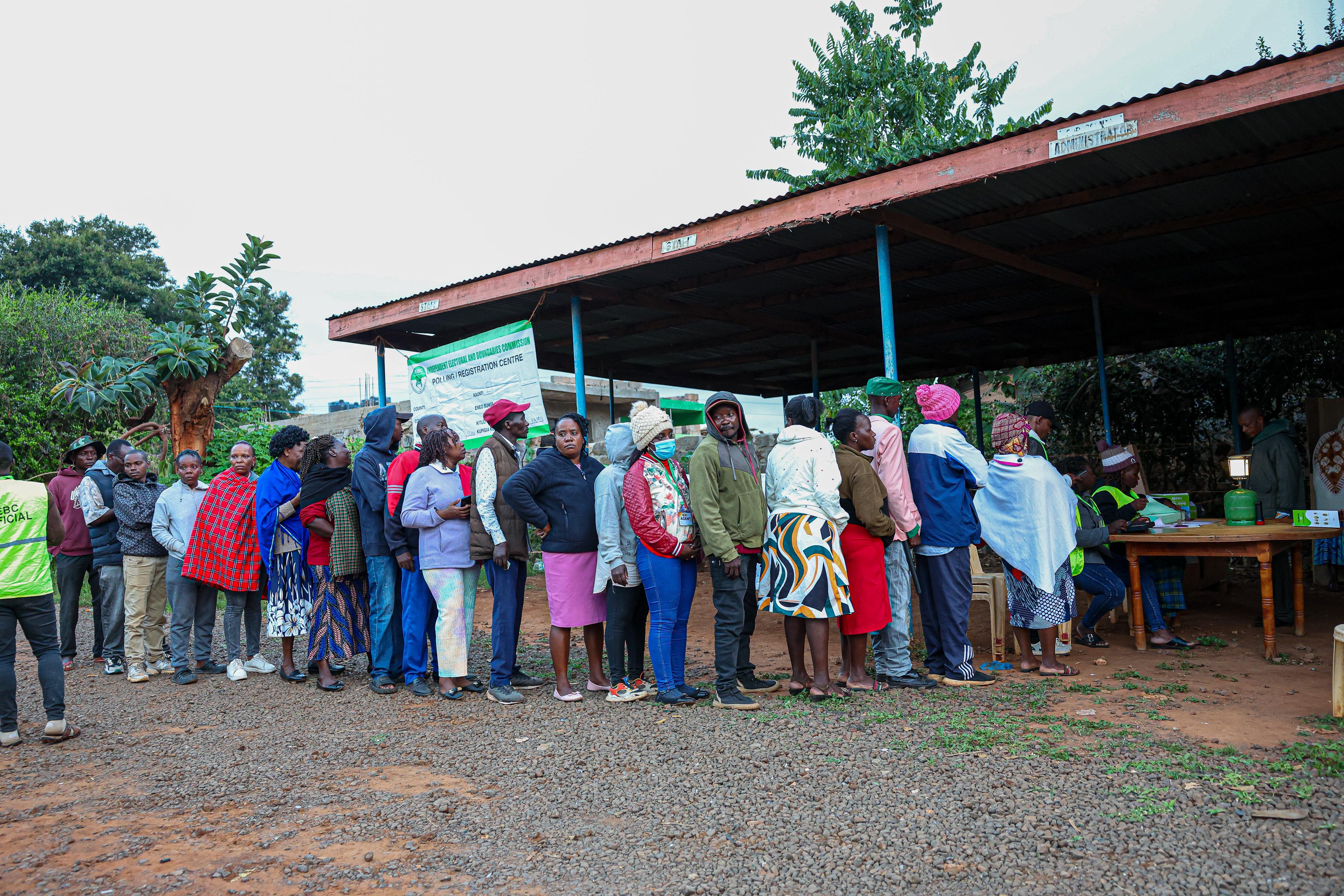
Kenya has a habit of panicking too late. We argue ferociously in election years, litigate outcomes for months and then move on - until the next cycle repeats the same anxieties.
The hardest truth to accept is that elections are rarely stolen at the ballot. They are stolen quietly, methodically, in the years before - when oversight is neglected, budgets are quietly weaponised, appointments are politicised and public participation is reduced to ceremony. By the time campaigns peak, the damage is often complete.
What remains is performance: rallies, litigation and rhetoric masking decisions already settled elsewhere. This is why 2026 matters more than the drama of 2027. It is the year when institutions either defend their authority or surrender it without resistance.
As Kenyans step into 2026, the political mood is already familiar. Campaign machinery is warming up, alliances are being tested and personalities are once again commanding attention.
Yet beneath the noise lies a quieter, more consequential question - one that will define not just the 2027 election, but also the future of Kenya’s democracy: Do our institutions still matter? Institutions are supposed to be boring.
Their power lies in procedure, predictability and restraint. When institutions work, they deny individuals the luxury of excess. When they fail, individuals become bigger than systems - and impunity takes root.
Kenya’s recent history offers ample examples of institutions that retreat when pressure mounts: regulatory agencies that go quiet, oversight offices that issue reports with no consequences and public agencies that confuse loyalty to power with loyalty to the constitution.
Nowhere is this tension more evident than in the contest over public trust. Kenyans are politically alert but civically exhausted. They follow developments closely, debate passionately online and show flashes of mobilisation.
Yet many no longer believe that engagement produces results. This exhaustion is dangerous. When citizens stop expecting institutions to work, institutions quickly stop trying. Accountability becomes optional and governance drifts into survival mode.
These institutions are not bystanders in this moment: The Independent Electoral and Boundaries Commission, the Judiciary, Parliament, county governments, universities, trade unions, faith institutions and the media.
They are the terrain on which Kenya’s democratic future will be decided. Their conduct in 2026 - how they resist pressure, uphold norms and communicate with the public - will shape the credibility of any election more than campaign manifestos ever will.
Equally important is the role of citizens beyond the spectacle of voting. Democracy does not collapse with a bang; it erodes through neglect. When budgets are passed without scrutiny, when public participation is reduced to a ritual, when corruption scandals generate outrage without reform, the erosion continues quietly. The cost is paid later, in legitimacy crises that appear sudden but are years in the making.
Kenya stands at a familiar crossroads, but with less room for error. Economic strain has strained patience. Social inequality has sharpened distrust. Politics has become more personalised, while governance has become more opaque. In this context, institutions are not abstract entities; they are the last remaining safeguards between order and uncertainty.
This is not a call for institutional perfection - no democracy enjoys that luxury. It is a call for institutional courage: the willingness to follow the law even when it is inconvenient, to disappoint power in order to serve the public, and to remember that legitimacy is earned daily, not declared during elections.
If institutions fail in 2026, 2027 will merely formalise the failure. But if institutions hold - quietly, firmly, consistently - then Kenya may yet prove that its democracy is bigger than its politics.
But let us be clear: institutions do not collapse only because they are attacked; they collapse because they are allowed to. When Parliament looks away, when regulators hesitate, when courts are intimidated into caution and when professional agencies retreat into silence, power learns a dangerous lesson - that rules are negotiable and consequences optional.
Kenya likes to pretend that democracy is rescued every five years by the ballot. It is not. Democracy is either defended daily or surrendered quietly. Those betting that citizens will show up in 2027 regardless of how institutions behave in 2026 are playing with fire. A country where institutions no longer command respect does not produce free elections; it produces negotiated outcomes dressed up as choice.
So let there be no illusions as the year begins. The 2026 polls will reveal who believes in the republic and who merely occupies office within it. If institutions choose comfort over courage, silence over duty and proximity to power over fidelity to the constitution, then 2027 will not be an election - it will be a confirmation.
And Kenyans will be left to confront a far more troubling question than who won or lost: when exactly did we agree to stop being governed by rules and start being managed by power? That is the real contest of the year ahead — and it will not be decided at the ballot box alone.





