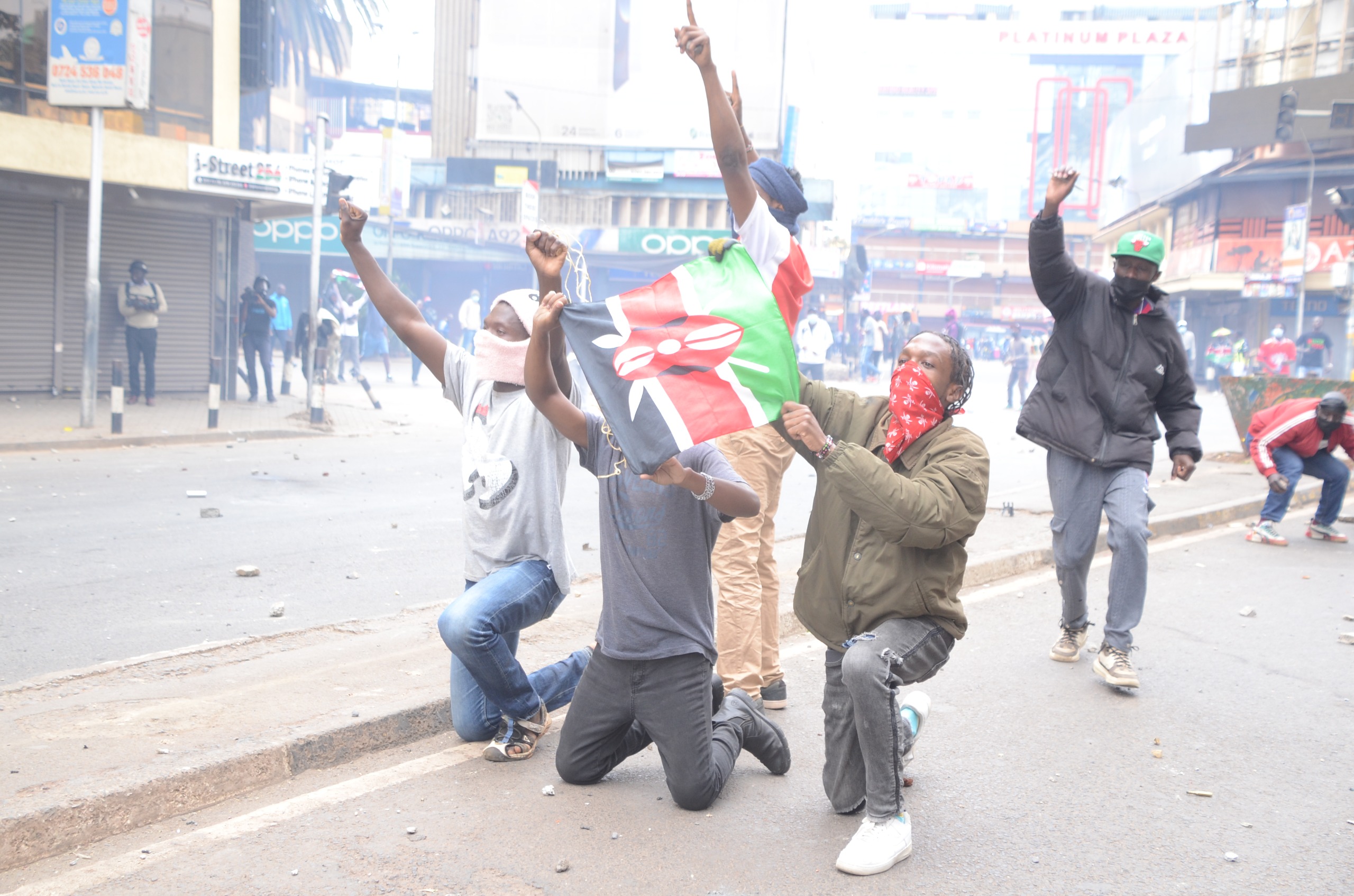
As Kenya moves toward the 2027 general election, youth engagement stands at the centre of both democratic renewal and political risk. Lessons from the 2024-25 Gen Z protests underscore a fundamental reality: young people are fundamental to Kenya’s political future, capable of strengthening democratic participation or amplifying instability.
Comprising more than 75 per cent of the population, Kenyan youth possess unmatched digital fluency, mobilisation capacity and civic energy. These same attributes, however, increase exposure to manipulation through disinformation, grievance politics and radical mobilisation.
Whether youth engagement contributes to peaceful participation or political disorder will depend largely on how political actors, institutions and information environments shape engagement in the lead-up to 2027.
Evidence from the National Crime Research Centre, the National Counter Terrorism Centre, the National Cohesion and Integration Commission, civil society organisations and academic research reveals a complex radicalisation landscape.
In this context, radicalisation refers to the process through which individuals adopt rigid or confrontational political positions that legitimise intimidation, exclusion, or violence in pursuit of political ends. This form of political radicalisation has become an enduring feature of Kenya’s electoral landscape.
Youth radicalisation is not an episodic phenomenon confined to election periods; it is cumulative and structural. High-stakes electoral cycles repeatedly reward confrontational mobilisation, while accountability for political violence remains weak.
Political elites continue to exploit youth grievances such as economic marginalisation, political exclusion and perceived injustice into mobilisation strategies that normalise coercive participation.
Over time, this has blurred the boundary between legitimate political activism and organised intimidation, socialising young people into adversarial modes of political engagement. Urban and peri-urban zones marked by unemployment, political exclusion and weak civic infrastructure remain particularly vulnerable.
Digital platforms have significantly intensified these dynamics. Online spaces have evolved into primary arenas of political contestation, where disinformation, hate speech and delegitimising narratives circulate with speed and emotional force.
Social media algorithms amplify polarising content, while encrypted messaging platforms enable closed-loop mobilisation beyond public scrutiny. Youth, particularly those facing unemployment and limited civic inclusion, are disproportionately engaged as both consumers and producers of such content.
Repeated exposure to emotive narratives framed around betrayal, victimhood, or existential political struggle accelerates radicalisation and lowers the threshold for offline mobilisation.
The convergence of online radicalisation and physical political action has become increasingly pronounced. Digitally mobilised narratives frequently precede the deployment of youth as political enforcers, used to disrupt campaigns, intimidate opponents and influence electoral outcomes in competitive constituencies.
By-elections held last year reinforced this pattern, demonstrating how online grievance construction and offline coercion operate as mutually reinforcing processes. This convergence poses a significant challenge ahead of 2027, particularly where community-level mediation mechanisms are weak or absent.
At the same time, Kenya’s own electoral history demonstrates that these trajectories are not inevitable. Periods of relative electoral restraint have coincided with sustained peace messaging and narrative discipline.
Following the 2007-08 post-election violence, coordinated peace campaigns led by political actors, media institutions, civil society and religious organisations played a central role in moderating youth mobilisation during the 2013 election. These efforts reframed restraint as a civic virtue and delegitimised violence as a political tool, particularly among young voters.
In more recent electoral cycles, however, peace messaging has struggled to keep pace with the velocity and reach of digital political content. While isolated calls for calm persist, they are often overwhelmed by grievance-driven narratives that dominate online spaces.
The erosion of sustained peace communication has created a vacuum in which radical narratives flourish, particularly among digitally connected youth who lack consistent exposure to countervailing narratives.
This imbalance underscores the need to re-anchor peace messaging as a continuous, adaptive component of youth engagement rather than a reactive election-period intervention.
Institutional trust further shapes youth susceptibility to radicalisation. Persistent doubts about the credibility of electoral management, unresolved cases of electoral violence and perceptions of elite impunity contribute to political alienation among young people.
Disengagement from formal electoral processes does not translate into political neutrality.
Instead, alienated youth often migrate toward alternative forms of participation online, protest mobilisation and informal political enforcement, where radical narratives offer a sense of agency and belonging absent in formal politics.
Socioeconomic pressures compound these vulnerabilities. High youth unemployment, rising costs of living and limited access to political opportunity structures deepen grievances that are readily exploited during periods of heightened political competition. In such contexts, youth mobilisation becomes transactional, with economic precarity lowering resistance to political manipulation.
The convergence of economic stress, digital exposure and weak institutional trust creates fertile ground for sustained radicalisation unless proactively addressed.
Regional experiences reinforce the case for sustained intervention. For instance, Rwanda has invested in continuous, community-anchored deradicalisation models that integrate youth councils, interfaith dialogue and peer mentorship into everyday governance structures.
These approaches show that deradicalisation is most effective when embedded within education systems, local leadership and political participation frameworks rather than treated as a reactive security measure. Kenya enters the 2027 cycle with institutional and societal capacity to scale similar models nationally.
Domestic initiatives already point to what works. Programmes led by the Kenya Youth Peace Network, Uwiano Platform for Peace and NCIC Tuungane Initiative demonstrate that consistent mentorship, structured dialogue, and skills development reduce susceptibility to extremist narratives while strengthening civic participation.
In the Coast region, initiatives combining vocational training with dialogue have rebuilt trust among at-risk youth and enhanced community belonging. In Nairobi’s informal settlements, digital literacy paired with civic forums has equipped young people to counter disinformation and act as peer stabilisers within their communities.
Media and civil society play a decisive supporting role. Media framing shapes youth perceptions, either legitimising grievance-driven mobilisation or reinforcing democratic norms.
Responsible reporting, avoidance of sensationalism and amplification of positive youth engagement are essential to sustaining social cohesion. Civil society organisations complement this role by providing platforms for dialogue, mentorship and civic skills, bridging ethnic, religious, and generational divides that often fuel radicalisation.
Despite these efforts, structural constraints persist. Radicalisation pathways vary across regions and digital ecosystems, complicating uniform responses. Fragmented coordination, limited funding and entrenched political patronage networks undermine long-term impact, while rapidly evolving online environments constrain monitoring and early intervention. Without adaptive and well-resourced strategies, youth vulnerabilities are likely to intensify as political competition sharpens ahead of 2027.
Against this backdrop, continuous youth deradicalisation emerges as a strategic necessity rather than a peripheral security concern. Unlike intermittent interventions tied to election calendars, continuous deradicalisation recognises political radicalisation as a dynamic process shaped by everyday governance, information environments and socioeconomic conditions.
Effective frameworks integrate civic education, mentorship, community participation, digital literacy, economic empowerment and sustained peace messaging into a coherent approach that extends beyond election cycles.
The stakes of inaction are significant. Youth who are repeatedly mobilised through radical narratives risk normalising intimidation and coercion as acceptable political tools, undermining electoral credibility and institutional legitimacy.
Conversely, youth who are continuously engaged, informed, and empowered become stabilising actors capable of moderating political competition and strengthening democratic resilience.
Ahead of the general election, continuous youth deradicalisation must be treated as a core democratic investment. For policymakers, the central implication is clear: youth deradicalisation must be institutionalised as a continuous governance function rather than treated as an election-period risk management exercise. This requires deliberate shifts in policy design, resourcing, and coordination ahead of the 2027 electoral cycle.
First, youth deradicalisation should be formally integrated into national and county-level peace, security and electoral preparedness frameworks. Agencies responsible for cohesion, countering violent extremism, elections and youth affairs should operate under a shared framework that recognises political radicalisation both online and offline as a standing governance challenge.
Second, digital spaces must be treated as core arenas of political regulation and civic engagement. Policymakers should invest in continuous digital literacy and counter-disinformation programmes targeted at youth, working in partnership with media houses, technology platforms and civil society. Peace messaging should be data-informed and sustained across electoral cycles, drawing lessons from the coordinated narrative discipline that contributed to restraint in the 2013 election.
Third, community-based youth engagement structures should be stabilised and funded beyond election cycles. Proven initiatives such as youth peace networks, dialogue platforms and mentorship programmes require predictable financing and institutional anchoring at the county level. Embedding these initiatives within education systems, vocational programmes and local governance structures reduces reliance on ad hoc donor funding and insulates them from political interference.
Fourth, political accountability must be strengthened to disrupt elite-driven youth radicalisation. This includes enforcing legal consequences for the use of youth in political violence, tightening oversight of campaign mobilisation practices and reinforcing norms that separate legitimate political participation from coercive activity. Without credible deterrence, deradicalisation efforts risk being undermined by the very actors who benefit from confrontational mobilisation.
Finally, economic inclusion should be treated as a stabilisation instrument, not merely a development objective. Youth employment, skills development and access to political opportunity structures directly affect susceptibility to transactional mobilisation.
Integrating economic empowerment into peace and cohesion strategies reduces the incentives that make youth vulnerable to political manipulation.
Taken together, these actions reframe continuous youth deradicalisation as a governance investment essential to electoral credibility, institutional legitimacy, and democratic resilience.
The policy choice facing Kenya is therefore not whether to act, but whether intervention will remain fragmented and reactive or become coordinated, sustained, and tailored for the realities of a digitally mediated political environment.
Nduvi and Muniu are senior research fellows at the Global Centre for Policy and Strategy, Nairobi-based think tanks