

As Kenya moves closer to the 2027 general election, the political moment invites a more considered examination of the forces that have consistently influenced electoral outcomes.
Kenyan elections are not spontaneous democratic moments; they are negotiated outcomes shaped by enduring forces that predate individual candidates.
The period between 2026 and 2027 will be defined less by campaign drama and more by how these forces align, collide and are disciplined into a coherent national narrative.
At the base of Kenya’s political architecture remains tribalism. Ethnicity continues to serve as the primary grammar of political mobilisation, not because of cultural rigidity, but because the postcolonial state has historically distributed opportunity through ethnic arithmetic.
Communities do not merely support leaders; they invest in perceived custodians of collective survival. While urbanisation, education and digital exposure have moderated the rawness of ethnic politics, they have not displaced it. Tribalism remains the entry point into coalition building, the first language of political trust and the silent organiser of electoral arithmetic.
Yet tribalism alone does not win elections, even when it is mobilised through collective tribal ambition for the top seat. Ethnic identity may anchor loyalty and shape expectations of access, but it does not sustain a campaign on its own. It must be financed. Money therefore emerges as the second defining force in Kenya’s political trajectory.
Electoral politics is an expensive undertaking, demanding sustained logistical presence, patronage networks, legal defence, communication infrastructure and constant movement. Money enables endurance. It keeps alliances intact and political organisations functional between electoral cycles.
Yet money without structure dissipates quickly. It can assemble crowds, but it cannot manufacture conviction. Its real influence lies in how effectively it is embedded within an organisational framework that converts resources into durable political power.
That framework is the political machine, the third and perhaps most decisive factor. Kenyan elections are won by systems, not sentiment. A political machine integrates ethnic coalitions, financial resources, administrative discipline, data, messaging and electoral vigilance into a single operational logic.
It is built quietly and maintained continuously. Between 2026 and 2027, the strongest actors will not be those who dominate headlines, but those who command functioning networks at constituency, county and national levels.
Overlaying these domestic forces is the international environment, which has at times played a decisive role in shaping Kenya’s political outcomes. External actors, particularly the United States and its allies, rarely intervene through open endorsement, but through the signalling of legitimacy.
The 2007–08 post-election crisis is instructive. After the disputed results, Washington was widely seen to favour the retention of President Mwai Kibaki, prioritising stability over a reversal of the outcome, even as Raila Odinga was widely regarded to have won.
International mediation, led by Kofi Annan, therefore settled on power sharing rather than transition. This episode illustrates how concerns about order, continuity and economic confidence often define the limits within which Kenyan politics is allowed to resolve itself.
However, none of these forces operate independently. They are animated and disciplined by narrative. The most powerful political currency in Kenya today is the ability to define the national conversation.
Narrative determines what citizens argue about, what they forgive and what they demand. It frames performance as success or failure, reform as sacrifice or betrayal. Without a compelling narrative, even the strongest political machine struggles to inspire legitimacy.
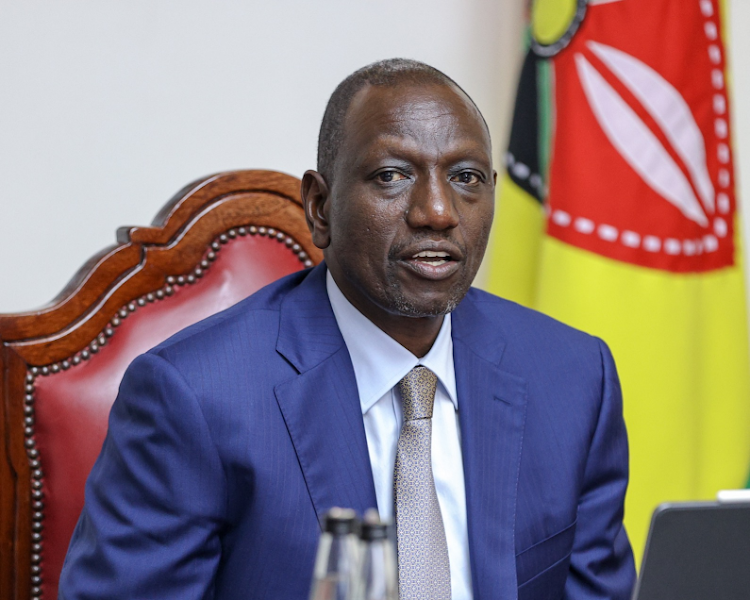
It is within this narrative contest that President William Ruto has demonstrated notable strategic clarity. Since assuming office, he has deliberately shifted public discourse away from perpetual grievance and ideological abstraction, towards performance, delivery and track record. Development outcomes, institutional reform, infrastructure and economic systems have been placed at the centre of political debate.
This reframing does not eliminate criticism, but it changes the terrain on which criticism must operate. Opponents are increasingly compelled to respond not with accusation alone, but with alternative records or governing blueprints. This was an absolutely smart move by Ruto and way ahead of narratives that will shape the journey to 2027.
Crucially, Ruto’s strategy has been reinforced by elite recruitment. Kenyan power is sustained by those who understand how institutions function. Governors, MPs, former ministers, bureaucratic operators and regional brokers form the operational backbone of political authority.
In this domain, the head of state currently leads. His administration has methodically absorbed large segments of the existing political class, weakening opposition capacity while strengthening his own machine. This consolidation reduces fragmentation and enhances governability, even as it provokes ethical debate.
Former President Uhuru Kenyatta appears to have recognised the enduring value of elite mobilisation and is repositioning himself through Jubilee. Often dismissed as politically exhausted, the party retains organisational memory, a recognisable brand and symbolic legitimacy in key regions.
Uhuru’s re-engagement has provided the party with renewed coherence and strategic relevance. Jubilee now possesses the potential to function as a bargaining platform, capable of influencing alliance formation and elite negotiation rather than merely offering commentary.
The extent of Jubilee’s leverage will depend on its ability to attract credible political actors who still command loyalty. Parties do not negotiate from nostalgia; they negotiate from organisational strength. Uhuru’s advantage lies in his resources, his deep understanding of state power, his international stature, and his residual authority among political elites who remain ideologically unanchored.
Yet President Ruto boasts comparable international clout and, as the sitting head of state, is better poised to grow it strategically and effectively over time.
Whether Jubilee emerges as a serious counterforce or a strategic intermediary will ultimately be determined by its recruitment discipline, but since Uhuru is not contesting the presidency and is likely to align with another candidate, the depth and durability of his influence in this process remain uncertain.
The opposition, however, remains uneven, particularly within the Orange Democratic Movement. ODM retains historical significance and emotional loyalty, yet it appears to be suffering from strategic drift.
The absence of a clear organisational centre has allowed undisciplined voices to dominate the public arena. Reckless talk, unanchored to policy or institutional logic, has weakened coherence and confused supporters. In a contest increasingly defined by structure and discipline, such disorder is costly.
There is a growing need for senior leadership within ODM to reassert control, to impose order, rebuild structures and clarify strategic direction. Without decisive intervention, ODM risks sliding into factionalism at a critical moment because, in politics, vacuums are quickly filled by ambition rather than strategy.
Equally urgent is ODM’s long term national identity and its unresolved position within the state. The party now occupies an uneasy space between opposition and government, yet in practice it is deeply and clearly embedded in the governing arrangement. This ambiguity has weakened internal coherence and blurred strategic purpose.
While Luo Nyanza remains ODM’s heartland, its historical strength has always rested on its capacity to function as a national party. The growing rivalry among leaders from the region risks narrowing that identity and anchoring the party in regional succession contests rather than national ambition.
To manage this transition, ODM must deliberately nurture a future national leader who is not necessarily Luo. This is not an abandonment of its base, but a recognition that a party so embedded in government must think beyond regional arithmetic.
Without firmer discipline, clearer structure and a more coherent national vision, ODM risks drifting into irrelevance, defined less by direction than by unresolved tension between memory and power. As Kenya moves deeper into the 2026–27 window, one reality is becoming increasingly clear.
The political actor who successfully integrates tribal arithmetic, financial muscle, elite recruitment, organisational discipline and a compelling national narrative will enter the election with decisive advantage.
At present, President Ruto leads in this configuration, not merely because of incumbency, but because of structural consolidation.





