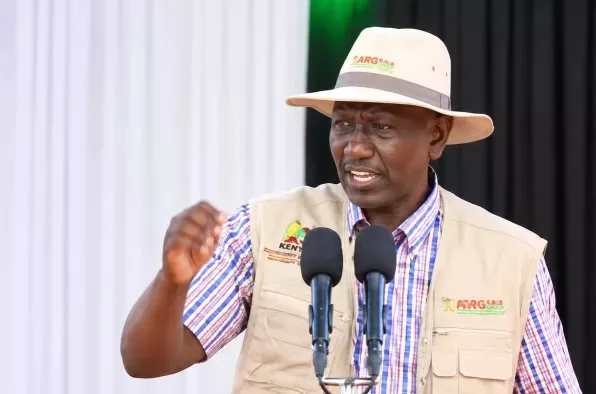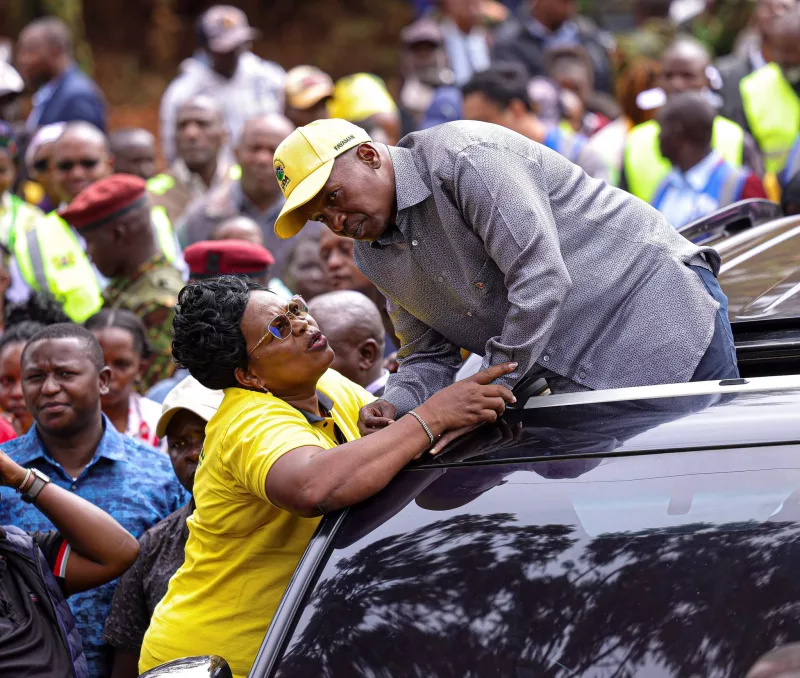
The 2027 election campaigns are on! Forget the IEBC calendar, or whatever the official campaign period should be. For all intents and purposes, the country’s electoral cycle has arrived early, and there will be no break until August 2027.
Incumbent MPs will make mere technical appearances henceforth, for back home in their constituencies, opponents will be running riot, and they’ll have to travel to the ground regularly to reverse and try to reverse the perceived damage.
You have to pity the Kenyan voter. As soon as he leaves the polling station on election day, the people he has elected, and those he hasn’t, all begin to fight over the next election. Consequently, the country remains on perennial election footing, accompanied by vicious and divisive rhetoric that just doesn’t seem to stop. The current poisoned environment is made worse by the absence of the enigmatic Raila Odinga, whose steady hand often calmed the political storms.
One of the 2025 events with the greatest impact on 2026 is the death of the former Prime Minister. A constant fixture in Kenyan politics for decades, Raila had become a colossus in national politics and a steady hand guiding his party and large base.
His ODM party, however, is nearing a massive implosion, with competing factions seeking to outdo each other in setting the agenda for the next elections.
There is an almost bizarre desire by President Ruto and his party to push the Raila Orange party into becoming an echo chamber, where anyone who disagrees with the ‘two-term’ re-election posture becomes an enemy deserving removal from the party.
This reason informs the unending controversy around ODM secretary-general Edwin Sifuna, who has flatly refused to back Ruto’s reelection in 2027, in sharp contrast with the position taken by rest of the party’s high command.
Incidentally, Raila’s death has somehow also led to the return of former President Uhuru Kenyatta, to the mainstream of Kenyan politics. Wildly cheered at every point of the Raila state funeral process, Uhuru was the earliest visitor to the graveside after burial, returning a day after to pay his respects. From then on, he has remained in the public space and ultimately got mired in the divisive politics.
It wasn’t long before Uhuru’s rock star treatment around the Raila crowds made the government and its supporters within ODM uncomfortable, leading to a shocking verbal attack on the former President by Homa Bay Governor Gladys Wanga, in the presence of President Ruto, at a football tournament in Homa Bay on December 28.
According to the ODM faction aligned with the broad-based government, Uhuru is rocking ODM by allegedly attempting to sponsor a different route to the 2027 polls.
The attacks on the former president were soon followed by a loud national discussion on what really happened in the 2022 election, once again dividing the nation, and particularly the ODM party, into two sides. There are those who believe Uhuru “played” the former premier and never really gave the requisite support for a real victory, and those who believe Uhuru did all he could, with only the incompetence and lethargy of the Raila team causing the loss to Ruto.
The postmortem itself has turned out to be just another slur contest. It is widely acknowledged that ODM is headed for a breakup, so the protagonists are simply hanging onto any available narratives to outdo each other, before they get to their points of no return.
You see, until now, no one has bothered to publicly analyse what went wrong for the Raila campaign in 2022, and the new voices now purporting to clear the air are only doing so for political expediency.
Be that as it may, the re-entry of Uhuru presents an unforeseen force that may influence events in a big way. The consensus across the country has always been that 2027 will be a big-money election, a contest of campaign war chests, so to speak. The secondary consensus has been that the joint opposition, even if it were to run one candidate, doesn’t quite have the resources to go to toe with President Ruto in a cash-intensive campaign.
However, Uhuru brings along not just one of the most powerful names in the country but also the resources and networks to back it. Before the former president’s reemergence in politics, the government and its broad-based allies within ODM loved to caricature ever opposing voice as dancing to the ‘Wamunyoro tune’, a reference to disgraced and impeached former DP Rigathi Gachagua. But in these past two months, the focus has turned to Uhuru, who clearly represents a more lethal national political force.
In the coming months, every political move by Uhuru will attract close scrutiny. Sifuna has already been accused of trying to sell the ODM party to the former president.
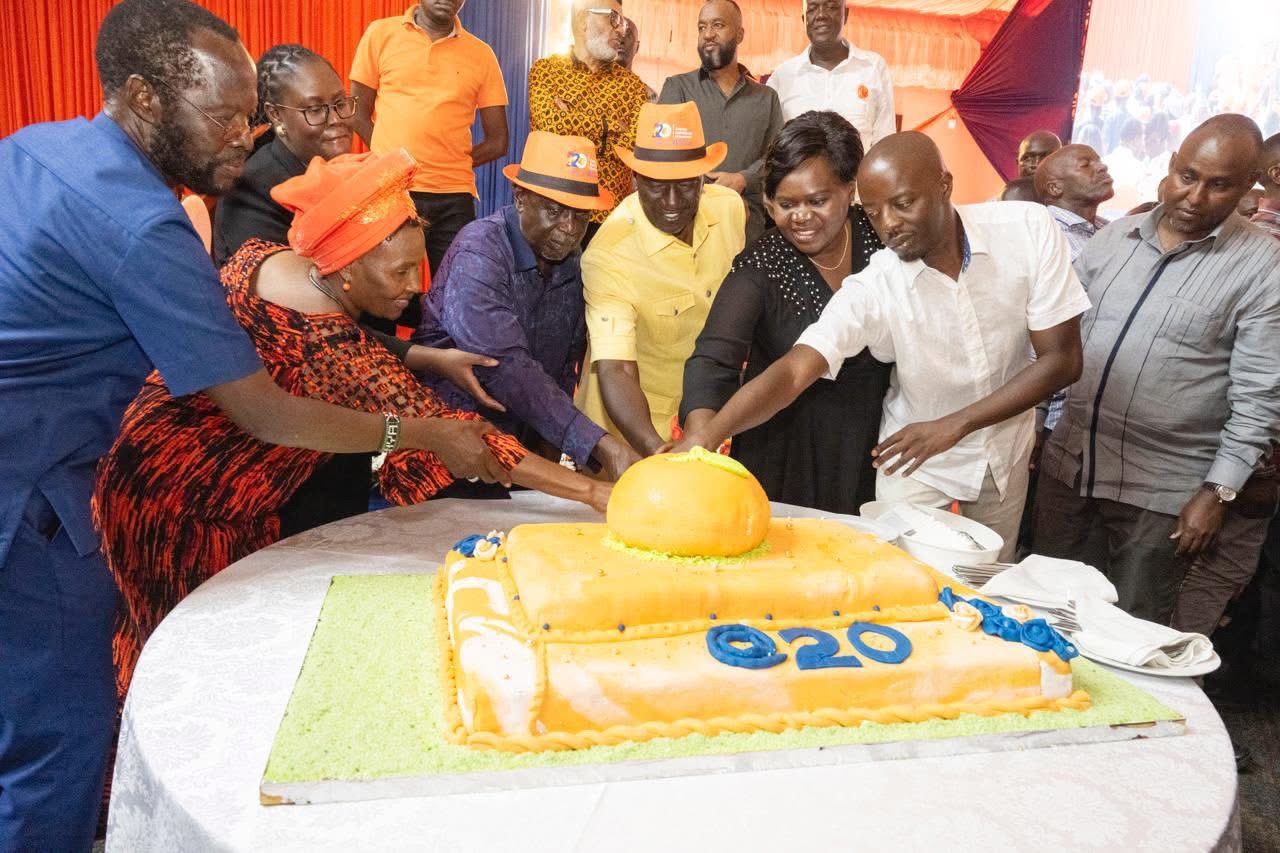
It is noteworthy that during the ODM @20 celebrations in Mombasa late last year, the ODM secretary general was the one who read Uhuru’s message to party members. The combination of the young and popular Sifuna, and Uhuru, a former president with deep pockets and wide networks, seems to shake the foundation of the Tutam plan.
It is important to mention that Uhuru is currently the party leader of Jubilee, which makes his official 2027 candidate the Jubilee one: former Interior CS Fred Matiang’i.
Given the skill and resilience with which Uhuru pushed disparate and diverse political forces to back Raila in 2022, there is no one more adept at laying the groundwork for an opposition coalition in 2027. I suspect the attacks targeting him are laced with heavy doses of panic from the broad-based actors, especially given the fact that Uhuru remains hugely popular in Luoland and may muddy the waters there.
This year, the political water will find its level. Incumbents holding onto undesirable tickets just to finish their term will begin to openly coalesce towards the parties on whose tickets they intend to run.
Well, many of them will be forced to make the verbal declaration early, because the danger with our politics is that the longer you take to unequivocally show your political direction to the electors, the faster opponents grab the opportunity in popular parties in the grassroots.
And the catch-up game is never guaranteed. Beyond the pushing and shoving in the current parties, political dynamics will lead to stampedes to more friendly formations and the migration itself isn’t too far away from beginning
At the time of penning this piece, there is sort of uneasy truce within ODM, in which the loud noises seeking the expulsion of SG Sifuna have dissipated, largely because Sifuna’s challenge to Minority leader Junet Mohamed to come clean on who contributed to the 2022 loss.
This call turned up the heat on the latter and led to calls for reconciliation within the party. However, interests within the party are now so sharply at variance that reconciliation at this point can only be temporary. Remember there is no Raila to bring together the leadership of his party.
This is the year when President Ruto’s do-or-die grab of Raila’s bases, especially the Luo Nyanza heartland, must happen, if he is to head into the 2027 election period with a large vote bloc to replace the lost Mt Kenya one.
Trouble is that there is still a reluctant portion of the Raila bases, not yet convinced that the Tutam agenda is representative of all. It doesn’t help that Ruto’s open preference for the Luo Nyanza base tends to alienate the other Raila bases in the rest of the country.
Almost on cue, the purveyors of the Tutam gospel tend to fashion it around the old Luo-Kikuyu tribal and political fault lines. And this is partly the reason why Uhuru’s popularity is an uncomfortable prospect for the broad-based people; it negates the narrative that Luo entry into the mainstream of power can only be at the expense of Kikuyus.
Indeed, the pursuit of the Luo vote bloc by the Kenya Kwanza administration has been matched by the political rhetoric aimed at both Uhuru and Gachagua, as if acknowledging they may eat Ruto’s lunch if not tamed.
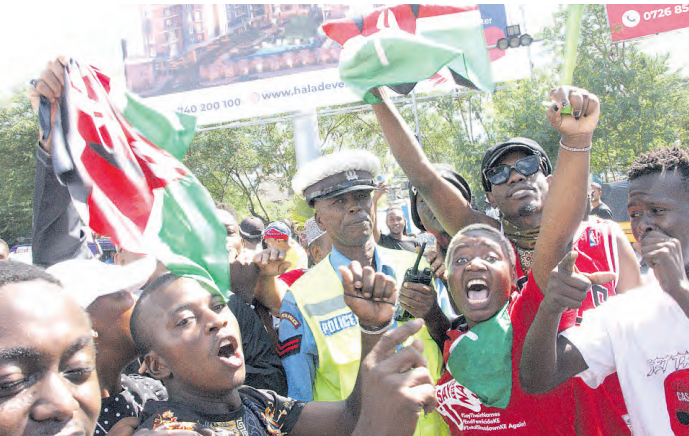
One aspect of 2025 that no one seems to talk about anymore is the Gen Z force of young people. The 2025 commemoration of the June 2024 Gen Z protests turned violent, as expected, but confirmed that beneath the surface still lay a large, despondent youth population whose grievances needed to be addressed for long-term stability.
Since June, that restive demographic has adopted a low profile, turning out less than they did in 2024. It would be interesting to see if they’ll come out this coming June and how it will all pan out.
Needless to say, if every June becomes an anniversary of the 2024 protests, then the 2027 version will happen merely weeks to the general elections. Essentially, this means that whatever resolutions come into play with the 2027 commemoration of the Gen Z riots will seep into the elections proper.
But before we get there, there is 2026 to worry about, and all signs are that both the leaders and the voters are intent on taking their positions early and entrenching them for the elections.
I therefore submit that the death of Raila, the return of Uhuru and the June 2025 commemoration of the Gen Z protests, make up a triumvirate of determinants that will set the political agenda in 2026, and possibly influence power plays ahead of the general elections.
Nevertheless, as stated at the beginning, the country will remain in campaign mode, and it will all get more intense by the day. We have to fasten our seatbelts, because the intrigues, drama and colour will be on another level. Whichever side you find yourself on, I hope 2026 comes with good tidings!