The political trajectory of Venezuela under Nicolás Maduro serves as a modern parable of governance gone awry. Systemic corruption, hyperinflation, mass migration and the erosion of democratic institutions and a profound disconnect from the populace — all stemming from poor leadership, are not unique to Venezuela.
This prompts a sobering question: if Africa faced its own ‘Maduro moment’, which of its nations and leaders could or would withstand the tremour?
The narrative of starting well and finishing poorly is a recurring tragedy, with power increasingly seen as a personal fiefdom rather than public trust. This creates a tinderbox of high unemployment, rampant inequality and public unrest.
Consider Zimbabwe, where the long shadow of Robert Mugabe’s rule left a legacy of economic paralysis. His successor, Emmerson Mnangagwa, promised a “new dawn”, yet the country remains gripped by hyperinflation, currency instability and crackdowns on dissent. The political elite is perceived to prosper while the majority battles poverty, a dynamic that fuels constant, if suppressed, unrest.
In South Africa, the African National Congress’s moral authority, forged in the anti-apartheid struggle, was weakened under former President Jacob Zuma. Rampant corruption within utilities, government tenders and law enforcement agencies crippled service delivery.
The result is a nation grappling with some of the world’s highest unemployment rates — particularly among the youth — plus regular loadshedding and widespread protests over the failure of basic services, a direct consequence of mismanagement and graft.
Similarly, Nigeria, Africa’s largest economy and most populous nation, exemplifies the paradox of immense potential stymied by poor governance. Despite its oil wealth, a significant portion of its population lives in extreme poverty. Security crises from Boko Haram to rampant kidnapping, coupled with controversial economic reforms such as removal of fuel subsidies, have sparked intense public anger. The elite, notoriously opaque in their dealings, appear insulated from the daily struggles of the masses, creating a deep well of frustration.
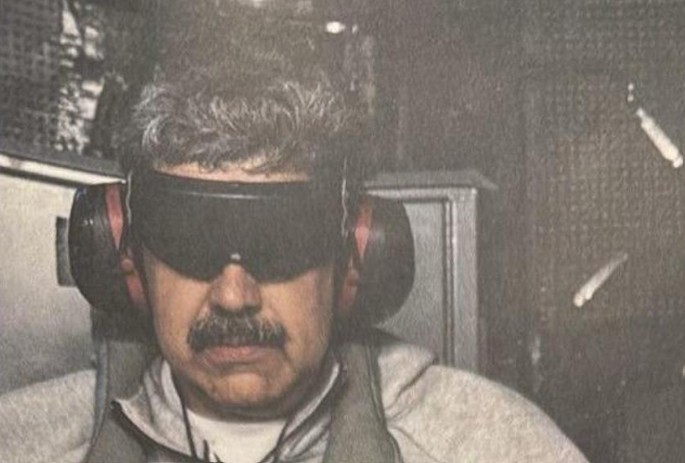
These examples appear similar to the happenings in Venezuela, which eventually led to Maduro’s removal by the United States.
While there is no consensus on the long-term outcomes of the US “intervention” in Libya, the fate of Muammar Gaddafi in 2011 likely marks the continent’s most intense ‘Maduro moment’ of this millennium. It demonstrated what can happen when a people are pushed to the brink and external powers decide to intervene.
The lesson is not about the righteousness of that intervention, but about the ultimate vulnerability of any leader who loses popular consent. Gaddafi seizure, whether viewed as liberation or collapse, hangs in the air as a silent warning: a populace suffering under corruption, unemployment and repression is a force that, once ignited, can lead to unpredictable and catastrophic change.
The question is whether today’s leaders, observing the chaos in Venezuela and the ruins of Libya, are privy to the historical forces that emerge when hope is extinguished.
Kenya stands at a crossroads of democratic maturity and the familiar challenges of inequality and corruption. The imperative, therefore, is to consciously build systems that resist a Maduro trajectory. The solution lies in a fundamental reorientation towards service.
Institutional integrity should take precedence over personal rule. Power must be depersonalised and invested in independent, well-resourced institutions — the judiciary, anti-corruption bodies, electoral commissions and public audit offices. Our history shows that when these institutions are perceived as credible, they can defuse political crises.
Further, economic inclusivity — especially addressing youth unemployment - is not just an economic goal but the single most important political stabilisation policy. This requires transparent, public-private partnerships focused on labour-intensive sectors, digital innovation and manufacturing, moving beyond a rent-seeking economy that benefits only a connected few.
Authentic public accountability is paramount. This goes beyond periodic elections. It means establishing genuine, transparent channels for citizen feedback, protecting a vibrant civil society and media and ensuring public officials are held to account for waste and corruption.
Leaders must be seen to live under the same laws and economic realities as their citizens. The antidote to a Maduro moment is a more equitable distribution of hope and opportunity within the nation itself. The choice is stark: serve the electorate faithfully, or risk being remembered as a cautionary tale.