Over the years, Kenyans have become more politically conscious, assertive and informed. Kenyan citizens increasingly understand that democracy, governance or even development is not merely about voting every five years but about continuous engagement, questioning leadership and demanding accountability.
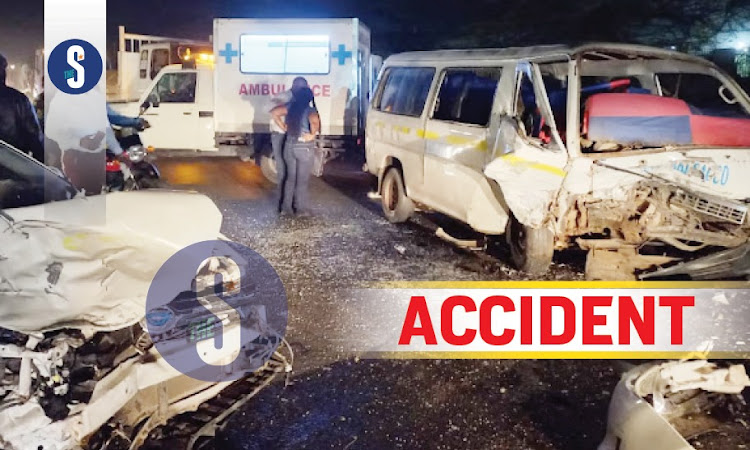
This is exactly why Kenyans on social media are questioning the whereabouts of Roads and Transport CS Davis Chirchir, especially during the past festive season, when our roads have become death traps, with road carnage reported everywhere, from major cities to smaller towns.
Worse still, up to this week when children are reporting to school and some people are coming from their hometowns and various holiday spots, road accidents are still being reported, gory images flood social media, with very little action and little show of empathy from the CS. Kenyans are therefore wondering, who is in charge of this very crucial ministry when everything is going haywire?
In response to the rising number of road accidents during the festive season, the Ministry of Roads and Transport only issued public safety messages urging Kenyans to exercise caution while travelling.
The CS called on motorists and passengers alike to prioritise road safety by using licensed and compliant public service vehicles and by cooperating with law enforcement officers on the roads. But this is mainly messaging and not very strict action, is this enough, especially when many accidents are reported?
One of the most significant features of leadership failure is the lack of disregard of human life, especially of its citizens. Very developed nations, treat their citizens as absolute treasures. One loss of life is loss of human capital, because one healthy human is an investment of the country. Ultimately, one healthy human translates into capital for the country.
This principle is evident in how Switzerland has handled the recent New Year’s club fire. From what was seen on mainstream media, authorities moved swiftly to secure the site, launch transparent investigations, communicate consistently with the public and offer support to victims and affected families.
Senior officials publicly acknowledged the tragedy, expressed empathy by condoling with families, praying and even taking flowers to the site. This is an example of good governance culture where human life is treated as a national priority, whereby protecting citizens is the first and most fundamental duty of the state.
Regard of human life by leaders is important. Back home in Kenya, similar or even worse than the Crans Montana tragedy, how can many die, heading to celebrate the festive with their families, and there is no state of the nation address. Is it that some deaths are more important than others.
When former Prime Minister Raila died he was accorded all the attention and dignity, yes, he was an important figure, but in egalitarian societies, for instance, all lives ideally matter and the show of empathy should be treated with equal proportion.
Unfortunately, being poor in oligarch driven societies, you only matter during populist campaign periods. Oligarchy stands for a system of government where power rests with a small, elite group of people, often the wealthy, military leaders, or powerful families, who rule for their own benefit rather than the public's.
This might be our reality, so crying for the CS of Roads and Transport to regulate the chaos happening in our roads is still a far cry, unless he proves us wrong.
The happenings on our roads this past festive therefore demands more than silence, platitudes, or blame-shifting. Kenyans demand leadership that treats every Kenyan life as sacred and non-negotiable.
The absence of the CS in the face of mounting fatalities is both a communication failure and a moral one. If leaders go quiet as citizens die, it can only prove that our lives as citizens are only important statistics for voting purposes, and not a development priority.
Practical measures could be such as, the government declaring road safety a national emergency during peak travel seasons, enforcing strict speed and alcohol regulations, deploying more visible and moral traffic police and technology-based monitoring where Kenya could work with bilateral partners, seriously and constantly audit road conditions and hold contractors and agencies accountable for unsafe infrastructure.
Public transport operators, such as matatus and long-distance buses must be regulated without compromise, driver training strengthened and real-time public updates issued during crises.
Above all, leadership must show empathy, through presence, action and accountability, because empathy is mandatory in public service, especially in unequal societies like ours.
Kenyans are no longer passive subjects, they are alert citizens and they are crying out on the only platforms available to them like social media. They are watching, questioning and demanding answers. And as we wish each other a Happy New Year, it is worth asking what exactly we are celebrating if lives continue to be lost so casually.
If those entrusted with safeguarding lives continue to abdicate responsibility, history will record this silence as complicity. Come the next election cycle, many citizens shall remember, vote wisely and refuse to toast to a future where lives bleed in many ways while leadership looks the other way.