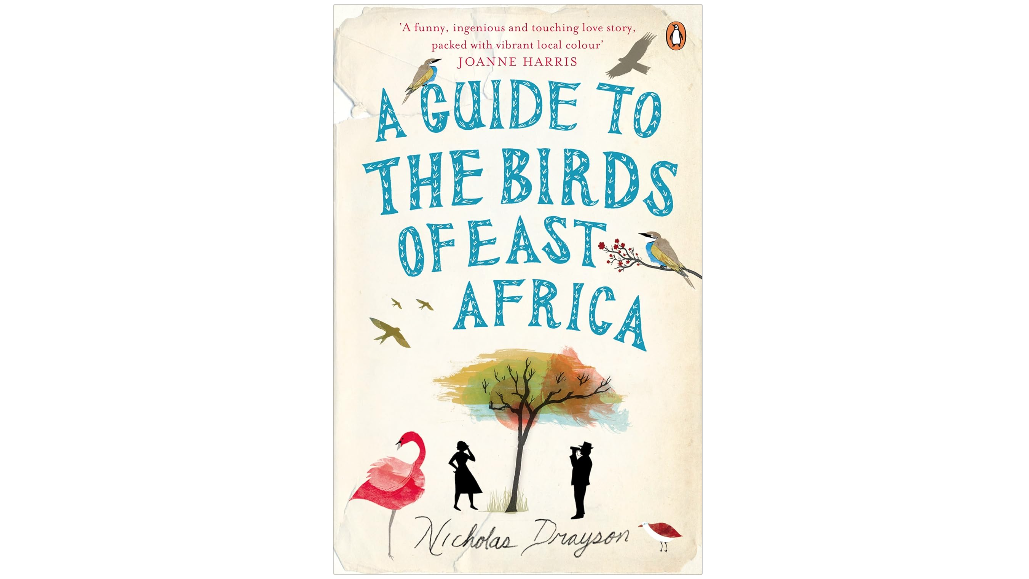
Set in the warm, bustling heart of Nairobi, this story takes what seems like a genteel hobby, birdwatching, and turns it into a tender, funny and surprisingly suspenseful meditation on love, ageing and the quiet courage of the unremarkable man.
At its centre is Malik, a retired civil servant and a man of impeccable manners and modest habits. He spends his mornings birdwatching and his evenings attending the East African Ornithological Society meetings, where his true passion is not just for the lilac-breasted roller or the grey-capped warbler, but for Rose Mbikwa, the graceful widow who leads the society’s outings.
Malik has loved her quietly for years, admiring her from a respectful distance. That is, until his old school rival, the boisterous and well-connected Harry Khan, returns to town. Suddenly, Malik’s peaceful world tilts off its axis when the two men agree to settle their romantic rivalry not through duels or declarations, but through a bird-spotting competition. The one who sees the most bird species in a week will win the right to invite Rose to the grand Nairobi Hunt Club Ball.
It’s a premise so quaint it could easily become farce, yet the author makes it shimmer with emotional depth and gentle humour. Beneath the feathers and binoculars lies a quietly profound exploration of human dignity and the courage to step out from the shadows. Malik, an unassuming man often overlooked by society, becomes the vessel through which we rediscover the thrill of small triumphs. As the author writes, “Courage comes in many forms, and sometimes it is simply the act of putting one’s heart at risk.”
The author’s Nairobi is vividly alive, not just in its natural beauty but in its layered humanity. The city pulses with contradictions: colonial remnants and modern ambition, chaos and calm, extravagance and humility. The author paints this landscape with a birdwatcher’s precision and a poet’s tenderness.
The prose flits from the comic to the poignant with ease, much like the sunbirds that populate the novel’s pages. His descriptions of birds are lush without being indulgent, often mirroring the emotional undercurrents of the human drama.
The writing style is deceptively simple yet quietly masterful. His tone feels like a friend whispering a story over a cup of tea: conversational, humorous and tinged with affection for his characters. He has an eye for the eccentric details that make people memorable: the way Malik’s hair “still obeyed the rules of the colonial service”, or how Harry Khan’s booming laugh “could startle the starlings from a tree”. This gentle wit softens the edges of melancholy and makes the reader fall in love not only with the story but with the rhythm of the author’s storytelling.
The novel’s charm also lies in its moral clarity. Malik’s humility stands as a quiet rebuke to modern cynicism. He is a man who believes that kindness and decency are not outdated virtues but enduring strengths. When he reflects, “There are some pleasures in life that do not need to be shared to be enjoyed,” we glimpse the serene wisdom that anchors his world, and perhaps, the author’s own philosophy.
Yet for all its warmth and wit, A Guide to the Birds of East Africa is not without its flaws. Some readers may find its pace almost too gentle, like a stroll when one expects a chase. The bird competition, which should pulse with tension, often unfolds with polite restraint. For those craving high drama or explosive revelations, the author’s understated style might feel too airy.
By the final pages, A Guide to the Birds of East Africa leaves you with the soft ache of nostalgia — for simpler days, for lost loves, for small acts of bravery that often go unseen. It’s a novel about noticing birds, people, moments, and about finding meaning in the quiet spaces between them.
The author, much like his protagonist, never raises his voice; he doesn’t need to. His story hums with quiet wonder, reminding us that love, in its truest form, doesn’t always arrive with fanfare. Sometimes, it perches unnoticed on a nearby branch, waiting patiently to be seen.
In a world that celebrates the loud and the bold, A Guide to the Birds of East Africa is a gentle, gleaming gem, a novel that whispers instead of shouts, yet lingers in your memory like the distant call of an unseen bird.