When Singapore separated from Malaysia in 1965, few observers believed the tiny island state could survive, let alone prosper.
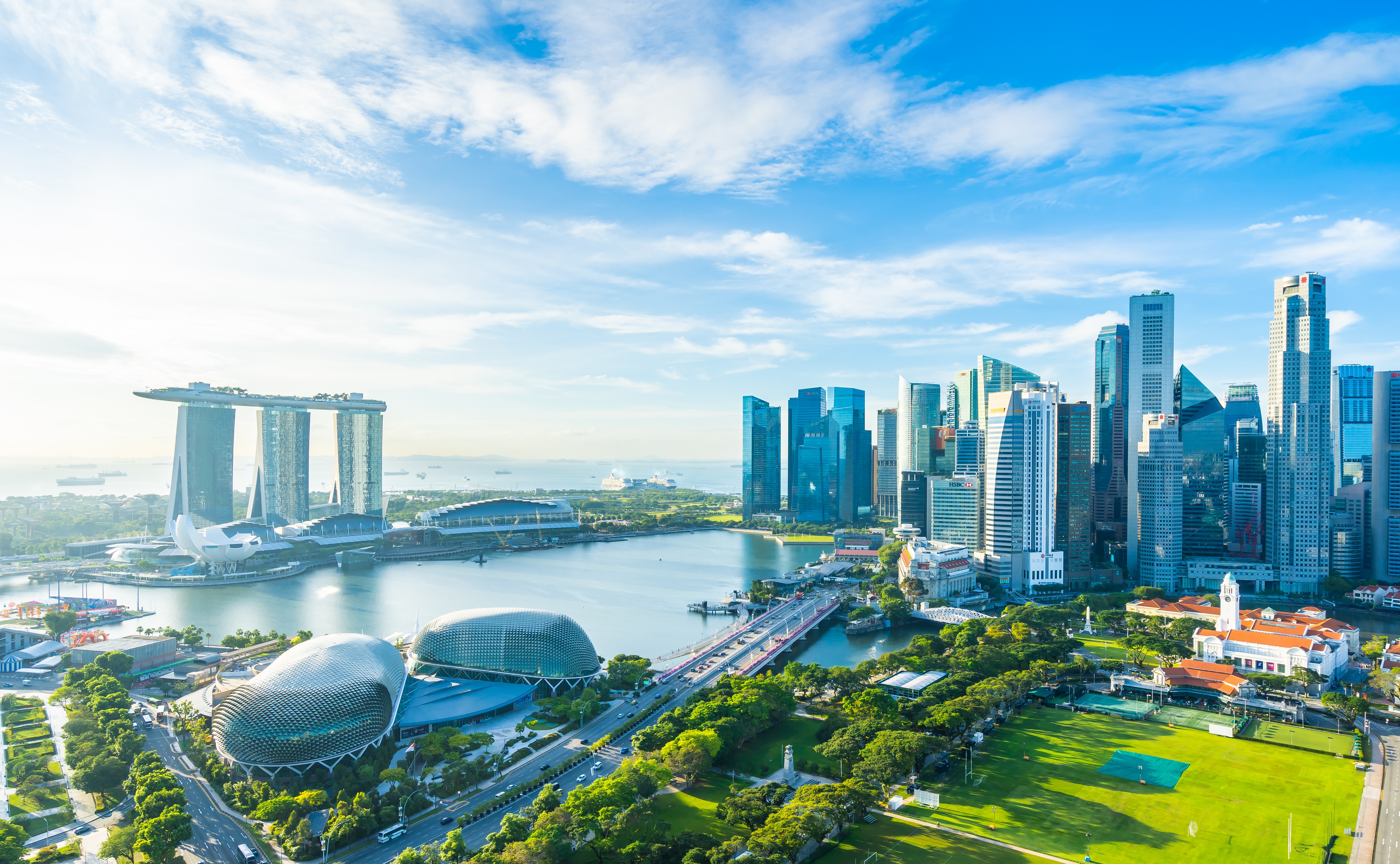
It had no natural resources, no hinterland, high unemployment, deep ethnic tensions and limited domestic capital. Six decades later, Singapore is one of the world’s richest countries by income per capita, a global financial hub and a benchmark for efficient governance.
The transformation did not happen by chance. It is widely credited to deliberate leadership choices, strong institutions and long-term economic planning under the country’s founding prime minister, Lee Kuan Yew, and a small team of technocrats who shaped modern Singapore.
For Kenya, which continues to search for a sustainable growth model amid debt pressures, unemployment and rising living costs, Singapore’s experience remains a frequent reference point.
President William Ruto has repeatedly spoken about productivity, industrialisation, export-led growth, housing, infrastructure and the need for discipline in public finance.
These themes echo ideas that underpinned Singapore’s rise, although the contexts are different. Understanding how Singapore was built, and what made it work, offers a useful lens for assessing Kenya’s current economic debate.
Singapore at Independence: A Crisis State
At independence in 1965, Singapore faced an existential crisis. The British were withdrawing their military presence, which accounted for a significant share of jobs.
The domestic market was tiny. Unemployment was high, housing shortages were severe and social unrest was common. There was no oil, no minerals and no fertile land to fall back on.
Lee, who had been prime minister since self-government in 1959, concluded that survival depended on making Singapore indispensable to the global economy.
The state would have to be open to trade, attractive to investors and ruthlessly efficient in how it governed itself. This diagnosis shaped every major policy decision that followed.
Leadership and the centrality of the state
Lee is widely credited as the principal architect of modern Singapore, not because he acted alone, but because he set the direction, enforced discipline and empowered capable technocrats.
Key figures such as Goh Keng Swee, the chief economic strategist, and S. Rajaratnam, who shaped foreign policy, played central roles. But the system worked because political authority and policy execution were tightly aligned.
The government adopted a highly interventionist but market-oriented approach. The state did not replace markets, but it guided them. It planned land use, invested heavily in infrastructure, directed industrial priorities and maintained strict control over public institutions. At the same time, it welcomed foreign capital, protected private enterprise and integrated fully into the global economy.
Building an export-oriented economy
One of the earliest and most consequential decisions was to pursue export-oriented industrialisation. Instead of trying to protect local industries behind tariffs, Singapore positioned itself as a manufacturing and logistics base for global companies.
The Economic Development Board, established in 1961, actively courted multinational corporations, offering tax incentives, reliable infrastructure and policy certainty.
Factories producing electronics, chemicals and precision engineering goods were set up to serve global markets. Over time, Singapore moved up the value chain, shifting from labour-intensive manufacturing to high-tech industries, finance and services.
This continuous upgrading was deliberate and state-led, based on long-term planning rather than short-term political cycles.
Infrastructure as economic strategy
Singapore invested early and heavily in infrastructure, treating it as an economic tool rather than a political trophy.
Port expansion, airport development, roads, public transport and utilities were planned with efficiency and future demand in mind. Changi Airport and the Port of Singapore became global hubs, reinforcing the country’s role in international trade.
Land, which was extremely scarce, was tightly managed through state ownership and long-term planning.
The Land Acquisition Act allowed the government to assemble land quickly for public purposes, keeping costs low and preventing speculative distortions. This enabled rapid industrial and housing development without prolonged legal battles.
Housing, labour and social stability
Economic growth was paired with social engineering aimed at stability. Through the Housing Development Board, the government built large-scale public housing estates, providing affordable homes to the majority of citizens. Home ownership was encouraged, tying citizens’ economic security to national stability.
Labour relations were carefully managed. Trade unions were brought into a corporatist arrangement that prioritised industrial peace and productivity over confrontation.
Wages were linked to productivity, and labour laws were designed to reassure investors while protecting basic worker rights. This created a predictable industrial environment, which was critical for long-term investment.
Anti-corruption and institutional discipline
Perhaps the most distinctive feature of Singapore’s model was its intolerance for corruption. Anti-corruption laws were strictly enforced, regardless of rank.
Public officials were well paid, but also held to high standards of accountability. The civil service was recruited and promoted on merit, not patronage.
This created institutions that were trusted by investors and citizens alike. Contracts were enforced, policies were consistent and decisions were implemented efficiently. Over time, this institutional credibility became one of Singapore’s strongest economic assets.
Kenya and the Singapore comparison
Kenya’s circumstances differ significantly from Singapore’s. Kenya is geographically large, agriculturally endowed and socially diverse.
Its political system is more pluralistic, with competitive elections and devolved governance. However, the comparison persists because Kenya, like Singapore in the 1960s, faces the challenge of turning potential into productivity.
President William Ruto has repeatedly argued that Kenya’s growth must be driven by production rather than consumption, exports rather than imports, and jobs rather than handouts.
His administration has emphasised housing, manufacturing, infrastructure, agricultural value addition and private-sector-led growth. These themes resonate with Singapore’s early strategy.
The Affordable Housing Programme, for example, echoes the idea that housing can be both a social and economic policy, creating jobs while addressing urban needs.
The push for industrial parks, special economic zones and export processing zones reflects an attempt to attract investment and boost manufacturing. Similarly, the focus on fiscal discipline and revenue mobilisation reflects an awareness that macroeconomic stability matters.
Where the differences matter
However, Singapore’s experience also highlights the difficulty of translating rhetoric into results. Singapore’s success rested not just on policy announcements, but on execution, discipline and institutional coherence.
Decisions were insulated from short-term political pressures, and policy reversals were rare. Kenya’s political economy, shaped by electoral competition and devolved power, makes such insulation more difficult.
Corruption and bureaucratic inefficiency remain widely cited challenges that, if unaddressed, risk undermining investor confidence and raising the cost of doing business.
While Kenya has strong laws and institutions on paper, enforcement in some cases has been uneven, according to public records and policy reviews.
Singapore’s lesson here is not simply about being tough on corruption, but about building systems that reward integrity and competence consistently over time.
The role of leadership and consensus
Lee Kuan Yew’s leadership style was controversial, often criticised as authoritarian. But even critics acknowledge that he built a strong national consensus around development priorities. Citizens were asked to make sacrifices, but the state delivered results in return.
In Kenya, President Ruto operates in a more open political environment, where consensus must be negotiated rather than imposed.
This makes the task harder, but not impossible. The Singapore example suggests that clarity of direction, policy consistency and credible delivery matter as much as ideology.
Lessons, not templates
Singapore is not a template that Kenya can copy wholesale. Its size, history and political system are unique. But its experience offers lessons that remain relevant: the importance of export competitiveness, the centrality of institutions, the value of long-term planning and the need for leadership that aligns words with action.
As Kenya debates its economic future, references to Singapore should go beyond admiration. They should prompt hard questions about governance, execution and trade-offs.
Singapore grew fast because it made difficult choices early, enforced them consistently and measured success by outcomes, not promises.
Whether Kenya can do the same will depend not just on policy design, but on the political will to see reforms through, even when they are uncomfortable. That, more than any slogan, is the enduring lesson from the country that Lee Kuan Yew helped build.
Francis Mureithi is the Radio Africa Group Digital Editor