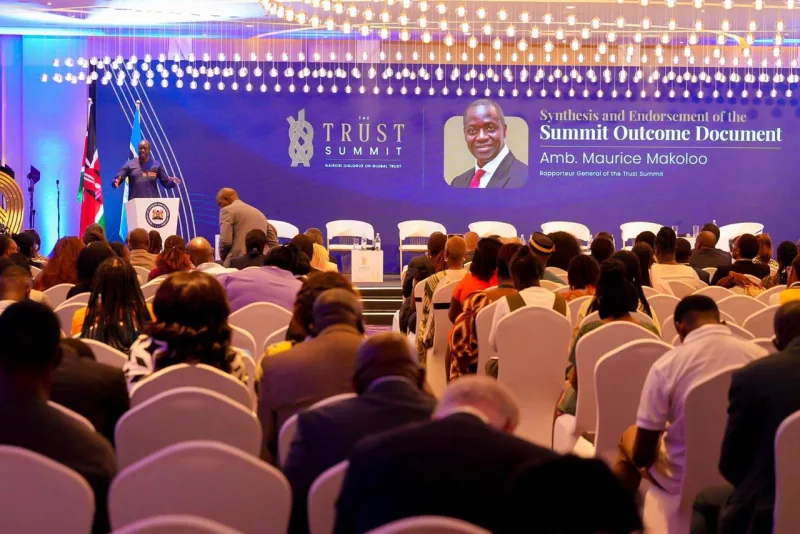
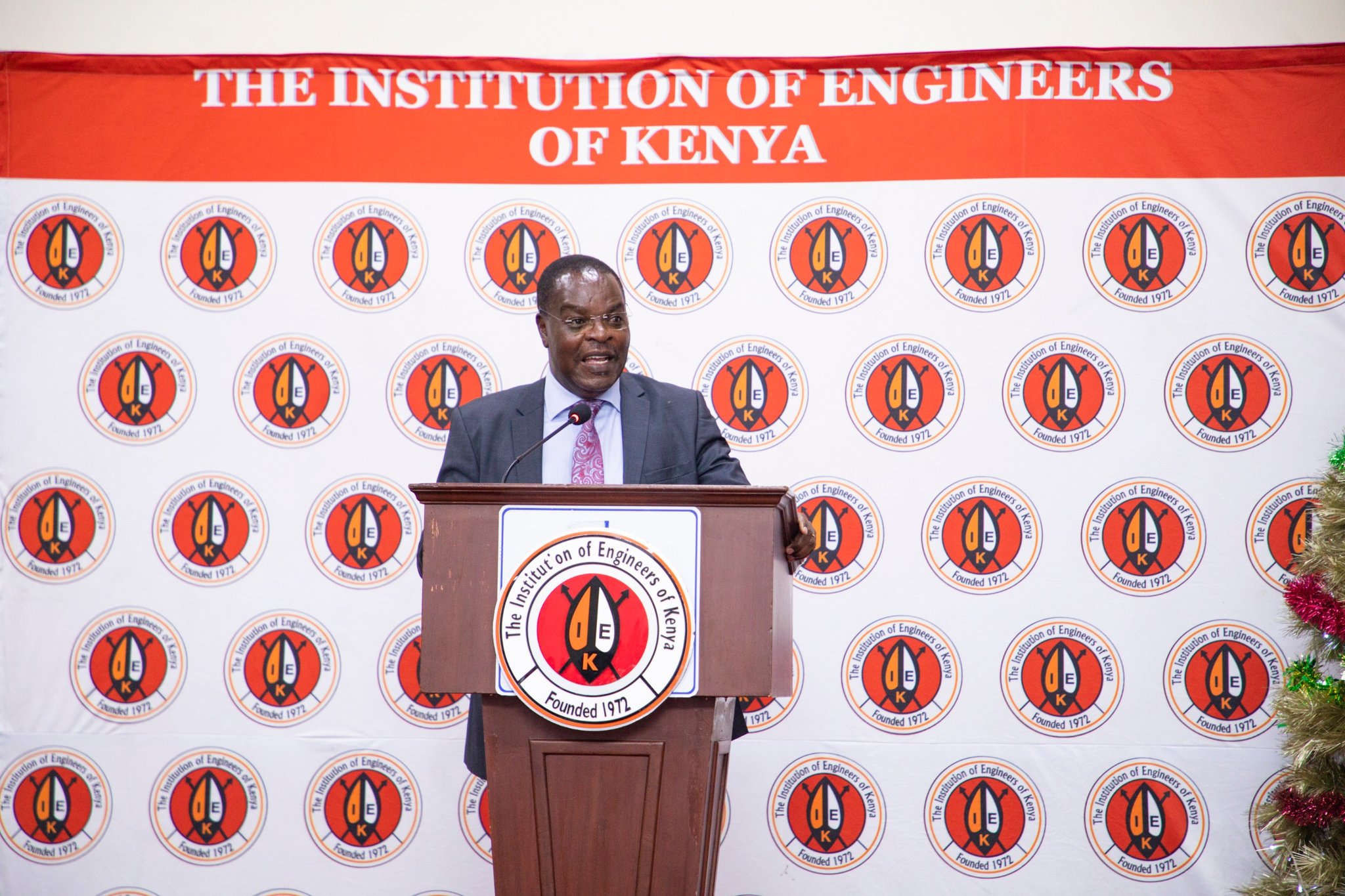
 EACC David Oginde during an event in Nairobi/COURTESY
Engineers have been urged to take a firm stand against corruption, with leaders in the profession warning that unethical conduct poses a serious threat to Kenya’s economic stability, infrastructure development and public trust.
Ethics and Anti-Corruption Commission (EACC) chairperson David Oginde cautioned engineers against becoming conduits of graft.
Speaking during the Institution of Engineers of Kenya (IEK) annual gala dinner in Nairobi, Oginde likened corruption to termites that silently destroy a structure from within.
“Corruption is like a termite. It does not attack a building from the outside; it eats it slowly from within. By the time you realise what is happening, the entire structure has collapsed,” Oginde said. According to Oginde, as professionals in the construction and infrastructure space, engineers must understand that integrity is not optional.
He noted that corruption in infrastructure projects often results in inflated costs, substandard work, stalled developments and erosion of public confidence, adding that engineers bear a personal responsibility to uphold ethical standards in their practice.
IEK President Eng. Shammah Kiteme on his part said the annual gala dinner provided an opportunity for engineers to reflect on the year gone by as they prepare for the challenges ahead.
“So much has happened. Engineers have been involved in numerous projects across the country, from design and construction to maintenance of critical infrastructure,” Kiteme said.
“We came together to celebrate engineers and the role they continue to play in national development.”
He said the institution has become increasingly vocal on policy advocacy, governance and the future of infrastructure development in Kenya.
While welcoming the government’s ambitious development agenda, including plans to scale up power generation from about 3,200 megawatts to 10,000 megawatts, expand transport and logistics networks, and strengthen human capital, Kiteme raised concern over what he termed the marginalisation of Kenyan engineers in major infrastructure projects.
“Research has shown that about 85 per cent of mega infrastructure projects in this country are handled by foreign firms,” he said.
“This has effectively turned Kenyan engineers into spectators in projects being implemented in their own country.”
He noted that the trend persists despite Kenya being “literally a construction site,” with multiple ongoing projects that could absorb thousands of local professionals.
Kiteme also called for stronger self-regulation within the profession, saying lapses in practice and oversight have contributed to quality and governance challenges in the sector.
He further proposed the establishment of an infrastructure advisory office within the Office of the President, arguing that while infrastructure is central to Kenya’s development agenda, there is a gap in technical advisory capacity at the highest levels of decision-making.
“There is very aggressive and welcome focus on infrastructure from the Office of the President,” he said.
He warned that appointing non-engineers to head institutions with fundamentally technical mandates could have far-reaching consequences.
“With the right expertise and data-driven approaches, infrastructure decisions can be made far more effectively than what we are seeing today,” he said.