I have discriminated against women in hiring. Not out of prejudice, but out of arithmetic. Years ago, when I owned a pharmaceutical company, I found myself consciously employing more men than women because every female employee of childbearing age represented a potential four-month maternity absence I could not afford. It was economic rationality. It was also unjust.
Today, I run a different business. My current company employs six people, all women. I made that choice deliberately. So, when I say Nairobi county's new menstrual leave policy is flawed, I am not arguing against supporting women. I am warning that this policy, as designed, will punish employers like me who already do the right thing.
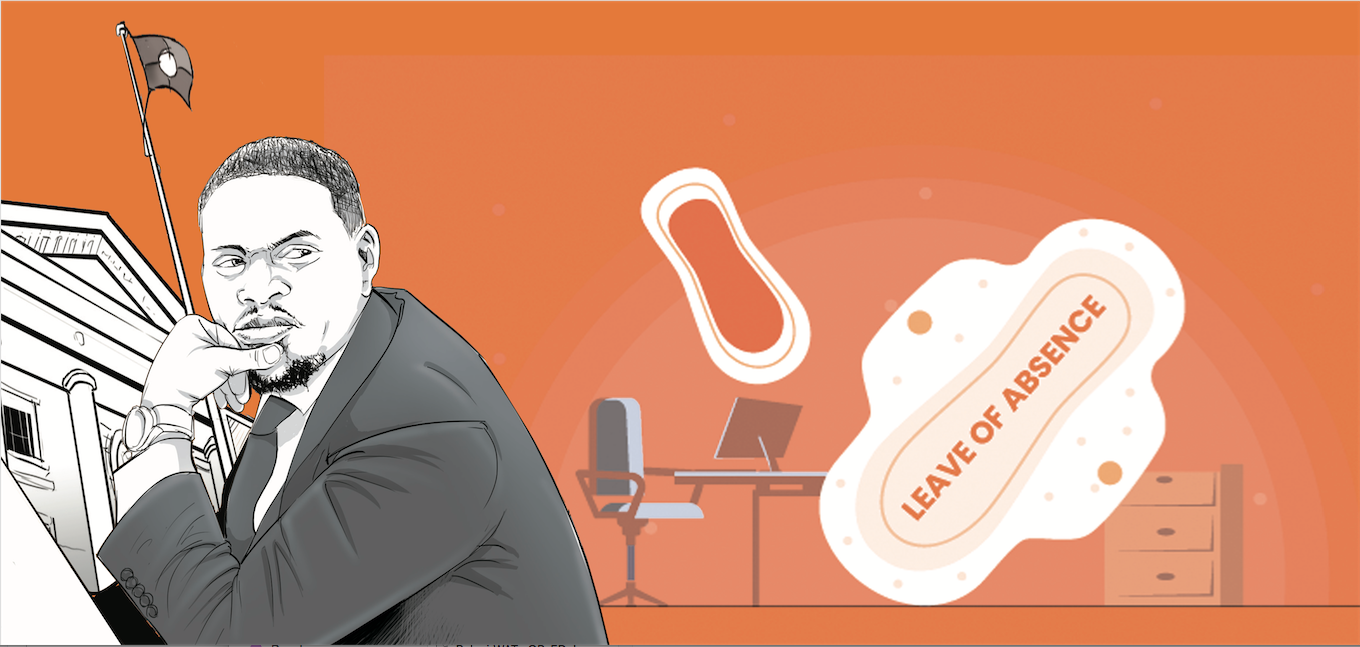
Governor Sakaja's cabinet has approved two paid menstrual health days monthly for female county employees, a first in Kenya. The medical rationale is sound: 65 to 80 per cent of women experience menstrual pain, with many suffering symptoms that genuinely impair work. This is a real health issue too long shrouded in stigma. But good intentions do not guarantee good outcomes.
Let me be clear: I am not minimising this pain. As a physician, I have treated patients debilitated by dysmenorrhea and endometriosis. The suffering is real, it is undertreated and it deserves recognition. My argument is not with the problem. It is with this particular solution.
Let me show you the mathematics from where I sit. If this policy extends to the private sector: six employees, two days monthly, twelve months. That is 144 additional paid leave days annually, the equivalent of losing one full-time employee for over six months every year. For an SME operating on thin margins, that is potentially the difference between growth and closure.
In practice, not every woman will take both days every month. But here is the critical point: employers make hiring decisions based on perceived cost, not actual cost. The mere existence of the entitlement changes the calculus, regardless of uptake. A policy that creates a legal right to 24 additional leave days marks every woman of reproductive age as potentially more expensive, whether she claims a single day or not.
"You are not hurting businesses that refuse to hire women. You are hurting the ones that already do."
Now consider an employer who has not made the choice I have. Facing two equally qualified candidates, they will see the woman as carrying a significant, recurring cost that the man does not. The rational response, though illegal and immoral, is predictable: hire fewer women, promote fewer women, pay women less to offset anticipated absences.
This is not speculation. Japan has had menstrual leave since 1947, providing 78 years of evidence. The results are damning: Employers openly admit to avoiding hiring women because of the additional cost. Research across multiple countries confirms that sex-specific employment policies, however well-meaning, reinforce the stereotype that women are less reliable employees.
With maternity leave, there is a solution: mandate equal paternity leave. If both parents might disappear for months after childbirth, the discriminatory incentive vanishes. This is what the Nordic countries understood. In Sweden, each parent has 90 non-transferable days. In Norway, parental benefits come from tax revenue, not individual employers. When both sexes carry equal "risk" and costs are socialised, hiring becomes gender blind.
But menstruation has no male equivalent. You cannot mandate that men also take two days off monthly. The asymmetry is biological and immutable. And Kenya, unlike Norway, has no social insurance fund for this. Employers bear the cost alone.
If the county genuinely wants to support menstrual health without entrenching discrimination, here is what must happen. First, fund the leave through a pooled mechanism: a small levy on all employers paying into a health fund, with reimbursement for actual leave taken, similar to how NSSF socialises pension costs.
Second, promote "menstrual flexibility" rather than rigid leave: remote work options, flexible hours and generous sick leave available to all employees. When everyone can access flexibility, no one is penalised for using it. Third, track the data. Monitor hiring patterns, promotion rates and wage differentials before and after implementation.
Nairobi county can implement this for its own workforce; government does not face the same survival pressures as private enterprise. But policy tends to migrate from public to private sector. When that conversation begins, remember who pays the price for unfunded mandates: not the employers who never hired women in the first place, but those of us who built businesses around them.
I applaud Governor Sakaja for breaking the silence on menstrual health. But I did not employ six women so that policy could make that choice economically irrational. Support the principle. Fix the mechanism. Or watch the private sector do quietly what I once did openly and hire more men.
Surgeon, writer and advocate of healthcare reform and leadership in Africa