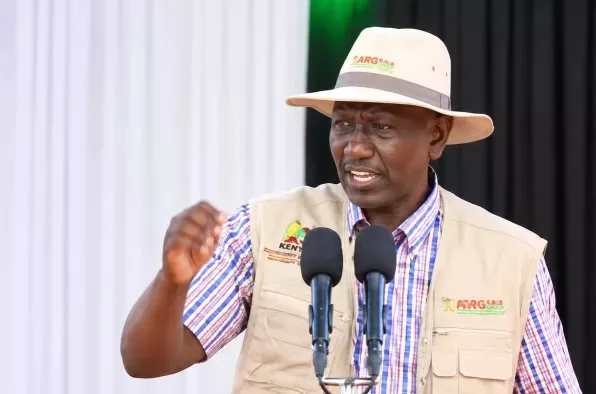
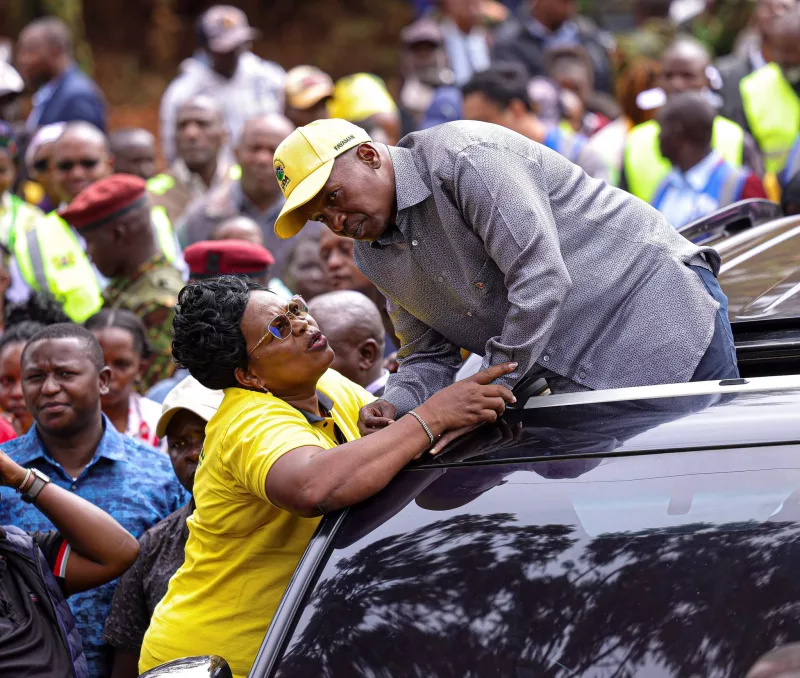
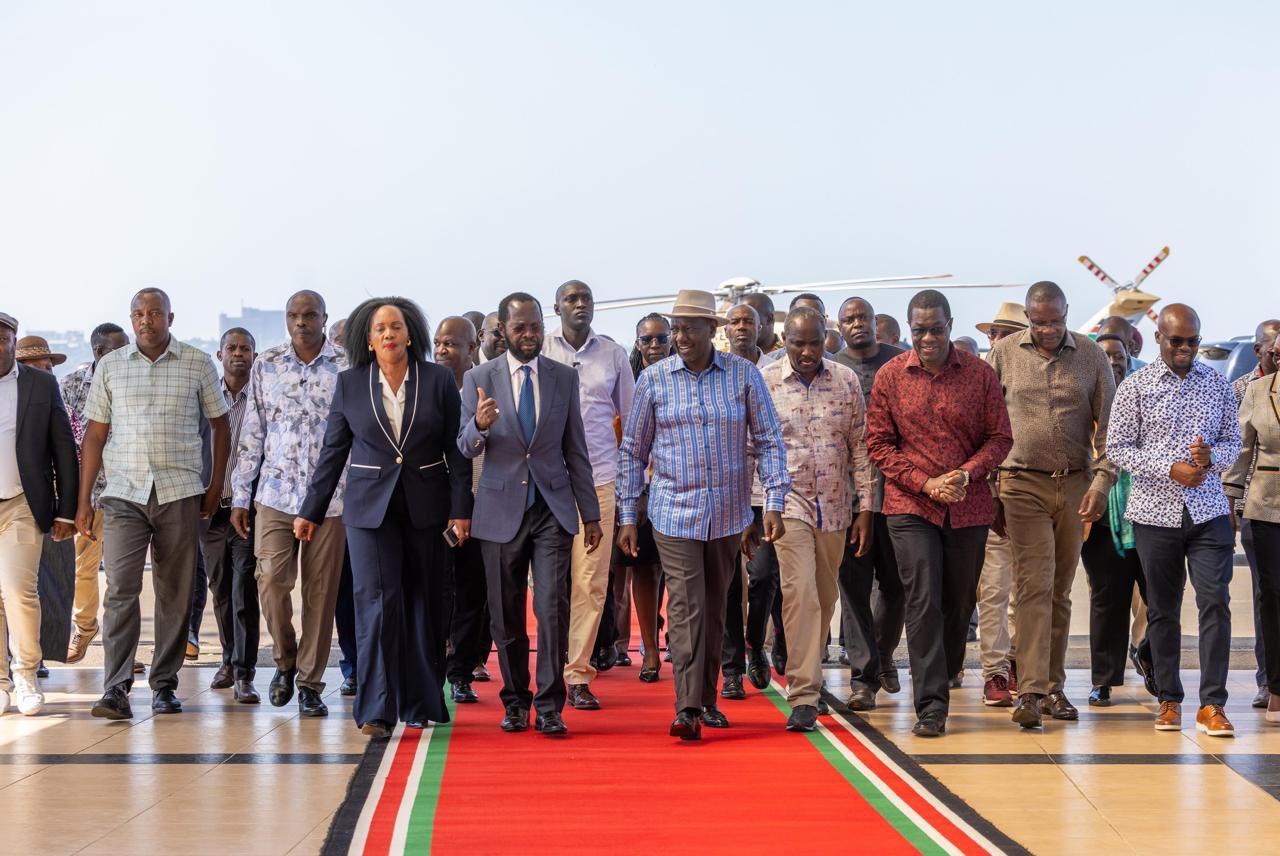
 President Williams Ruto flanked by top state officials during his working tour of the Nyanza Region, mid
this year /HANDOUT
President Williams Ruto flanked by top state officials during his working tour of the Nyanza Region, mid
this year /HANDOUT
For more than six decades after independence, Nyatike Constituency existed at the periphery of Kenya’s political imagination remote, resource-rich, but largely ignored.
No sitting president ever set foot here. That reality changed under President William Ruto.
In under two years, President Ruto has visited Nyatike three times an unprecedented political statement in itself.
These visits are not just ceremonial they are a deliberate disruption of Kenya’s long-standing Nairobi-centric politics and a signal that even the farthest corners of the republic matter.
Nyatike, home to about 200,000 people, sits at a strategic crossroads bordering Tanzania and Uganda.
It hosts Migingo Island, thrives on Lake Victoria’s fisheries, holds mineral wealth in Macalder, and is anchored by the perennial Kuja River. Yet despite this abundance, poverty, poor infrastructure, and state neglect have defined daily life for generations.
Ruto’s first visits in 2024 and 2025 shattered that silence. He met fisherfolk on the shores of Lake Victoria, miners in Macalder, and communities long excluded from national development conversations.
Promises followed—investment in fishing cooperatives, mineral processing, road upgrades, and harnessing the Kuja River for agriculture and energy under the Bottom-Up Economic Transformation Agenda (BETA).
His return on December 17, 2025, during the Luo Festival, carries deeper symbolism.
President’s visit to Thimlich Ohinga, a UNESCO World Heritage Site, elevates Nyatike from the margins to the global stage.
This ancient stone settlement is not just a cultural landmark; it is a potential tourism engine that could create jobs, preserve heritage, and inject dignity into local livelihoods.
Critically, these visits have reframed Nyatike as an economic frontier rather than a forgotten outpost.
More than 10,000 fishers depend on Lake Victoria, yet post-harvest losses exceed 30% due to weak cold-chain infrastructure. Macalder’s minerals gold and copper remain largely dormant decades after colonial extraction.
The Kuja River could irrigate farms, supply clean water, and support sand harvesting for the region’s construction boom.
Ruto’s repeated presence suggests intent. By returning again and again, he challenges the old model where leaders appeared once during campaigns and vanished thereafter. That said, symbolism alone will not fill potholes or classrooms.
Nyatike’s challenges remain stark. Roads are often impassable, cutting off markets and services. Only about 18.6per cent of residents historically access clean water.
Schools, especially junior secondary, lack teachers, furniture, and basic facilities, dragging enrollment and performance down.
Artisanal miners face license suspensions and violent clashes, while fishermen continue to report harassment by Ugandan and Tanzanian security forces around Migingo despite bilateral agreements.
These realities temper optimism with urgency. The success of Ruto’s Nyatike engagement will be measured not by the number of visits, but by delivery, tarmacked roads like Nyakweri–Sori, regulated mining that protects jobs and the environment, joint lake patrols that secure livelihoods, and real investment in education infrastructure.
Still, context matters. No other president before him crossed this bridge. Ruto did. That alone has altered Nyatike’s political standing and restored a sense of national belonging long denied.
Since 1963, Nyatike has produced neither a Cabinet Secretary nor a Principal Secretary.
Representation at the highest levels is not charity it is justice for a constituency that contributes fish, minerals, sand and strategic borders to the nation.
For a constituency long consigned to the shadows, these visits have restored something powerful: hope and the belief that Nyatike’s resources, heritage and people finally count in Kenya’s future.
The writer is (CHRP-K) Lawyer and Human Resource Professional