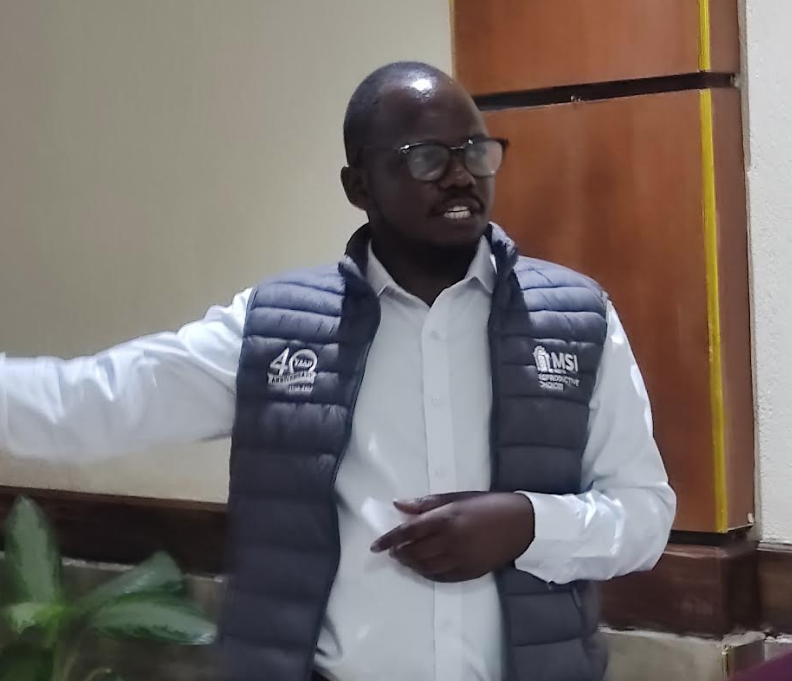
 Innocent Wangila, MSI's evidence to action officer during the launch of the report on Thursday /CLARET ADHIAMBO
Uptake of permanent methods of family planning such as tubal ligation and vasectomy in Kakuma and Kolobeyei wards in Turkana county is next to zero, a new report has shown,
The report by Maristopes International (MSI) says of the 28 facilities surveyed, only three facilities in Kakuma offered tubal ligation while none offered vasectomy.
It says long-term methods such intrauterine devices (IUCDs) also have low uptake and inconsistent availability across healthcare settings compared to other contraceptive methods.
“The proportion of facilities that indicated that their staff have been trained on contraception in Kakuma of 79.2 per cent is higher than the 25 per cent of facilities in Kalobeyei that indicated that their staff had received contraception training,” the report says.
The report cited lack of refresher training on modern methods of family planning as one of the major gaps.
“We still require training on preferences of family planning methods on how to select one because most of the clients complain about the side effects,” a health service provider at Kalobeyei dispensary said.
“I received training six years ago. I may require the training, especially for IUCD insertion and how to manage post abortion care cases,” a nurse at Kalobeyei medical facility said.
Innocent Wangila, MSI’s evidence to action officer,said some health service providers also rely on the internet to provide family planning solution, which he described as dangerous.
Male gatekeeping – where a woman has to seek her husband’s permission before taking family planning – cultural or religious norms have also restricted women's access to reproductive health decisions.
“Communities in Kakuma and Kolobeyei are largely pastoralists. Now most of these facilities are on highways meaning some of these women have to walk for up to two days to access the services. Between food and accessing family planning services, what do you think they will choose?” Wangila said.
On post-abortion care, the report said reliance on traditional methods for family planning and abortion services has prevented women from seeking hospital care.
“It is really a challenge to adolescents because they do it in darkness and once it backfires and becomes hard, they don’t rush to public facilities, but they come to the private sector. Remember we have traditional doctors who are offering post-abortion care,” a private health facility healthcare provider said.
Women residing in refugee settings experience increased exposure to early and forced marriage, coerced sex and early childbearing, as well as increased risk-taking associated with gender roles in family circles.
More than 50 per cent of adolescents residing in Kakuma refugee camps are sexually active before 18, mostly for survival or because of sexual violence.
“Most of these young girls end up purchasing pills to procure abortion over the counter that backfire on them, hence the need to sensitise train pharmacists on effective family planning and post abortion care treatment,” Wangila said.
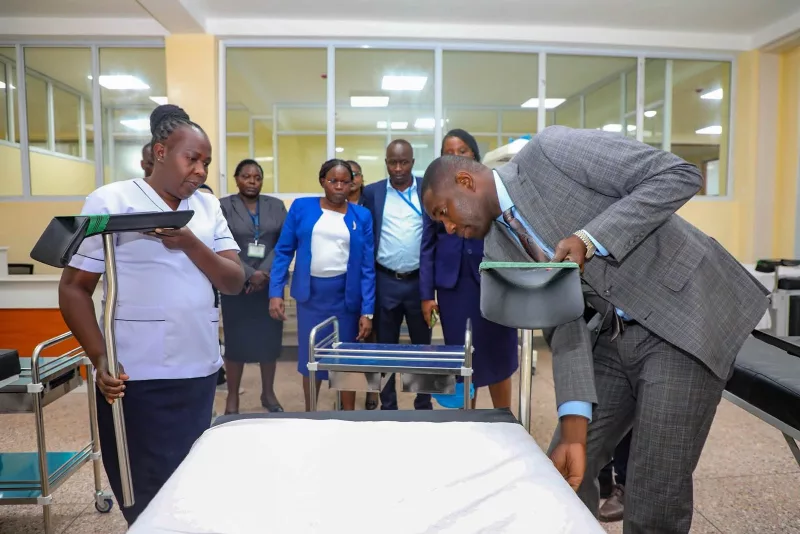
The report also shows 54 per cent of the facilities refer post-abortion care services due to lack of equipment, procedural rooms and trained medics.
Two thirds of all the facilities assessed indicated that their staff have been trained on post-abortion care, with one third indicating that the staff have not received the training.
“In Kalobeyei settlement, half of the facilities indicated that their staff had not received training on PAC (post-abortion care) while in Kakuma, 31.3 per cent of the facilities also indicated that their staff had not received post abortion care training. Over 40 per cent of the facilities indicated that their staff had received post abortion training more than two years ago.”
It has recommended consistent training of medics on family planning methods and PAC service provision and supporting facilities with the necessary infrastructure to provide long-term solutions.