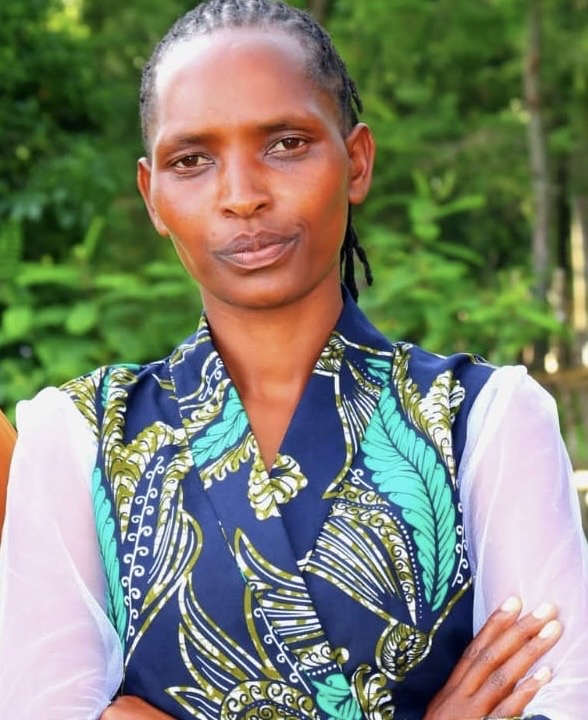
 Kuppet Bomet branch gender secretary Evalyne Chepkirui Sanguya in Bomet town
A teachers' union has called for the urgent declaration of mental health as a national disaster, warning the crisis is rapidly affecting a large section of the population.
Kenya Union of Post-Primary Education Teachers (Kuppet) Bomet branch gender secretary Evalyne Sanguya warned that Kenya is grappling with a silent crisis of mental illness that continues to devastate individuals, families and the economy.
She said the country’s mental health system remains critically underdeveloped, with nearly 75 per cent of those in need unable to access care.
“This is no longer a hidden issue. It is a national emergency unfolding quietly in our homes, schools, and workplaces,” she said.
Sanguya pointed to the heavy economic burden caused by untreated mental health conditions, estimated at Sh62.2 billion annually.
She said lost productivity due to absenteeism, reduced efficiency at work and premature deaths linked to suicide are significantly affecting national development.
Of particular concern, she said, is the growing crisis among young people.
With about 41 per cent of youth aged 18 to 34 years reportedly struggling with mental health challenges, Sanguya warned the country risks losing a critical segment of its future workforce.
“Our youth are the backbone of this nation, yet many are battling unseen struggles without support. This threatens not just individuals, but the stability of our future,” she said.
Sanguya, who spoke in Bomet, also criticised the minimal budget allocation to mental health, currently standing at less than 0.01 per cent of the national health budget.
She said the neglect has led to outdated infrastructure and a severe shortage of professionals.
The gender secretary argued that declaring mental health a national disaster would trigger immediate action, including increased funding, integration of mental health services into routine healthcare, and reforms such as the decriminalisation of suicide attempts.
“We must move from stigma to solutions. Mental health is not a luxury; it is a necessity for survival and national progress,” she said.
Sanguya further called for stronger workplace protections to ensure individuals facing mental health challenges are supported rather than discriminated against.
Her remarks add to growing calls for government intervention, with stakeholders warning that failure to act decisively could deepen the crisis and its far-reaching consequences.
She said the government, counties, medical institutions, and other health sector players should join hands in working towards a solution to the challenge of mental illness, which she said was worsening in all parts of the country.