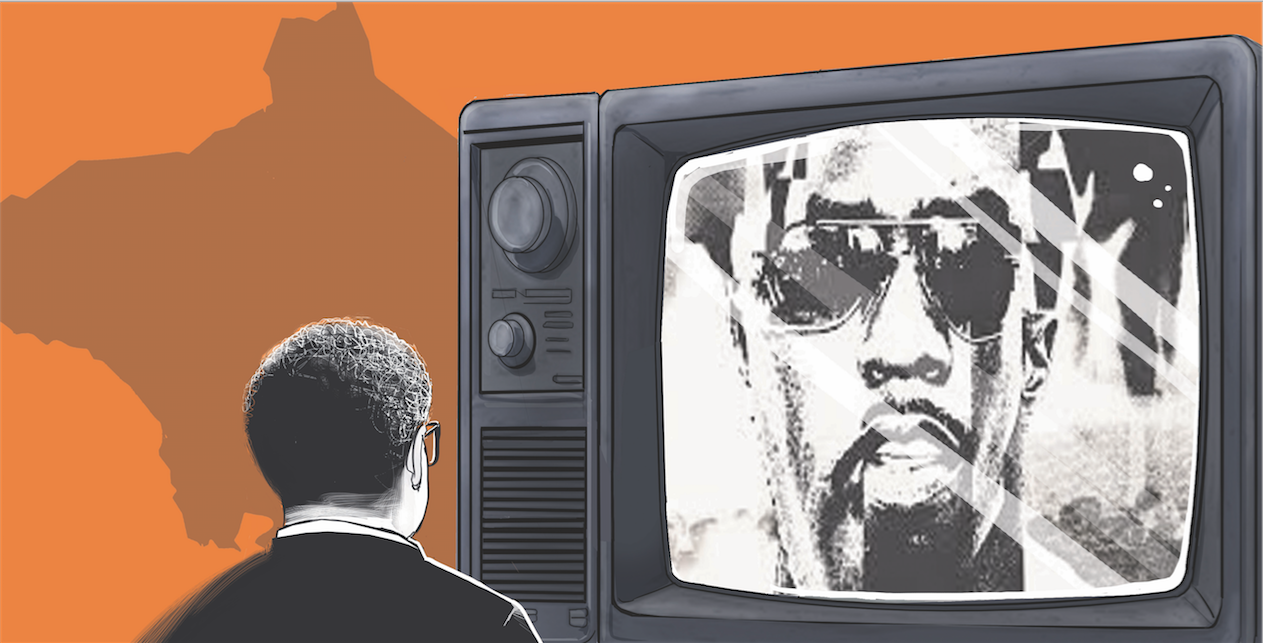
Over the long Jamhuri weekend, I painfully watched Sean Combs: The Reckoning, a docuseries chronicling the rise and fall of American music mogul Sean Combs.
Painfully, but also pitifully, as Combs was the larger-than-life figure of our times. He had the Midas touch of the then-budding rap music, was black, young, swaggy and successful.
But beneath this success, Combs ran a terrorist organisation of sorts where sexual abuse, torture, death and impunity thrived.
From 'Bad Boy Records' labelling, the signs were all there for the world to see. Early on, in 1991, a concert stampede in which nine lives were lost ushered him into the spotlight.
From then on, it was reincarnation upon reincarnation for Diddy.
He started out as Sean Combs (or was it Sean John?) and later became known as Puff Daddy. From Puff Daddy, he transformed into P Diddy, and from P Diddy to Swag and to Brother Love.
There was always something smelly, something dubious about him.
It matters very little that the docuseries is executive-produced by his archrival Curtis '50 Cent' Jackson. By following the trail of logic, it is easy to cut through their rivalry.
The accounts presented are as nerve-racking as they are revealing. I was particularly shocked to see the possible star role Diddy played in the senseless killings of Tupac Shakur and Christopher Wallace, aka Notorious B.I.G.
It was obvious from the accounts of Bad Boy insiders that the now-infamous East Coast vs West Coast rap feud was contrived. My generation’s top-ranking musical geniuses ended up only watering Diddy’s music empire with their young blood.
The world was denied of inconceivable musical works and talents, their immediate families robbed of their loved ones. Diddy’s music empire blossomed even more upon these deaths, and grew more emboldened.
To make it through the rap industry, one had to go through the eerily named Daddy's House Studios, all its motions. From the docuseries, it was pain upon pain for young artists, subservience, slavery and suck-ups.
It was particularly terrible for the vulnerable groups – young men and women – as Diddy set out to dispirit them while abusing them at the same time.
Until Daddy's House began to crumble, many of the victims had no clue. Drugged and defiled, they had no idea until stock upon stock of baby oil was discovered in his closets.
Diddy’s story sounds too distant – 8500 miles away – until it is not. Across all our industries – music, media, law, manufacturing, healthcare, technology, finance, to name but a few – we have our little, pathetic Diddy’s squeezing the spaces around them.
They run industries or departments, close them up to new entrants, dictate the rules and create self-servient monopolies. New entrants into the game are abused to the core, and more often than not have to bend over backwards to please the old staggers in the game.
Just like Diddy, they are pompous, speak the right language of hope against the odds and appear to have everything good going on around them. Beneath the veneer of their success, however, piles crushed dreams, tears and curses.
Entrenched impunity, broken system of justice and general lethargy in our society have guaranteed them the freedom to gallivant around while their victims add layers upon layers of abuse, pain and injustice.
But just like Diddy, their hour of reckoning is coming. Our society is opening up more and more every other day. The “me too” movement, which sounded far too away, is now ringing closer and closer.
Our criminal justice, law and order sector is making slow but sure steps in the right direction. In a way, it is unimaginable that Diddy got away with so much and for so long in such a great country as the United States of America.
He is now serving 50 months in prison while close to 70 other cases against him are being processed. Unless he defies the arithmetic of probability, he has a snowball in hell's chance of gaining back his freedom any time soon.
Musau, an Advocate of the High Court of Kenya, is a Senior Project Manager with the Friedrich Naumann Foundation. The views expressed here are his own and do not necessarily reflect the position of FNF