This social commentary is informed by the events that followed the untimely death of renowned radio personality Festus Amimo and the troubling rumours that were peddled about the cause of his death.
It is not intended to interrogate facts, assign blame or validate speculation. It seeks to ask a harder question of ourselves: what does our response to death, and indeed other challenging situations in human existence, say about who we have become?
In the immediate aftermath of Amimo’s passing, grief was quickly crowded out by conjecture. Social media timelines filled with insinuations framed as curiosity, rumours masquerading as public interest, and narratives constructed without evidence or consent.
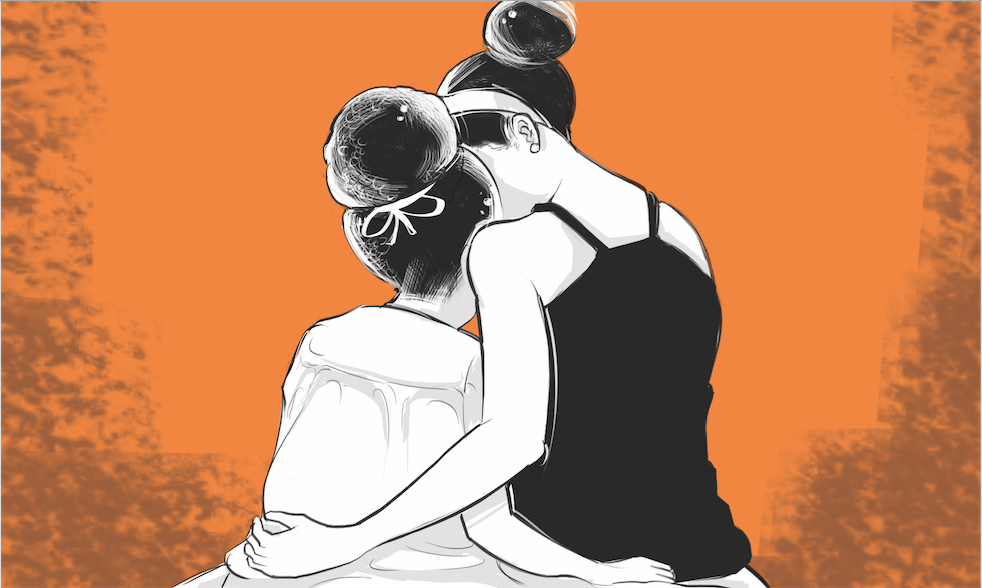
In that rush to explain, the dead were denied dignity and the bereaved were denied peace. What should have been a moment of solemn reflection became an episode of public consumption.
This pattern is neither accidental nor new. It reflects a deeper transformation in our public culture—one that increasingly resembles the Roman amphitheatre. You see, in Rome of yore, crowds gathered not merely to watch, but to be thrilled by the Gladiators as they spilt blood.
Today, the spectacle no longer requires physical violence. Assaults on reputations suffice. Privacy is expendable. Grief itself becomes content. Our digital public square has normalised the idea that tragedy must perform before it can be acknowledged.
The rumours surrounding Amimo’s death, regardless of their source, expose the erosion of ethical boundaries that should govern how we treat the dead and those who mourn them. Death, it seems, is no longer allowed to be quiet. Families are no longer allowed to grieve privately. And society, impatient with uncertainty, reaches for speculation to fill the void where restraint should live.
It is precisely this moral drift that Development Through Media sought to confront with its 16-article series, one for each of the 16 Days of Activism against Online Gender-Based Violence. While the series focused on online gendered harms, its gist applies more broadly: digital spaces have become theatres of violence, sustained by algorithms that reward the bizarre and audiences drawn to “trending content” that, in essence, rewards humiliation.
One of the most unsettling insights from DTM’s series during the 16 Days of Activism is how easily cruelty is much too often repackaged as accountability. We tell ourselves we are “asking questions” when we pry into private grief. We claim “public interest” when we circulate rumours that add nothing to understanding and everything to harm, manipulate public compliance. In doing so, we collapse the distinction between scrutiny and voyeurism, between truth-seeking and spectacle.
The events following Amimo’s death also revealed an uncomfortable inconsistency. In some instances, restraint is invoked swiftly—privacy is defended, professionalism emphasised, silence justified as respect. In others, particularly where the deceased or the bereaved lack institutional protection, restraint evaporates. This selective ethics exposes a troubling reality: dignity in death has become conditional, even commoditised.
DTM’s serialised reflections warned that such inconsistency corrodes public trust and deepens harm. They also showed how digital violence thrives on dehumanisation. Once a person is reduced to a storyline, their pain becomes consumable. Once grief is transformed into content, empathy becomes optional. In the end, the crowd feels more entitled to answers as it cedes its right to demand justice and empathy.
This psychosocial commentary is therefore less about Amimo than it is about the values we bring to moments of vulnerability. It is about whether we recognise that the dead cannot defend themselves and that the living should not be forced to defend their sorrow. It is about remembering that restraint is not censorship, and silence is not complicity. Sometimes, silence is mercy.
The final essays in DTM’s 16-day series called for concrete interventions: enforcement of cybercrime laws, ethical reporting standards, survivor-centred digital policies, and accountability for platforms that profit from outrage. But they also issued a simpler, more humane appeal: to restore empathy as a civic virtue. To pause before posting or sharing and ask: Does this honour the dead? Does this protect the grieving? Would I want this done to my own family?
If we fail to ask these questions, we risk becoming a society that gathers eagerly around every tragedy, not to console, but to consume. A society that mistakes attention for care and curiosity for compassion. A society that has forgotten how to mourn and how to be human.
Amimo’s death should have united us in reflection and solidarity. Instead, it has offered us a mirror. What we see in it—and what we choose to change—will determine whether our digital public square remains an arena of spectacle or becomes, once again, a space anchored in dignity, privacy and shared humanity.
Edwin Wanjawa is a sociologist and programmes associate and Dommie Yambo-Odotte is a psychologist, executive director and producer. They work for DTM, a non-profit media-focused CSO