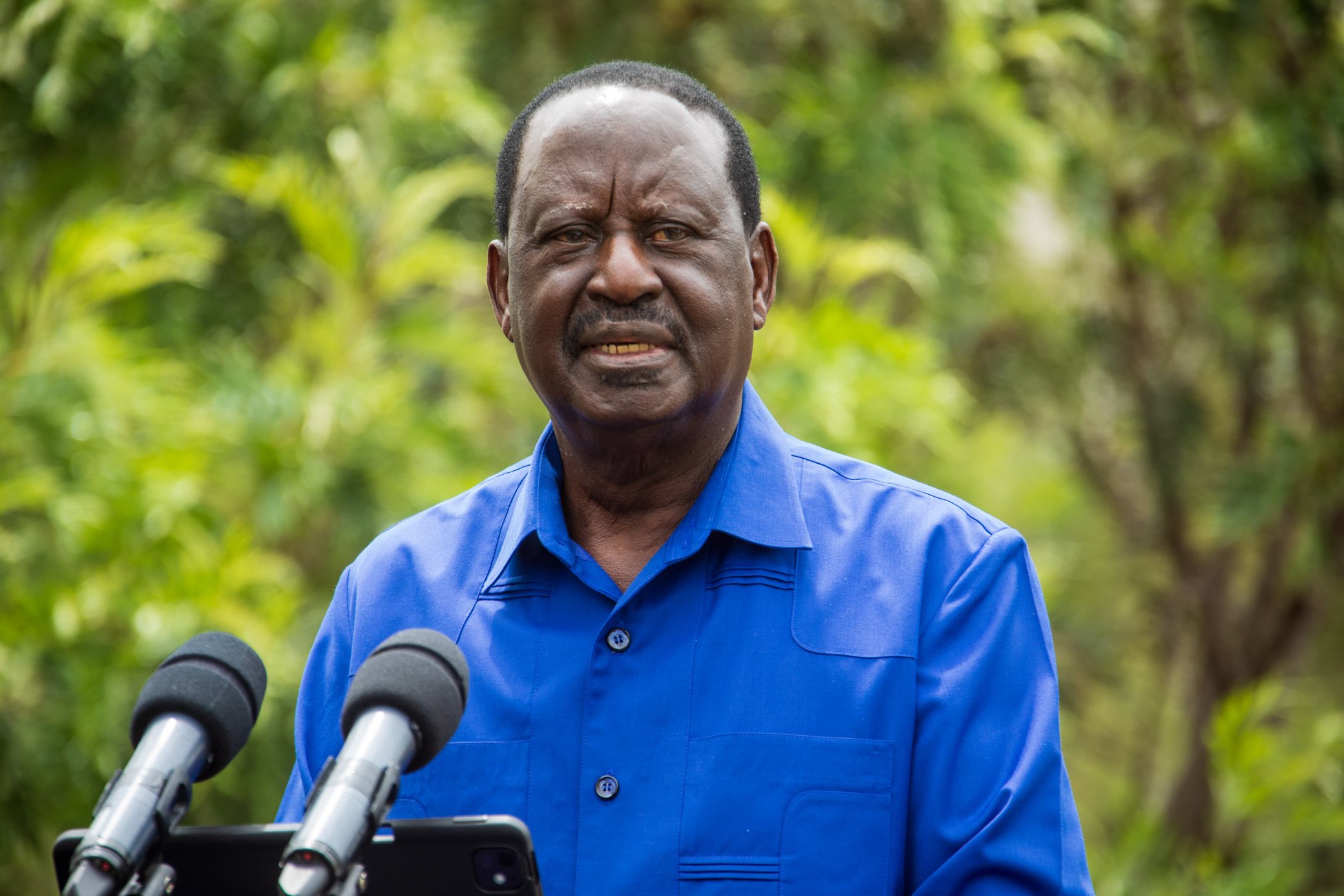
 Former Prime Minister Raila Odinga / FILE
Raila Odinga’s passing has sparked a fierce scramble among Nyanza leaders vying to fill his shoes, a competition that will influence the general election.
For a generation, Raila wasn't merely a politician but the singular authority around whom the Luo political identity coalesced. His demise has created a profound leadership vacuum, leaving the community without its anchor ahead of a crucial election.
The question of ‘Who’s next?’ echoes in political rallies, churches, homes, and across social media. And will ODM and the region side with the opposition or seek government bounty from President William Ruto?
The race for a title - and responsibility for negotiating the community’s interests at the national table - is wide open. Energy Cabinet Secretary Opiyo Wandayi, Homa Bay Governor Gladys Wanga, Embakasi East MP Babu Owino, Interior PS Raymond Omollo, and Treasury CS John Mbadi are considered frontrunners. Cabinet members tend to side with the broad-based government endorsed by Raila.
Their recent activities, from public engagements to home receptions, signal bids to become the community's new voice. Wandayi recently hosted the Luo Council of Elders at his home, a meeting attended by ODM party leader Oburu Oginga, MPs, MCAs, and clergy.
Pundits called it a launchpad to consolidate the Luo vote. Governor Wanga is praised for a strong county development record and a firm grip on regional politics.
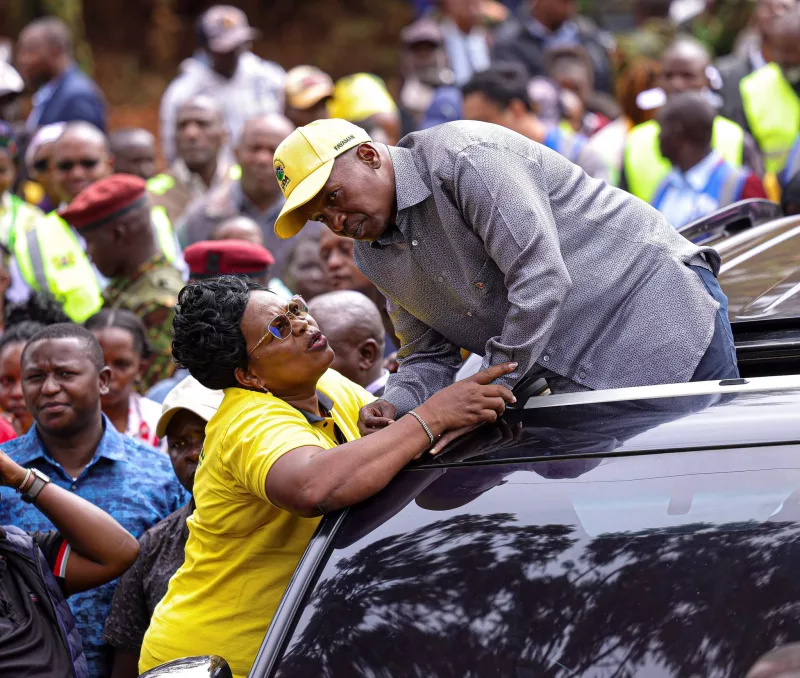
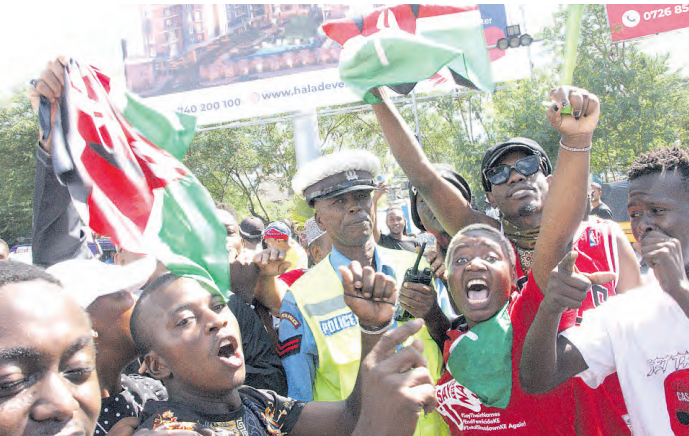
Mbadi, by virtue of his powerful CS Treasury portfolio, is viewed as having the experience and a direct line to resources for development. Women demonstrating in Kisumu in support of PS Omollo, the man who has President William Ruto’s ear, has highlighted the Omollo factor in the race.
His community work and popularity has signalled a shift in Nyanza’s power dynamics. Babu Owino has been holding gatherings across Nyanza to test his political might and present himself as a sober voice.
While all wannabes say they ‘have what it takes’ to lead the ‘orphaned’ masses, the big question is: what are their options? The Luo community for years has followed an organic kingship system, whereby authority flowed naturally from a recognised central figure without formal transition mechanisms.
While it worked during Raila’s three-decades at the helm, it has left Nyanza vulnerable without him. The vacuum has opened the door for President William Ruto’s team to court the crucial, and no longer unified voting bloc.
Traditional loyalists - ODM leadership, the Raila family, pro-government figures, and county leaders — all say they are best placed to bargain for the region, creating internal fractures.
Wanga has opened battlefronts with her deputy, complicating her reelection prospects. Babu and Winnie Odinga, who is also apparently eyeing the ODM mantle, are said to be struggling with an identity crisis, the latter for her poor command of Dholuo.
By being beholden to Ruto’s government, Mbadi and Wandayi carry the ‘Ruto factor’ in their bids as they were plucked from ODM to join the government. are leveraging their positions and local ties to advocate for support for Ruto.
But their prominence also raises questions of ODM’s former identity as the unmistakable voice of the opposition.
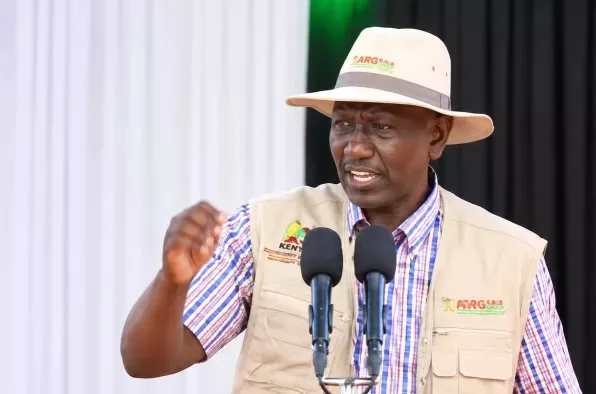
Wandayi has publicly declared he will lead Ruto's campaign in the region, asserting that no other politician has a chance in 2027. Pundits say simmering tensions are notable, but individual efforts may come to naught.
“Raila is irreplaceable,” political analyst Joshua Nyamori says.
“He was a national hero, and the Luo community following was due to his national accomplishments… At no day did Raila ask to be the kingpin; the post doesn’t even exist in our cultural political structures.”
Nyamori believes a leader will be followed based on relevance in solving the community’s problems — bad roads, ill-equipped hospitals, poor schools, and general economic woes.
He argues that Raila foresaw internal chaos and charted the community along Ruto’s path for development. Thus, Nyamori says, the community will likely align with Ruto for now, and the relevance of those jostling for preeminence will depend on the development agenda and that alignment.
Eliud Owalo, deputy chief of staff for Delivery and Government Efficiency in the President’s Executive office, dismissed kingpin politics, saying leadership is about service delivery.
“If you want to be kingpin in total disregard of the development needs and challenges facing the common wananchi, it is a zero-sum game,” he said.
“Let us not be preoccupied with political kingship because it is not serving the interests of common wananchi. We need to facilitate development for the benefit of the people,” Owalo said.
He said the region must have a paradigm shift and deliver the much-needed ‘third liberation’, which is centred on economic empowerment.
Political scientist Oscar Omondi says the Nyanza elite are in panic mode, hence, “everyone is fighting everyone.”
He says the narrative in Nyanza is likely to be won by those leaning towards the broad-based government, citing their capacity to mobilise support.
“This is our first election in many seasons without a presidential candidate. The big question is: what are we fighting for? How will we bargain when disunited?” Omondi asked.
These conflicts extend beyond individual rivalries. Recently, the Luo Council of Elders acknowledged that the “noise of kingpinship” threatens to divide the community when it most needs unity.
The violence during the recent Kasipul by-election in Homa Bay served as a worrying indicator of how quickly political competition can turn hostile. Gem MP Elisha Odhiambo warned the region's political culture is “increasingly drifting into hostility and alarmist rhetoric”, threatening voters' democratic rights to choose freely.
The 2027 presidential election presents the community with its most difficult political decision in decades as it must determine its national direction without Raila’s guidance.
President Ruto's administration has been actively courting the region, with ministers beginning early 2027 campaign efforts. Declarations of support for Ruto are already emerging. A section of Kisumu West women recently declared ‘William Ruto Kumi Bila Break’, framing support as consistent with Raila's legacy of peace.
"After the death of Baba, he left us with President Ruto," explained women's leader Elizabeth Ochieng, citing housing, education support, and enterprise capital as reasons for their shift.
The Luo political elite are acutely aware of this courtship and are navigating it with a newfound practicality. Speaking at a meeting hosted by CS Wandayi, ODM party leader Oburu Odinga declared a historic shift in the community’s approach.
He said the Luo community would no longer enter political alliances blindly after years of perceived betrayals, setting up another challenge for the leadership contenders.
"Now we are clever. We cannot be cheated again," Oburu said, emphasising that future cooperation must be based on clear, negotiated benefits for community development and representation.
This could complicate the arithmetic for those keen to shepherding the community away from the Ruto epicentre. Several pathways are emerging. Ugenya MP David Ochieng said Luo Nyanza must maintain working relations with President Ruto.
He said this is not necessarily a permanent shift, but a strategic move to secure political and developmental footing. Wandayi himself has stressed the importance of Luo unity, echoing Raila’s past warnings against division, as analysts emphasise the what will be an historic and pivotal decision.
What is certain is that the 2027 General election will reveal whether Luo Nyanza maintains its traditional voting patterns, fragments into multiple alignments, or gradually shifts toward the ruling coalition.