The Horn of Africa is entering a period of heightened instability. Political fragmentation, disrupted Red Sea shipping routes and intensifying geopolitical competition have forced global powers to reconsider long-standing assumptions about regional security.
Recent comments by Donald Trump — including sharp criticism of Somalia’s instability — have sharpened this debate, while the U.S.-brokered peace agreement between Rwanda and the Democratic Republic of Congo demonstrates that long-running disputes can shift when incentives align.
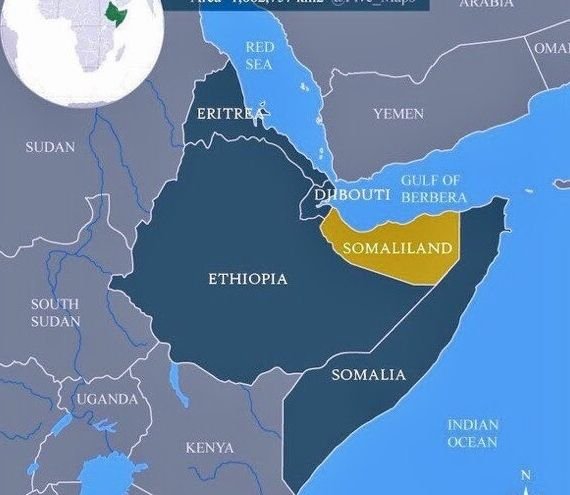
Against this backdrop, attention is returning to an often-overlooked but increasingly relevant actor: Somaliland. Unrecognised yet strikingly stable, Somaliland presents a political question dating back to 1960 that is becoming more urgent — and more solvable — as regional dynamics evolve.
Long-frozen issue returning to the fore
Somaliland gained independence from the UK on 26 June 1960 and received international recognition before voluntarily uniting with Somalia days later. The union collapsed decades ago; Somaliland reasserted its sovereignty in 1991 and has since built functioning institutions without external support.
Previously overshadowed by geopolitical caution, Somaliland’s question is now resurfacing. Insecurity along the Gulf of Aden, political fragility in Somalia and disruptions to maritime routes have raised the cost of maintaining ambiguity. With major powers reassessing strategy across the Red Sea, Somaliland’s political status is increasingly central to calculations of regional stability.
Stable outlier in an unstable region
Somaliland has maintained relative peace, multiparty elections and effective governance for more than three decades. Its hybrid system — combining traditional authority with modern institutions — ensures predictability that is rare in the region.
Government ministries function, contracts are respected and political transitions occur without widespread unrest. For investors evaluating frontier markets, this stability is a rare strength.
Strategic trade corridor on the Gulf of Aden
Situated along one of the world’s busiest shipping lanes, Somaliland’s geography is a key strategic asset. The modernisation of Berbera Port and the development of the Berbera–Ethiopia corridor are reshaping regional logistics.
The corridor gives Ethiopia — a market of 120 million people — an alternative maritime outlet at a time when supply-chain resilience is becoming critical. For global companies navigating Red Sea disruptions, Somaliland’s port and free zone offer a commercially viable alternative.
Digitally advanced economy
Somaliland has leapfrogged traditional financial systems, achieving high mobile-money penetration, robust telecom networks and a fast-growing fintech ecosystem. This digital-first economic landscape supports financial inclusion and encourages investment in telecoms, data infrastructure and cloud services.
Airspace and aviation: Rising strategic asset
Somaliland’s airspace, long administered from Mogadishu under a UN-brokered arrangement, has become an increasingly sensitive and commercially significant issue. Airlines operating between the Gulf, East Africa and the Horn routinely fly over Somaliland’s territory, making it one of the most important aviation corridors in the region.
As regional air traffic expands and geopolitical risks reshape flight routes around the Red Sea, Somaliland’s airspace is gaining strategic relevance. Control and management of the airspace remain contested, but the territory’s consistent stability has strengthened arguments — both technical and political —for a more decentralised or jointly managed aviation system.
For global carriers and aviation investors, any future clarity in airspace governance would enhance safety, reduce routing complexity and potentially unlock new logistics and cargo opportunities tied to Berbera’s emerging role as a regional hub.
Untapped natural resources and renewable energy
Somaliland’s underexplored resource base includes promising hydrocarbon basins, deposits of gypsum, limestone, manganese and potential rare-earth elements, as well as artisanal gold deposits that could be developed into commercial operations.
Strong solar irradiance and consistent wind conditions create opportunities for renewable-energy investments — from solar farms and wind projects to industrial mini-grids.
Private sector driven by diaspora initiative
Economic growth has been fuelled by a dynamic private sector and significant diaspora investment. Local firms lead in telecommunications, logistics, retail and digital finance, offering foreign investors experienced partners and fewer administrative barriers than in many regional peers.
Shifting international context
Trump’s recent remarks about Somalia and Somali immigrants highlight the political and reputational risks increasingly attached to “Somalia” in U.S. discourse. This shift may make Somaliland’s differentiated identity more attractive to policymakers seeking stable partners rather than deeper involvement in protracted crises.
At the same time, the contrast between Washington’s frustration with Somalia’s instability and Somaliland’s relative calm strengthens arguments for recognising Somaliland or at least expanding economic and security cooperation. In an era where strategic clarity is valued, Somaliland’s trajectory diverges sharply from that of its neighbours.
Moment for strategic reassessment
As global powers rethink maritime security, aviation safety, supply-chain resilience and alliances across the Gulf of Aden, Somaliland is emerging as a potential anchor of stability.Addressing its long-standing political question does not require disruption — only realistic engagement with three decades of de facto statehood.
For investors and policymakers, Somaliland’s quiet rise offers a rare proposition: a frontier market with real stability, strategic relevance and significant room for growth.
The writer is a political commentator