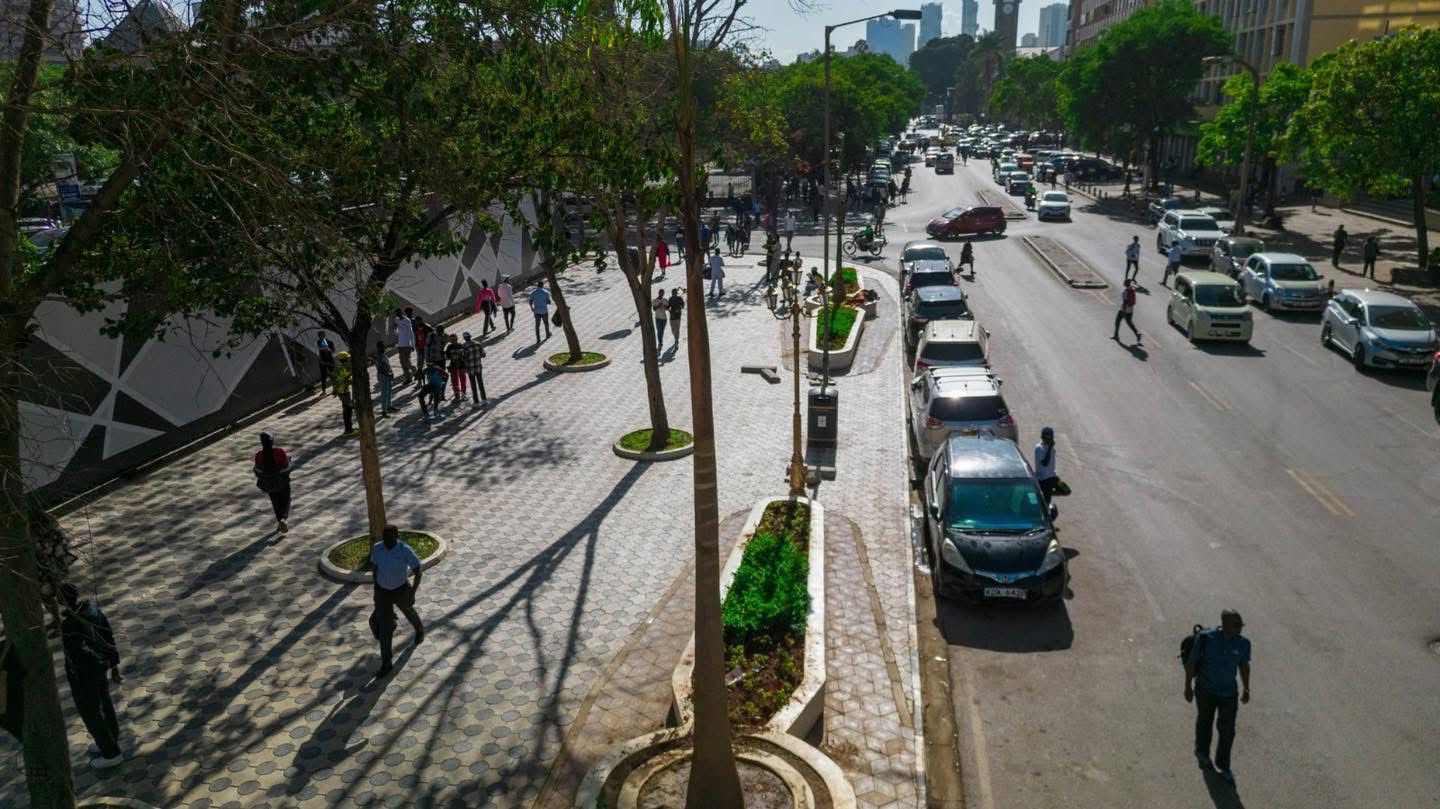
Nairobi is undergoing the transformation many of its inhabitants have always been wishing for. The ongoing beautification of our Central Business District is beginning to breathe new life into a space long filled with congestion, visual noise, pollution and one sprawling without regulation.
For the first time in years, we pedestrians are starting to feel that Nairobi can at least reclaim its reputation as the “Green City in the Sun.”
Regardless of the body that has initiated the beautification and redesign of the streets, this is a much-welcome move. When we have wide pedestrian corridors, some strategic planting of trees, fresh road markings, and improved lighting.
They show that the city has a leadership that is finally giving attention to the aesthetics, safety, and usability of public spaces, just like the current Addis Ababa model of urban development. This might be the beginning of what we crave when we say we want a well-planned city.
There is more that the county government and the national government can do, and I hope this is in the pipeline. As Nairobi grows, some clutter still hangs over its streets, literally.
The CBD is currently drowning in signboards, billboards, a lot of mismatched shop branding, double branding, and so much unregulated signage plastered on buildings, walkways, and even trees. This visual pollution is very unattractive; regardless of the current beautification, too many of those visuals create the chaos that we have grown to accept.
Many buildings have layers and layers of new and even worse old signboards that have not been removed for years. Why, for example, should an organisation have five or more signs in one building? Redundant boards, broken signs, and outdated banners should be taken down to eliminate clutter and make the city look cleaner and more organised.
Inasmuch as billboards are a revenue source, they must be placed strategically, not crammed into every available space. There can probably be a number allowed for each space, in fact, there are cities in this world where you barely see any signboards, and still the occupants of their buildings are able to market their spaces, perhaps online. In this case, having building numbers and smaller signs inside building entry spaces is enough.
Digital billboards on the highways or on top of buildings should also comply with brightness and size regulations to prevent light pollution.
City Hall therefore now has a unique opportunity to move to the next stage of beautification, whereby they can possibly introduce or enhance clear guidelines on the size, placement, design, and colours allowed for building signage.
Our leaders have been to major global cities such as Johannesburg, Stockholm. Cape Town, Singapore, which have very strict codes ensuring harmony across commercial districts. Our urban planners can borrow from these models to create a more visually coherent and dignified CBD.
It might therefore be time that businesses should be guided to adopt clean, uniform, city-friendly signage, simple fonts, consistent sizes, and modern tasteful designs. This would enhance brand visibility while preserving the beauty of the cityscape. Lack of conformity should be met by serious enforcement power.
Over to you, Governor Sakaja, to build on this momentum. After cleaned-up signages, perhaps matatu, street photographers and motorbike regulation should follow.
If Nairobi sustains this momentum and embraces stronger regulation of signage and infrastructure aesthetics, our CBD can become one of the most attractive urban centres in Africa.