A new report has revealed that many of the skin-lightening products circulating in local and international markets are dangerously toxic, with tests showing they contain mercury.
Mercury is a potent neurotoxin that can damage the nervous system and, with long-term use, harm the eyes, lungs, kidneys, digestive tract and the immune system.
The findings have reignited global concern and strengthened calls for tougher regulation under the Minamata Convention, which seeks to eliminate mercury-added products through stricter laws, enhanced monitoring and wider public awareness.
The Zero Mercury Working Group (ZMWG), working with partners in Pakistan, Kenya, the Philippines and the US, purchased and tested samples from six widely sold brands of skin-whitening creams, whose packaging says they are manufactured in Pakistan.
The brands found to contain mercury were sourced from local shops, official websites and online platforms.
When the creams were analysed in accredited laboratories in the EU and the US, the results were alarming.
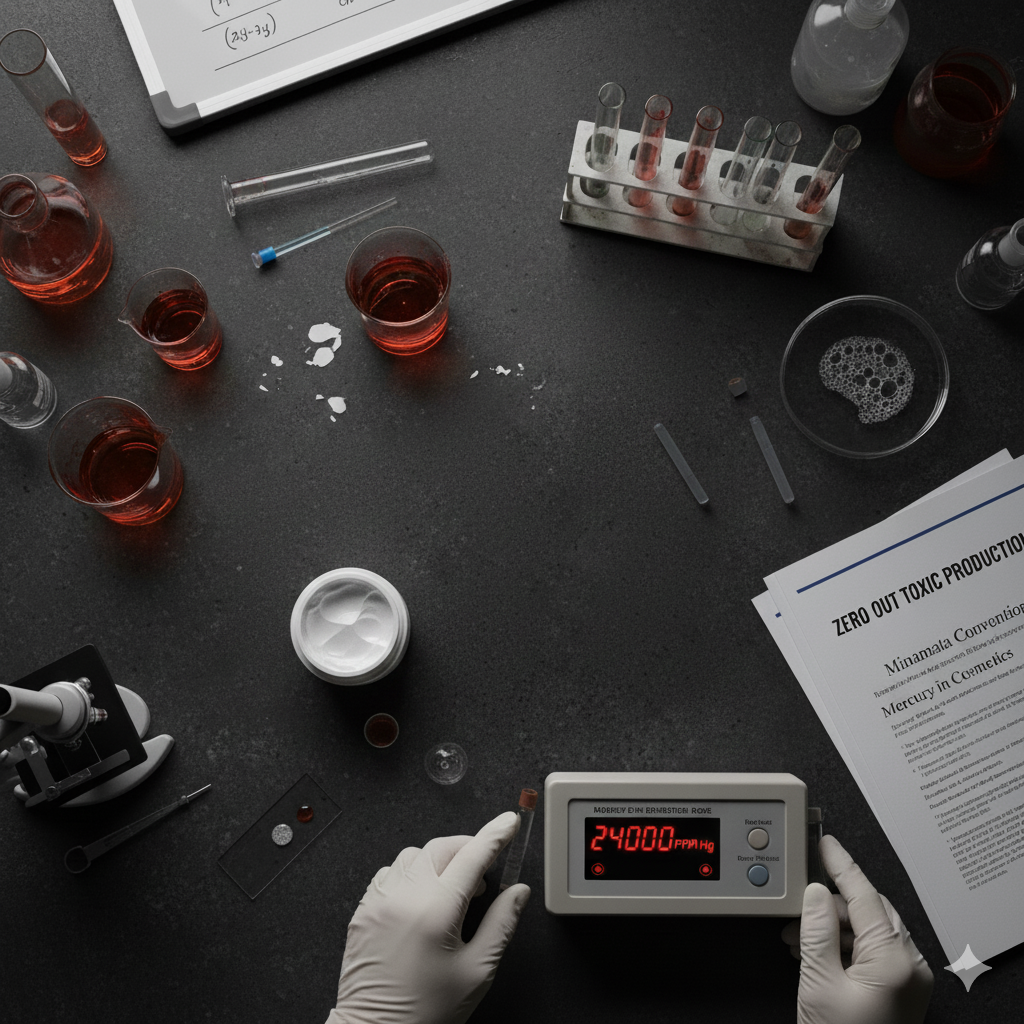
Out of 37 samples, 35 contained mercury levels thousands of times above the former legal limit of one part per million. One cream registered a staggering 24,000 ppm.
The report, titled Zero Out Toxic Production, was released at the opening of the Sixth Conference of the Parties (COP-6) to the Minamata Convention on Mercury.
It builds on years of ZMWG investigations exposing the toxic and often illicit global trade in mercury-added skin-whitening products.
Despite repeated warnings from governments and the identification of these products as illegal, their trade continues largely unchecked.
ZMWG estimates that more than 66 million mercury-added skin lighteners are produced annually, using over 110 metric tonnes of mercury compounds. Pakistan, Thailand and China account for more than half of this global production.
Dr Razia Safdar of the Sustainable Development Policy Institute said the findings should be a wake-up call.
“As a party to the Minamata Convention, Pakistan needs to prohibit the manufacture, import and trade of skin-whitening products having more than one ppm mercury,” she said.
Partners coordinated ZMWG’s testing: SDPI in Pakistan, Ban Toxics in the Philippines, Cejad in Kenya and the Mercury Policy Project and We Act in the US.
The products tested included creams, lotions and soaps — all commonly used by consumers seeking lighter skin tones.
Michael Bender, ZMWG co-coordinator and a lead author of the report, welcomed the recent nationwide investigation launched by the Competition Commission of Pakistan into companies producing and selling mercury-laden creams.
“This will both protect consumers from serious health risks and ensure fair competition within the cosmetics market,” he said.
Last year, COP-5 decided to replace the one ppm threshold with a complete ban on mercury in cosmetics.
But implementing the ban remains a complex challenge involving regulation, supply chain controls, training and public education.
The secretariat’s review of global input — including guidance from ZMWG — made clear that eliminating mercury-added products is possible only through coordinated action.
Elena Lymberidi-Settimo, Senior Advisor on Mercury at the EEB and ZMWG co-coordinator, called on producing countries to act immediately.
“Eliminating the manufacture and hence the supply, of mercury skin-whiteners at the source should be a priority,” she said, noting the difficulty of policing online sales and cross-border smuggling.
In the Philippines, the challenge is even steeper. “National bans are not enough,” said Jam Lorenzo of Ban Toxics.
“Smuggling has historically been hard to regulate and online platforms have made it even worse. Unless global production is restricted, it will be hard to protect human health and the environment.”
Kenya faces similar risks. Griffins Ochieng, executive director of Cejad, warned that toxic creams continue to flow into the country through online marketplaces.
He said COP-6 offers a critical opportunity to adopt strong decisions that prioritise halting production altogether, while also supporting countries without existing bans and funding surveillance to track mercury levels in cosmetics.
For advocacy groups, the issue also carries deep social and environmental injustice.
“The continued production of skin-lightening products with intentionally added mercury is an environmental injustice felt by people of colour around the world, and it must be stopped,” said Mae Kennedy of WE ACT for Environmental Justice.
ZMWG is also urging the Convention to close loopholes that allow the continued use of mercury compounds in cosmetics and other hazardous applications.
Currently, mercury compounds themselves are not regulated under the treaty — a gap the group says is undermining global efforts.
Formed in 2005, ZMWG is a coalition of more than 110 health and environmental organisations from over 55 countries, coordinated by the European Environmental Bureau and the Mercury Policy Project.
Its latest report makes one thing clear: despite global bans and warnings, toxic skin-lightening products remain widespread — and eliminating them will require bold, coordinated action at every level.