

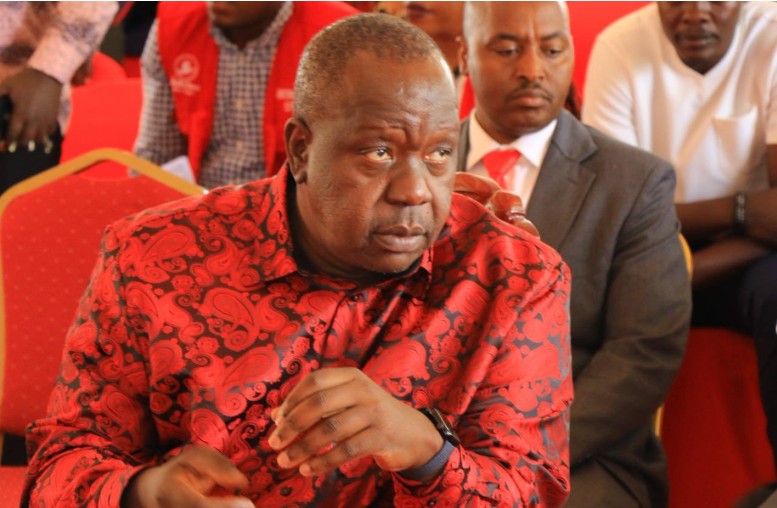
Now that the Jubilee Party formally appointed Fred Matiang’i as its deputy party leader and its flagbearer for 2027, Matiang’i has a leg up on the only other potential serious contender in the opposition, who, no need to type the name but you already know, if you honest.
This is because Jubilee remains a national party with structures, grassroots reach and a legacy — which gives the former CS an existing platform to build upon, without starting from scratch. Those who were urging him start from scratch were not serious but used it as bait to lure Matiang’i into a hole he could not possibly get out of in any shape to seriously contest.
That Jubilee endorsement effectively anoints Matiang’i as the ideal candidate to whip the incumbent come 2027, especially given the former CS’s widespread and growing organic support across the country.
According to a 2025 national opinion poll by Research 8020, Matiang’i leads among potential 2027 candidates: 24 per cent of those polled said they would favour him, ahead of Ruto at 21 per cent. Support spreads across age groups (Gen Z, millennials and older voters) and across counties, including urban centres and historically non-Jubilee regions.
Matiang’i is a beacon of hope for those longing for a candidate who can unite Kenyans across tribal, ethnic and regional divides. That cross‑tribal, cross-ethnic and cross-regional appeal is especially valuable in Kenya’s electoral politics, where coalition‑building remains decisive.
The Jubilee deputy leader is often described as a manager, not a career politician, language that resonates with voters frustrated by political patronage and unfulfilled promises.
As former CS and ‘Super CS’ under former President Uhuru Kenyatta, he offers administrative experience and a deep understanding of government structures, which embodies exactly the qualities voters are demanding. He presents himself, and there is nothing to the contrary, as someone who can make impactful decisions — for the good, at levels even the incumbent has not made and is not equipped to make.
Matiang’i has affirmed commitment to coalition building, pleading with opposition leaders and factions to unite behind a single candidate for 2027. He is too humble to say it, but objectively speaking, that single candidate ought to be and should be him.
Given that the opposition is fragmented among multiple leaders, a candidate with a party base like Jubilee, with national reach and relative neutrality in existing factional rivalries, should easily serve as a compromise unity candidate.
As party elders and key Jubilee officials rally behind him publicly, others may find it harder to contest that consensus — reducing the risk of vote splitting that would no doubt benefit the incumbent.
The 2025 poll placing Matiang’i ahead of Ruto comes amidst widespread dissatisfaction over cost of living, economic stagnation and perceived mismanagement. In this climate, he being a technocrat and reformer — not a populist or tribal mobiliser — could easily attract swing voters seeking pragmatic solutions over personality politics.
Most Kenyans agree that the time is ripe for a manager, rather than a politician, to manage the affairs of the country, which favours the former CS, the quintessential super manager who knows how to get things done with a no-nonsense attitude.
These qualities resonate with most voters, especially with a younger, economically concerned electorate.
However, much as we may not want to admit it, there are looming dangers in the opposition. Thus, all of us clamouring for change must be resolute and sober in making sure those dangers don’t lead to the incumbent yanking victory from the jaws of defeat. We just can’t and won’t let that happen.
In sum, Matiang’i represents the strongest convergence of positive factors a candidate to beat the incumbent must have: institutional backing via Jubilee, a national brand beyond tribal/ethnic/regional politics, technocratic credentials, public dissatisfaction with status quo and growing poll numbers.
In a crowded and often fractured opposition field, those attributes give him a real shot at consolidating support broadly enough to challenge and beat the incumbent come 2027, God willing.





