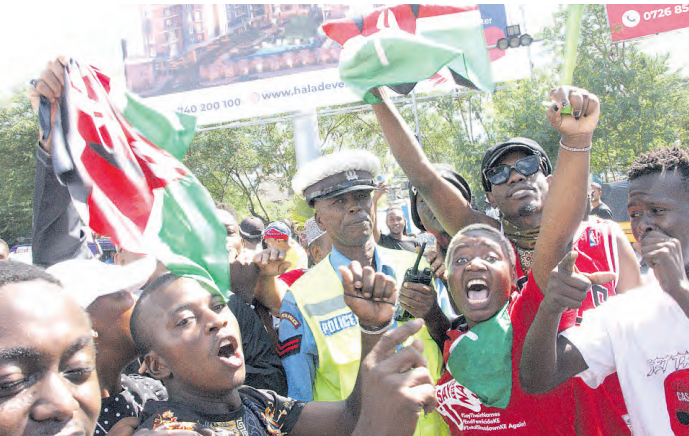
In 1991, when Kenyans won the battle to repeal Section 2a of the Constitution and restored multiparty democracy, the country erupted in hope.
Ford had mobilised millions who believed political pluralism would end repression, curb corruption and usher in accountable governance. Three decades later, that dream stands mangled.
And if the recent by-elections are any indication, what we call ‘democracy’ is now a hollow ritual — more performance than principle, more deception than deliberation.
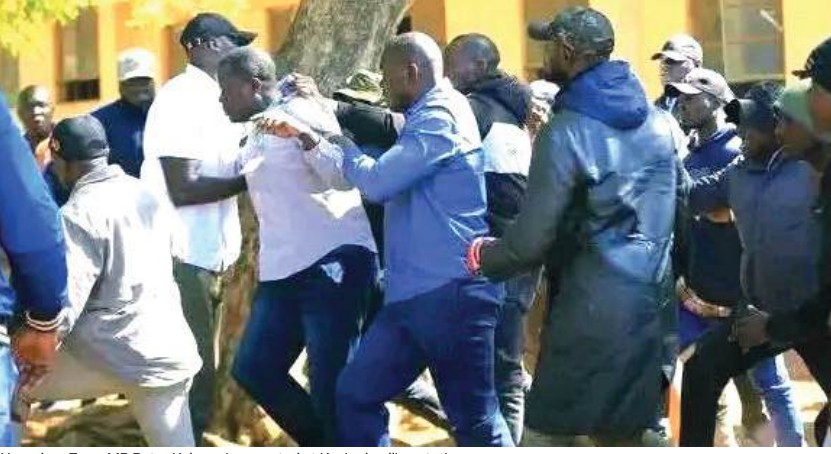
The latest by-elections exposed this dysfunction with brutal clarity. What should have been routine democratic exercises descended into violent, chaotic contests dominated by bribery, goonism and shameless state interference. In several polling stations, hired thugs intimidated voters and journalists.
Violence led to injury and even death — yet the IEBC blandly described the process as ‘largely peaceful.’ Civil servants defied the law to campaign openly. Bribery was not hidden; it was normalised, as candidates bought loyalty with cash and commodities were handed out in broad daylight.
These by-elections were not about ideas or policy. Personalities were louder than issues; tribal loyalties overshadowed public interest; and money triumphed over merit. What voters witnessed was not competition among visions for a better Kenya, but a scramble among elites seeking access to state resources.
The people — whose sovereignty the constitution celebrates — played second fiddle in election choreographed over their heads, funded through their taxes and concluded without their input.
Political parties, once seen as vehicles of ideological contestation, now resemble shell companies activated only to seize power and plunder public resources. Coalitions form and dissolve with mercenary convenience. Manifestos are treated as disposable pamphlets. Campaign promises evaporate immediately after victory. This is not democratic politics; it is organised greed dressed up in democratic language.
Meanwhile, the state itself has been captured — by financial elites, by cartels and by foreign actors whose priorities often matter more than those of citizens. Much of our economic policy is scripted in Washington or Brussels and rubber-stamped by legislators who barely grasp its implications.
Budgetary decisions prioritise debt repayment and elite deals over healthcare, food security, and education. Corruption and waste remain rampant. Oversight agencies are intimidated or compromised. Investigative reports gather dust. Whistleblowers are punished. Yet we insist we are a democracy.
But how can democracy thrive in a country where nearly half the population lives in poverty? Hunger is the enemy of civic agency. In these by-elections, as in many before them, voters sold their votes for small tokens — not because they are immoral, but because the system has conditioned them to exchange citizenship for survival. Poverty makes bribery logical. Desperation makes manipulation easy.
Election campaigns are financed through stolen public funds and proceeds of economic crimes. To win office requires massive expenditure; once elected, leaders rush to recover their investments. The result? A Parliament filled with millionaires whose priority is self-preservation, not public service.
Adding to the crisis is our compromised election management. The IEBC has failed repeatedly to demonstrate consistency, competence, or independence. Every cycle is marked by logistical failures, suspicious technology breakdowns, contested results and post-election litigation.
Now, even in by-elections, the commission appears numb to malpractice — violence glossed over, bribery normalised and the unlawful involvement of public officers ignored. When the referee is timid or complicit, the match cannot be fair.
What democracy is this — in which people bleed but the institutions stay silent? What democracy is this — in which thugs dictate outcomes and citizens watch helplessly? What democracy is this — in which elections have become a marketplace of violence rather than an expression of collective will?
We must confront the truth: our democracy has been hollowed out, surviving more as a slogan than a lived experience.
So what must be done?
First, we must abandon the illusion that democracy is about ballot boxes or biometric kits. Elections do not constitute democracy. Democracy demands justice, accountability, dignity, and equity — values that remain elusive in our political culture.
Second, we need a return to issue-based politics driven by ideas rather than theatrics. Civic-voter education must be continuous, not a donor-funded activity rolled out months before elections. Citizens must be empowered to interrogate leaders, track promises, and sustain oversight long after ballots are counted.
Third, power must be redistributed. A democracy that excludes the majority from land, opportunity, and voice is a contradiction. Economic justice is the foundation of political freedom. Without it, democracy becomes a tool for elite domination.
Finally, we must speak the truth about our failures. Patriotism is not silence. Patriotism is vigilance, courage, and accountability. A country cannot heal from what it refuses to name.
The recent by-elections were not just contests; they were symptoms of a deeper national malaise. Kenya’s democracy is on life support, surviving through ritual rather than substance. It will remain a lie until citizens — ordinary men and women — choose to rise, confront the system, and demand a democracy that honours their dignity, aspirations, and sacrifices.
Kenya deserves better. And democracy, if it is to live again, must be reclaimed from those who have abused it.