Kenya’s November 27 by-elections offered an early diagnostic of the newly reconstituted Independent Electoral and Boundaries Commission’s preparedness for the 2027 general election. They were conducted in Banissa, Kasipul, Magarini, Malava and Mbeere North constituencies, as well as county assembly wards.
Far from being a routine administrative exercise, the polls functioned as a stress test for the commission’s operational systems, integrity safeguards and its capacity to stabilise electoral environments historically prone to contestation.
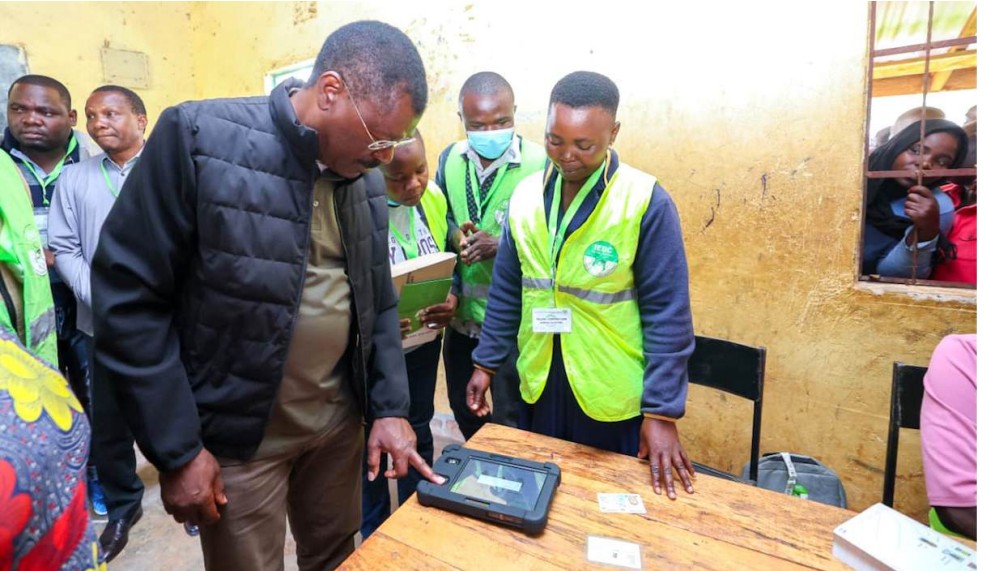
Despite operating amid heightened political tensions and the recurring risk of electoral violence, the IEBC demonstrated measurable gains in administrative discipline. The commission adhered to statutory timelines, clearly communicated the election calendar with clarity and facilitated the timely opening of most polling stations with essential materials from ballots to Kiems kits. It showed improved logistical coordination.
Observer data reinforced this assessment: The Elections Observation Group (Elog) reported orderly procedures in 93.4 per cent of monitored polling stations, citing adherence to public counting, ballot box sealing, and agent verification protocols.
The rapid publication of results via IEBC’s online portal further strengthened the transparency chain, reducing information vacuums that often fuel uncertainty.
Security management emerged as another critical evaluation dimension. IEBC, working with security agencies, adopted a preventive posture in areas with a history of tension, deploying uniformed and undercover officers to deter disruption.
Public condemnation of violent incidents and sanctions against two Kasipul candidates suggested a more assertive approach to enforcing the electoral code. The prompt gazetting of results contributed to a perception of procedural continuity and institutional confidence.
However, the by-elections also exposed structural vulnerabilities with implications for 2027. Incidents of intimidation, clashes between supporters and harassment of candidates in some constituencies pointed to persistent gaps in security risk assessment and deployment strategy.
These disruptions, coupled with allegations of ballot secrecy breaches, problematic assisted voting and inconsistencies in voter registration, underscore a credibility deficit that remains unresolved despite administrative gains.
Opposition parties and civil society groups amplified these concerns, highlighting a widening gap between the electoral agency’s self-evaluation and public trust.
Low voter turnout in certain areas added another layer of concern, signalling disillusionment, fear, or disengagement and raising questions about the effectiveness of civic education and voter mobilisation efforts.
Observer assessments reflected this dual reality. While recognising the overall procedural soundness of the polls, Elog cautioned against downplaying violations, intimidation and logistical shortcomings. This fusion of competence and fragility underscores the challenge of administering elections in a context of deep political polarisation and fluctuating public confidence.
The by-elections point to several priority reforms ahead of 2027. Strengthening security frameworks through improved risk mapping, accountable deployments and clearer engagement protocols remain central. Equally critical are enhanced transparency mechanisms around ballot handling, observer accreditation and assisted voting, all of which directly influence perceptions of electoral integrity.
Inclusivity gaps also demand attention, requiring disability-friendly polling stations, targeted civic education for underrepresented groups and a more responsive grievance-handling architecture.
Ultimately, the November by-elections revealed an IEBC capable of conducting elections efficiently, yet still constrained by structural credibility challenges. Administrative competence, while necessary, is insufficient on its own. The commission must now prioritise trust-building, institutional openness, and security resilience to ensure the 2027 polls reflects both procedural integrity and public confidence.
The writers are senior research fellows at Global Centre for Policy and Strategy, a Nairobi-based think tank