

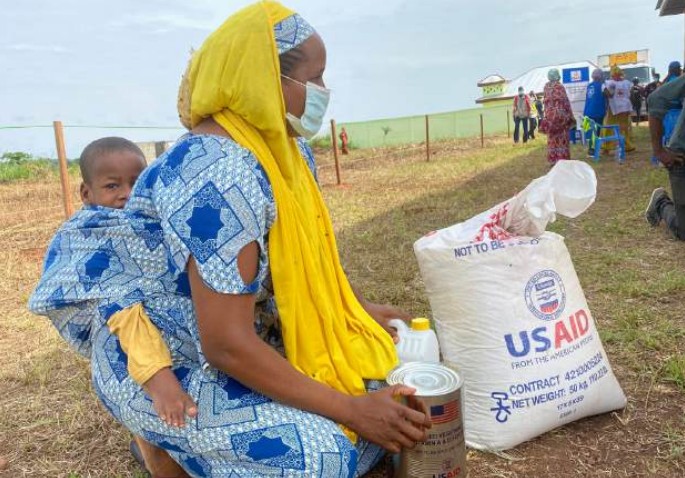
The rise of nationalist political leaders and movements across the world has led to diminishing role of development aid and military cooperation in international relations.
Within the Global North, diplomacy was conducted in the currency of strategic interests that were aligned to security concerns. In the 20th century period, the Cold War defined most of the cooperation agreements amongst the competing geopolitical blocks.
The relationships between the north and the Global South were also dependent on the vagaries of the Cold War.
Even though majority of the developing world countries openly declared non-alignment as official foreign policy, in practice each had closer ties with their respective benefactors. The former colonies of the imperial empires found themselves tied to the metropolis on account of loans and attractive aid grants.
Others who gained independence through liberation wars tactically established bonds with the Eastern Europe under the patronage of the USSR. China emerged from their war with Japan as an expansionist and controlling economy.
With a large population and industrialising economy, China found ready allies in the emerging nations of Africa, Asia and South America. However, the relationship was more exploitative to the developing nations while benefiting the north.
The cooperation agreements were designed to support the strategic and economic interests of the European nations. Each of the power blocks needed many allies to secure and support their global interests through the UN as well as domestic economic stability.
The third world countries continued to provide agricultural and industrial raw materials at grossly cheap prices to sustain the economies and lavish lifestyles of the north. The loans were enticing but with hidden strings attached. This made them entangling in the long run and trapped the new nations in a cyclic debt burden.
Diplomacy is the practice of managing international relations through peaceful means like negotiation, dialogue and compromise, rather than force. It is the primary instrument for a country to conduct foreign policy by communicating its interests, resolving disputes, building alliances and fostering cooperation on global issues such as trade, security and the environment.
Key actors in diplomacy include diplomats, who work through institutions like embassies and ministries of foreign affairs and international organisations. In many instances, international relations have also been devoid of peaceful engagements.
Military intervention in international relations is considered necessary in cases of imminent threat or self-defence, to enforce international law and punish severe violations, or to protect human rights when a state is unwilling or unable to do so, as outlined by the Responsibility to Protect (R2P) principle. Interventions are also conducted to maintain or restore peace, and can sometimes be done with the consent of the target country.
Under these circumstances, the dominant states would push through a resolution of the UN so as to justify their military action. The superpower would rally their allies to provide political goodwill by voting to support the action. Thereafter, they would deploy their military arsenal to exact the desired actions.
In extreme cases, governments have been overthrown in the process. In their stead pliant regimes have been installed largely in the interests of the intervening state. The principles of these early and contemporary diplomatic relations are guided by the ideologies and beliefs of the World War Two victors. The victors abrogated themselves veto powers within the UN Security Council.
The council is the world’s most powerful governing organ of the UN. In spite of the presence of the USSR, and later Russia and China in the council, the other members from the western hemisphere always had their way. In the escalation of the cold war there emerged the military cooperations of NATO and Warsaw Pact. NATO was led by the USA for the West and Warsaw Pact led by the USSR for the East, respectively.
The resultant relationship with the Global South was therefore not based on mutual agreements and benefits. It was determined by the interests of the super powers. They set the terms that skewed in their favour.
When the Berlin Wall was brought down in 1990, the Cold War ended unceremoniously. The world politics became de facto unipolar with the US as the single superpower and global watchdog. Out of necessity and political brinkmanship, the US redefined and reorganised the principles of diplomatic engagement among nations. Without the counterforce of the USSR, NATO dictated the rules for international relations.
The period also marked a decline in economic growth among the third world and they required a lot of intervention from the bigger economies. NATO used the Bretton Wood institutions of World Bank and IMF to initiate stringent conditionality for aid to the third world. Hitherto, the superpowers had propped up strongmen and dictators in the third world to protect their interests.
Now they demanded open governance systems through democratic practice. The question of transparency and accountability became critical in the management of public resources.
This was to stem the runaway corruption that had become the hallmark of third world governments. Unfortunately, the structural adjustment programmes imposed on the developing nations ended up pilling up more debts as the default rates compounded.
Loan repayments were rescheduled but at additional costs. Political instability set in most countries and the economies stumbled with unemployment and inflation hitting all time high.
The stable economies that relied on natural resources such as oil and minerals were sabotaged through espionage and regimes toppled. In their place, weak heads of government were planted to support the extractive nature of the diplomatic relationships between the US and allies and the third world countries. The West needed to exploit the vast natural resources in the developing nations at minimum cost.
This approach only helped to entrench corruption in these counties instead of stopping it. Without strong national institutions to safeguard good governance, corruption became syndicated between the comprador states and the metropolis in the West.
Third world leaders were facilitated to open personal offshore accounts for kickbacks awarded on single sourced and restricted procurement in favour of the European contractors.
Unfortunately, the arrangement where the US and allies established friendly regimes became a heavy burden in sustenance. At the end of Barack Obama’s regime and in Europe, there emerged nationalist political movements.
Global concerns began to be frowned upon. Many political leaders grew popular by championing nationalistic and domestic agenda against global issues. World security, human rights and climate change took back banner as western leaders asked for the logic in subsidising other nations expenditures.
Development aid and loans became scarce and more expensive. President Donald Trump became blunt in his second term. He just cut almost all aid to the developing world by the stroke of a pen through his many executive orders. Earlier, the UK had exited from the European Union through the Brexit campaign referendum.
Their argument was that the country was underwriting the chunk of the Brussels institution’s budget. Long before Trump came onto the scene last year, President William Ruto had foreseen the signs of the time. He initiated a campaign for stronger intra-Africa trade ties and championed the elimination of interstate movement within the continent.
At the global stage he boldly called out the developed world for creating unfair trade practices. He further challenged the UN to revise its articles of association to enhance the equal participation of member states.
The argument has been embraced by states and hence the decline of aid as the main currency for diplomacy. The two milestone undertakings by the Ruto administration in regards to international relations come to mind.
The Haiti mission and the leading role in COP23 and 24 have placed the country at the forefront of diplomatic leadership. These have been followed by a series of bilateral trade agreements with various countries to promote mutually beneficial commerce and industry.
Moving forward, nations that embrace exchange of quality goods and services will be at the high table of international diplomacy as opposed to those who rely on development aid either as benefactors or recipients.





