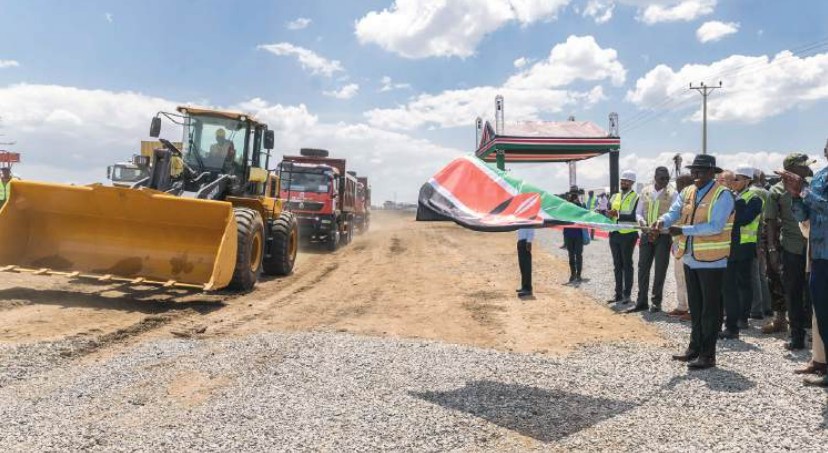
Kenya’s formal launch last week of the dualling of the Rironi–Naivasha–Mau Summit Road marks a defining moment in the country’s infrastructure journey.
Far from being a ceremonial announcement, the launch signalled the start of a transformative undertaking, one that will reshape mobility, trade and the economic geography of Kenya and the wider East African region.
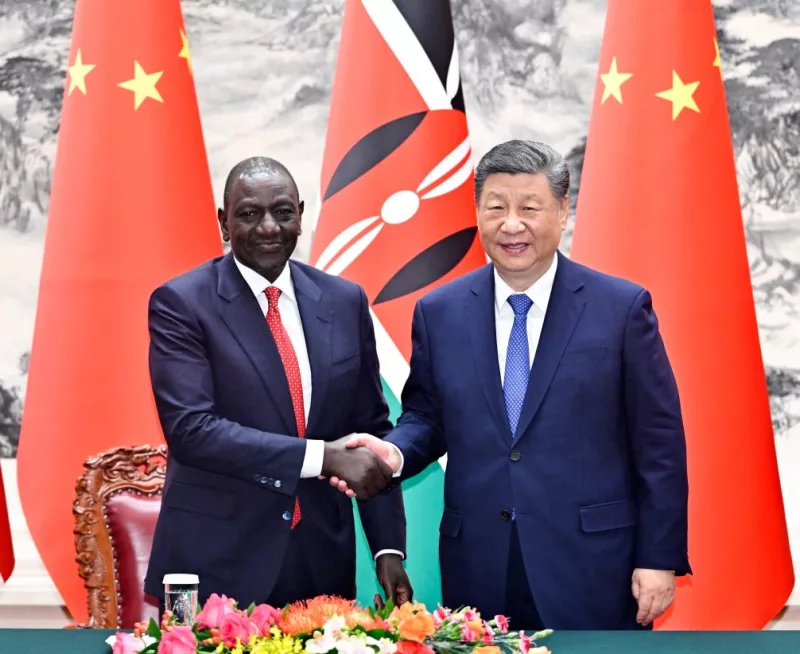
As construction begins under a public–private partnership led by a consortium of Chinese companies, this corridor stands poised to become a flagship symbol of what strategic cooperation under the Belt and Road Initiative can deliver for Africa.
The Northern Corridor has always been Kenya’s economic backbone. It links the Port of Mombasa to Nairobi, Naivasha, Nakuru, western Kenya and the landlocked economies of Uganda, Rwanda, Burundi, South Sudan and eastern DRC.
Yet for years, congestion, slow-moving traffic, high transportation costs and safety challenges have undermined its full potential. The decision to dual this key stretch from Rironi through Naivasha and up to Mau Summit addresses those constraints with the seriousness they deserve.
But the project’s significance extends beyond asphalt and interchanges. It embodies a larger vision: one where Kenya positions itself as a regional hub of efficiency, investment and connectivity. In many ways, the project aligns naturally with the BRI’s focus on developing high-quality infrastructure that enhances trade flows, reduces logistical bottlenecks and integrates markets across continents.
China’s participation through its consortium is central to this story. For over a decade, Chinese engineering firms have refined their expertise in African terrains – from Standard Gauge Railways to port modernisation and urban expressways.
Their involvement in this project reflects not just technical capacity but long-term strategic partnership. Under BRI, China promotes infrastructure that unlocks economic potential and Kenya has emerged as a critical gateway along Africa’s east–west trade axis.
Dualling the Rironi–Mau Summit stretch is therefore not an isolated venture; it is an infrastructural complement to the grander regional connectivity map China envisions for East Africa.
For Kenya, this partnership delivers concrete, measurable gains. First is the anticipated reduction in travel time. Once complete, the smooth flow of vehicles will cut long delays that currently slow freight movement and increase costs. The agricultural economies of Rift Valley and Western will particularly benefit: faster transport means fresher produce reaching markets, fewer post-harvest losses and more competitive farm-to-market supply chains.
Second is the increase in safety. The existing road has long been notorious for accidents, particularly on the steep and winding escarpments. A modern dual carriageway with service lanes, grade separations and enhanced engineering standards will significantly curb these tragedies and promote safer travel for commuters and transport operators alike.
Third is the stimulation of local economies. Better roads attract new investment—hotels, logistics depots, service centres, light manufacturing parks and housing developments.
Towns such as Naivasha, Gilgil and Nakuru are already emerging as commercial magnets; improved mobility will accelerate that momentum. Small and medium-sized enterprises along the corridor stand to benefit from increased traffic, expanded customer bases and improved access to suppliers and markets.
Most importantly, the launch signals Kenya’s growing sophistication in infrastructure financing. Through the PPP model, risk and responsibility are shared, ensuring that the road is constructed, operated and maintained to high standards while easing immediate strain on the exchequer.
It also reflects confidence from investors—including Chinese partners—who see Kenya as a stable, growth-oriented economy worthy of long-term engagement.
From the perspective of the BRI, the project aligns perfectly with its three core pillars: connectivity, cooperation and shared prosperity. By improving the reliability and efficiency of the Northern Corridor, China helps create a smoother trade route linking Africa’s interior to global markets.
The road complements other BRI-linked investments in rail, energy, ports and industrial parks, creating a network effect where each project amplifies the impact of the next.
Critics often question China’s role in Africa, but the Rironi–Naivasha–Mau Summit project demonstrates the opposite of the skepticism: it is an example of cooperative development built around Kenya’s priorities, implemented through mutually beneficial arrangements and designed to generate long-term economic returns for the region.
The launch of this road is therefore not simply an infrastructure milestone; it is a statement of aspiration. It reaffirms Kenya’s commitment to becoming a competitive, well-connected regional powerhouse and it showcases the positive evolution of Kenya–China relations under the BRI.
If executed with transparency, environmental care and community involvement, the corridor will stand as a landmark of shared progress—proof that when vision meets partnership, development becomes not just possible, but inevitable.