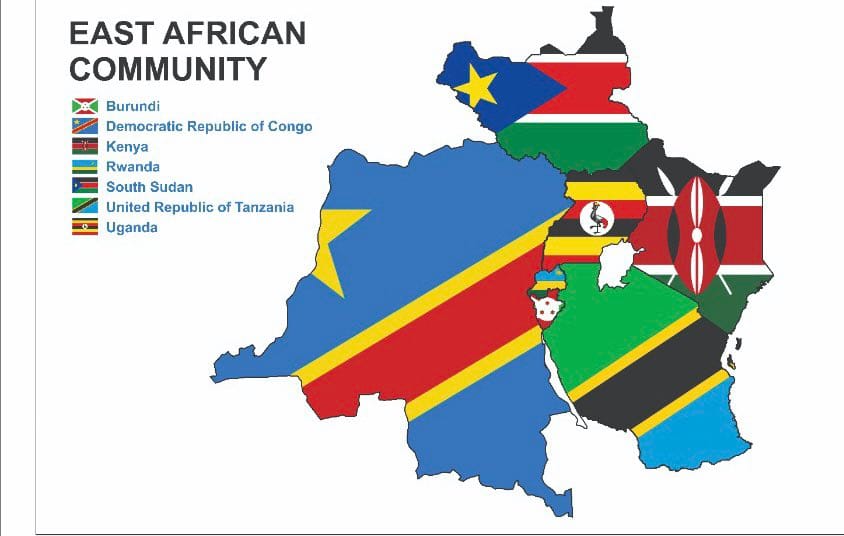
Somalia’s recent encounter before the East African Court of Justice — its first since joining the East African Community — marks a profoundly important moment in the country’s regional integration journey.
The consolidated case filed by Ali Abdullnur Osman, Abdullahi Mohamed Ahmed and Ahmed Mohamed Awil, challenging the procedure used by the Federal Parliament in nominating Somalia’s representatives to the East African Legislative Assembly, illustrates the legal and political consequences that arise when national procedures intersect with regional obligations.
The interim orders issued by the court, restraining the EALA speaker and clerk from administering the oath of office or recognising Somalia’s transmitted nominees, underscore both the seriousness of the legal questions raised and the court’s readiness to assert its authority under the EAC Treaty.
This case is not simply a procedural dispute—it is a profound test of Somalia’s adherence to regional norms and the enforceability of the treaty over member state actions.
At the heart of the case lies Article 50 of the EAC Treaty, which mandates that EALA representatives be elected through a democratic, representative and transparent process that reflects political, gender and other forms of diversity.
Articles 51 and 52 further elaborate on how member states must organise these elections and the obligations they bear in ensuring compliance. Since the EACJ is empowered by Articles 23 and 27 of the treaty to interpret and enforce these obligations, Somalia’s domestic processes are no longer shielded from external review—they must align with regional standards.
The applicants in Application No. 16 of 2025 (EACJ), Amb Mohamed Ahmed Awil & Another v. Somalia & EALA, argue that the Somali Federal Parliament departed from these standards, rendering the outcome inconsistent with the treaty.
Their contention mirrors the legal challenges previously brought against Uganda in 2012 and South Sudan in 2017, where the court invalidated national procedures that failed to meet Article 50 requirements.
In both cases, the court made it clear that member states cannot treat EALA elections as purely domestic political processes; they are bound by regional legal obligations that supersede political expedience.
Early reports that Somalia has lost at the first-instance level—although the judgment is still awaited—suggest that the EACJ has maintained consistency in its jurisprudence.
If the court indeed found that Somalia’s selection process fell short of treaty standards, the implication is clear: even as a newly admitted member, Somalia is expected to meet the same democratic, procedural and administrative obligations that bind all EAC member states. Membership comes not only with rights, but with significant responsibilities.
Somalia retains the right to appeal, but only on grounds that the court misinterpreted the treaty’s legal provisions. This limited avenue emphasises that the central issue is not political preference but the proper application of regional law.
Beyond the immediate legal consequences, this case serves as a critical learning opportunity for Somalia. Joining international and regional organisations requires a deep understanding of the legal frameworks governing those institutions.
Failure to comply exposes states to litigation, embarrassment, shame and potential invalidation of national decisions—costs that can be avoided through better preparation and institutional cohesion.
As Somalia continues its integration into the EAC, it is imperative that its political, legislative and judicial institutions internalise the standards and obligations that accompany membership. The EAC is a rules-based community, and respect for those rules is essential not only for compliance but also for credibility and effective participation.
Ultimately, the case symbolises Somalia’s growing engagement with regional governance and the rule of law. It is a reminder that sovereignty in a regional system is exercised through compliance, not exception and that the legitimacy of national decisions increasingly depends on their alignment with higher regional norms.