CNN journalist Larry Madowo has publicly defended his investigative reporting on Tanzania’s post-election violence, emphasizing the risks witnesses took to share their experiences.
In an Instagram post, Madowo wrote: “Tanzanians risked their lives to speak to me for our CNN investigation. We only reported what we carefully verified and can prove. Nobody has pointed out a single lie in our reporting despite a social media campaign by trolls to discredit it.”
His statement comes amid the release of a CNN documentary which documented allegations of police killings, concealed fatalities, and harsh crackdowns following the 29 October 2025 election.
Disputed Election Sparks Unrest
Tanzania’s 29 October election, in which President Samia Suluhu Hassan was declared the winner with around 98% of the vote, was immediately contested by opposition groups and civil society. Reports of irregularities, boycotts, and political suppression led to widespread protests in major cities, including Dar es Salaam and Arusha.
Security forces responded with tear gas and live ammunition, with eyewitness and forensic evidence indicating multiple civilian deaths. Hospitals and mortuaries were overwhelmed, highlighting the scale of the unrest.
The CNN investigation relied on satellite imagery, geolocated videos, audio analysis, and testimony from over 100 Tanzanians to document the violence.
Among the incidents reported, two people were killed at a single intersection in Arusha, including a pregnant woman who was shot in the back and died instantly. Audio verification confirmed that the shots originated from police positions, contradicting official accounts.
Allegations of Concealment
The report also raised allegations that authorities attempted to conceal the true death toll. Video evidence showed freshly turned soil across wide areas, consistent with testimony that young men were ordered to dig mass burial sites.
While CNN could not independently verify the existence of the graves, satellite imagery reportedly showed soil disturbances in cemeteries corresponding with the timeline of the protests.
ALSO READ: Larry Madowo: They Paid Goons Sh100K to Attack Me and Break My Cameras
According to opposition sources, as many as 2,000 people may have died during the week-long unrest, though the government described this figure as “hugely exaggerated.”
The scale of casualties reportedly overwhelmed local infrastructure, with doctors describing mortuaries so full that bodies had to be left outside.
Government Response and Inquiry
The Tanzanian government made efforts to stop the story before publication. Furthermore, CNN asked the government and police for comment prior to broadcasting, but did not receive a response to their detailed questions.
Following the documentary’s release, the government issued a Public Notice on 21st November 2025. They acknowledged the CNN documentary concerning the 29th October events.
“The Government is currently reviewing and verifying the contents of the documentary. An official response will be issued upon completion of this assessment.”
Madowo countered this statement, saying that the Tanzanian government was adamant to give their side of the story when he reached out to them before releasing the expose.
“The Tanzanian government didn’t respond to our detailed questions before we published. Now they’re saying this. They tried to block this story from getting out. But we’re telling it to the world,” Madowo posted.
In separate remarks, the government dismissed the opposition’s death toll figure as "hugely exaggerated". President Hassan has launched an inquiry commission into the unrest.
However, she caused further controversy by suggesting that protesters were paid to take to the streets.
Social Media Solidarity Campaign
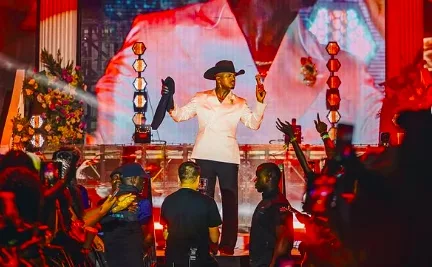
Following the broadcast, Tanzanians launched a major online campaign to show solidarity with the reporting. Thousands of social media users, particularly on Twitter, changed their profile pictures to feature Larry Madowo’s image, quickly turning him into a viral phenomenon.
Posts expressing support appeared in both English and Swahili, with many praising the journalist for “covering without fear or favour” and highlighting the importance of a free press. The campaign served as both a tribute to investigative journalism and a visible demonstration of public engagement with the revelations.