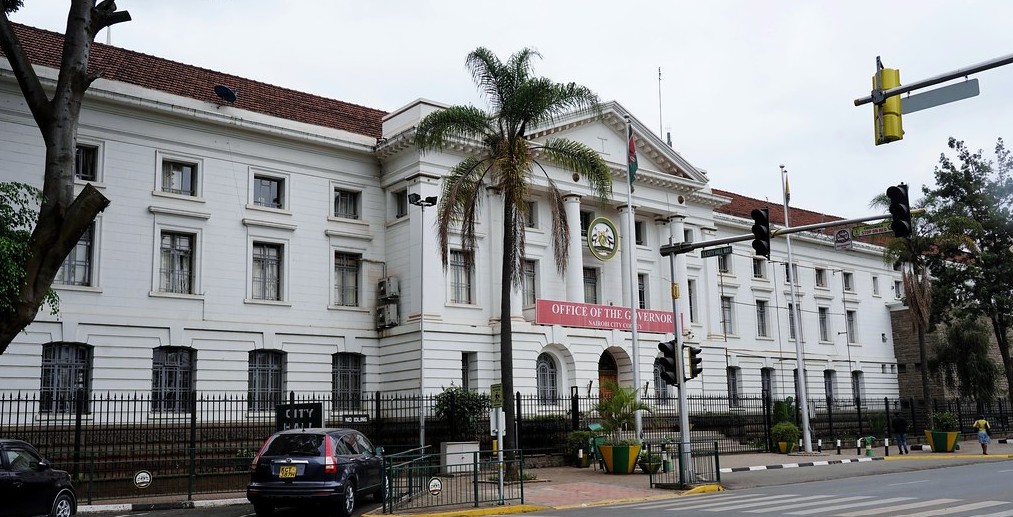
The Employment and Labour Relations Court has ordered the Nairobi County
Assembly and its Speaker to pay a former nominee for Chief Officer Sh7 million
for failing to complete his vetting process.
Advertisement
Advertisement
Justice Byram Ongaya ruled that the Assembly and Speaker violated Halkano
Dida Waqo’s constitutional rights by failing to communicate the outcome of his
vetting for the position of Chief Officer for Housing and Urban Renewal.
“The 3rd and 4th respondents to jointly or severally pay the petitioner Sh7
million by January 15, 2026, and failing interest to run thereon at Court rates
from the date of this judgment until full payment,” the Judge ruled.
Waqo was nominated by the Nairobi Governor on April 15, 2024, and vetted by
the County Assembly’s Lands, Planning and Housing Committee on May 6, 2024.
He had been nominated alongside six other candidates.
However, the committee never tabled its report before the full House within
the statutory 21 sitting days.
Advertisement
Advertisement
Waqo said on May 21, 2025, the County Assembly held a special sitting where
it considered reports for six nominees, excluding the report with respect to
him.
He argued the committee’s failure to table the report inexplicably excluded
him within the context of standing order No. 32(4) of the Standing Orders of
the County Assembly of Nairobi City.
The court heard that after the vetting proceedings, Waqo has never been
notified of the outcome of the vetting process and in violation to the
Constitution and the Public Appointments (County Assemblies Approval) Act,
2017.
Section 9(1) of the Act states, “(1)Unless otherwise provided in any law, a
committee shall consider a nomination and table its report in the County
Assembly for debate and decision within twenty-one sitting days from the date
on which the committee first sits to consider the nomination.”
He said on September 19, 2024, he wrote to the County Assembly and its
speaker in a bid to follow up and establish the status of the outcome following
his vetting as nominated for Chief Officer Housing and Urban Renewal.
No response came, he said, despite making numerous formal and informal
inquiries on whether his nomination was approved or rejected for appointment.
Waqo stated that the respondents were automatically required to address his
reasonable expectation and the failure to do so was unlawful, unreasonable,
procedurally unfair and in breach of the legitimate expectation to due process
in the vetting and appointment proceedings.
The responded however argued that the petition did not meet the evidentiary
threshold of granting the orders sought as the facts and or grounds upon which
it was anchored and premised did not raise any constitutional infringement or
violation to warrant granting the orders.
They added that the allegations imposed on Governor and the City County were
“far-fetched, misconstrued, unlawful and unreasonable”.
In the judgment, Justice Ongaya said the Assembly’s failure to act amounted
to a violation of Articles 35 and 47 of the Constitution, which guarantee
access to information and fair administrative action.
“The failure to table the vetting report and communicate the outcome was
callous, whimsical and a gross violation of the petitioner’s rights,” the judge
said.
The court found that while the Governor and the County Government had
fulfilled their role by forwarding the nomination, the County Assembly and the
Speaker were responsible for completing and communicating the vetting outcome.
Justice Ongaya declared that the two respondents had breached constitutional
values of transparency, accountability and good governance under Article 10.
The court awarded Waqo Sh7 million in general damages to be paid jointly or
severally by the Assembly and the Speaker by January 15, 2026, with interest
accruing thereafter at court rates.
“In that consideration, the Court finds that the award as made will meet the
ends of justice,” the court stated.
Other prayers, including an order to compel the Assembly to table the report
and to quash the subsequent appointment of another officer, were declined since
the process had already lapsed and the position was filled.
The ruling underscores public bodies’ obligation to conclude and communicate
administrative processes promptly, with Justice Ongaya noting that state organs
cannot let vetting processes “fade away in silence.
“Public office is about service to the people and not a power to rule
the people free from the chains imposed by the law and the Constitution,
especially, the pronouncements in the Bill of Rights,” Justice Ongaya
said.