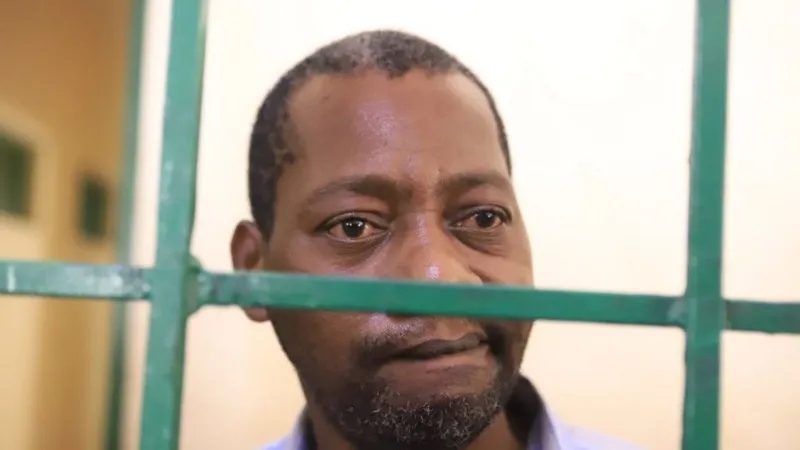
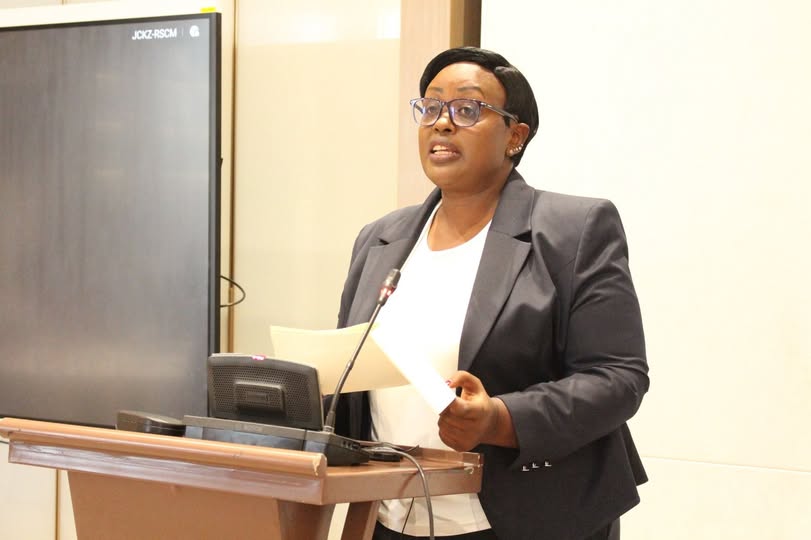
 Ipoa
commissioner
Jackline
Mwenesi /FILE
Ipoa
commissioner
Jackline
Mwenesi /FILE
The Independent Policing Oversight Authority has urged the police to embrace intelligence-led operations, deploy modern technology and strengthen community policing ahead of the 2027 polls.
The oversight agencyhas also raised concerns about police accountability.
During a meeting with the National Assembly’s Committee on Administration and Internal Security in Mombasa, Ipoa officials and lawmakers raised concerns over rising political tensions and the delicate balance between enforcing law and safeguarding human rights.
Ipoacommissioner Jackline Mwenesi placed responsibility squarely on the political class, warning that leaders must take charge in cooling tensions.
“The buck stops with the political class to lower the temperatures,” she said, cautioning against unnecessary pressure on the police.
“With all honesty, the police are not overwhelmed.”Her remarks came as lawmakers pressed Ipoa to explain its response to recent incidents of alleged police misconduct during political rallies.
Lari MP Mburu Kahangara cited a widely circulated incident involving the former Deputy President Rigathi Gachagua at ACK Watima in Nyeri, where officers were seen firing at parked vehicles and smashing windscreens.
“This is something already in the public domain,” Kahangara said. “Has anything been done to establish the command structure and officers involved? Such actions give a bad name not just to the police but to government as well.”
In defence, Ipoachief executive officer Elema Halakhe said the authority had launched both monitoring and investigative processes into the incident, but encountered challenges in obtaining accurate deployment records.
“We made significant progress, but we are yet to establish which officers were deployed,” Halakhe said.
“The information provided did not match what we found on the ground.”Halake said that Ipoa had recommended institutionalising intelligence-led policing to anticipate such incidents, alongside strengthening community policing and enhancing training in crowd management and human rights.
“There is a need for refresher training, especially as we approach 2027. In that incident, the police were least prepared,” he said.
Lawmakers repeatedly stressed the need for proactive policing, with Sotik MP Julius Sigei calling on Ipoa to move beyond reactive oversight and anticipate emerging threats.
“I would like to see Ipoa being more proactive, looking at possible scenarios and deploying technology accordingly,” Sigei said, warning of large-scale unrest similar to past incidents where crowds overwhelmed security agencies.
The discussion also turned to the use of force by police officers, with committee vice chairperson and Saku MP Dido Rasso questioning how Ipoa defines legitimate use of force in an increasingly charged political environment.
Rasso warned that Kenya’s electoral history suggests heightened tensions in 2027 due to incumbency dynamics, potentially leading to increased protests and police engagement.
“What is your projection based on this history?” he said, adding that leadership both political and institutional, must take responsibility to prevent chaos.
Ipoa officials acknowledged the concern, revealing that the authority is already modelling election-related scenarios based on past trends to improve preparedness.
“We are studying historical patterns and projecting possible outcomes to better prepare,” Halakhe said.
On technology, both lawmakers and Ipoa officials backed the adoption of tools such as drones, body cameras and CCTV systems to enhance transparency and accountability.
Teso North MP Oku Kaunya, however, cautioned that drones may not be effective in spontaneous incidents such as sudden attacks by goons.
“In unpredictable situations, by the time you deploy a drone, the damage may already be done,” he said, urging a balanced approach.
Ipoacommissioner Annette Mbogo clarified that drone deployment would be intelligence-led and primarily used in planned public order situations.
“It will be suitable for monitoring planned events, but less effective in spontaneous incidents,” she said, adding that a legal and data protection framework would be required for its use.
The authority also endorsed the use of body cameras and CCTV systems in police stations, noting that technological evidence is harder to manipulate and could strengthen investigations.
Narok West MP Gabriel Tongoyo, who chairs the committee, sought assurance on the rollout of body cameras.