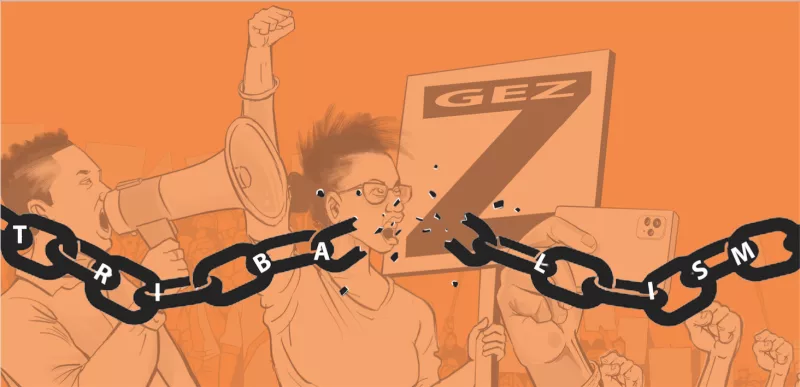
As we head to 2027, Kenya is not just approaching another election. We are approaching a defining moment. A moment that will answer a fundamental question: will we continue to practice politics as inherited drama, or will we finally practice politics as a deliberate design for the future?
For decades, Kenyan politics has been defined for the youth, but rarely defined by the youth. The narratives have been set elsewhere. Tribe against tribe. Personality against personality. Government versus opposition. Rich versus poor. The script is old, the actors change, but the play remains the same. And the biggest losers in that play have been the young people of this country.
That is why the most urgent task for Kenyan youth today is not to choose a side. It is to change the debate itself. We must lead the objectivity debate.
Define objectivity debate
The objectivity debate is a simple but radical demand: that we judge Kenyan politics not by who is speaking, but by what is being said. Not by where a leader comes from, but by what that leader can actually do. Not by the noise on the podium, but by the numbers in the budget, the policy paper, the implementation plan.
For too long, our politics has rewarded loyalty over logic. We have been asked to defend our political camps even when they are wrong, and to attack the other camp even when it is right. This is subjective politics. It is emotional, it is ethnic, it is transactional. And it is expensive.
Objective politics asks different questions. If a government programme is working, can we say it is working even if it was started by someone we did not vote for? If a policy is failing, can we say it is failing even if it is being championed by our own community? Can we separate a good idea from the person who carries it?
This is the maturity Kenya needs before 2027. And only the youth can lead it, because we are the only generation with the least to lose from breaking with the past, and the most to lose if the past is repeated.
As we approach 2027, the youth must refuse to be mobilised as foot soldiers for anger. We must position ourselves as the referees of reason. When a leader comes to our constituency, our question should not be "What party are you from?" but "What is your economic blueprint for my ward?" When a manifesto is launched, we should not ask how many pages it has, but how many jobs it can create.
If we do not lead this shift, we will walk into 2027 with 20 million voters under the age of 35, voting on the basis of narratives crafted by a few people over the age of 60. That is not democracy. That is demographic betrayal.
Exploit digital openings
To lead an objective debate, young people must also be economically empowered. An unemployed youth is easily bought. A dependent youth is easily swayed. An idle youth is easily weaponised.
This is why we must be brutally honest about opportunity.
The government has opened several doors in the digital economy that did not exist five years ago. Programmes like Ajira Digital, Jitume Labs in Tvets, Kenya Youth Employment and Opportunities Project and the expansion of fibre and digital hubs in constituencies are not political favours. They are infrastructure. They are tools.
I have met young people in Eldoret, Kisumu, Garissa and Mombasa who are earning Sh30,000 to Sh150,000 a month from online writing, coding, virtual assistance, data annotation and e-commerce, simply because they took the Jitume training seriously and treated their laptop as a farm.
This is not to say everything is working. It is not. The cost of data is still high, devices are still expensive and many hubs still lack consistency. But objectivity demands that we acknowledge progress where it exists and build on it, rather than dismiss everything because of politics.
The call to Kenyan youth is this: take the digital jobs. Take them aggressively. Register on the platforms. Learn the skills. Form groups and bid for work as agencies. Let us move from complaining about unemployment in the baraza to competing for employment on the global server.
A youth who earns his own income online is a youth who cannot be paid Sh500 to throw a stone at a rally. Economic independence is the foundation of political objectivity.
Go beyond jobs, lead innovation
Here is the harder truth: digital employment alone will not make Kenya a first world economy. Doing outsourced jobs for companies in the UK, US and China will make us earners, but it will not make us owners.
If we want to catch up with the first world, we must shift from being users of technology to being creators of technology. From being consumers of innovation to being drivers of innovation.
The UK, the US and China did not become wealthy by being the best freelancers. They became wealthy by building things that the world must pay for. Apple, Alibaba, M-Pesa, Safaricom, Flutterwave did not happen by chance. They happened because young people in those countries were told: your idea can become an industry.
Why can the next global health-tech platform not be built in Nakuru? Why can the next logistics unicorn for Africa not be coded in Turkana? Why can the next creative economy export not come from the music studios in Nairobi's Eastlands?
Kenyan youth have three unfair advantages that no other generation had.
First, we are the most educated generation in our history. Second, we are the most connected. Third, we are the most pan-African in mindset. A 24-year-old in Nairobi today understands Lagos, Kigali and Johannesburg better than any Cabinet Secretary did in 1995.
We must use that to build.
This means moving our creativity from entertainment only to enterprise. Our TikTok creativity must become product design. Our X spaces must become policy labs. Our WhatsApp groups must become savings and investment chamas that fund prototypes, not just parties.
The private sector is where the catch up will happen. Government can create an enabling environment, but it cannot innovate at the speed of the market. The real battle for Kenya's place in the first world will be fought and won by young founders who choose to solve Kenyan problems in a way that can be scaled to the world. Food security, climate smart agriculture, affordable housing materials, low-cost diagnostics, educational content in Swahili and local languages. These are billion-dollar industries waiting to be built.
The task ahead
So as we head to 2027, I make this appeal to my fellow young Kenyans:
Do not just register as voters. Register as thinkers.
Lead the objectivity debate in your family WhatsApp group, in your campus, in your boda boda stage, in your church, in your workplace. Insist on facts over feelings. Demand that every politician who wants your vote tells you how they will grow your income, not just how they will punish their opponent.
Take the digital jobs that are available today, even as you demand better ones tomorrow. Earn your independence.
And then, dare to build. Dare to fail while building. Dare to build again. Because no one will come to save us. No superpower owes us development. We will have to innovate our way into the first world, just as those ahead of us did.
The 2027 general election should not just be about who becomes president. It should be about what kind of citizen we have become. If the youth lead with objectivity, innovation and creativity, Kenya will not just have a peaceful election. Kenya will have a prosperous future.