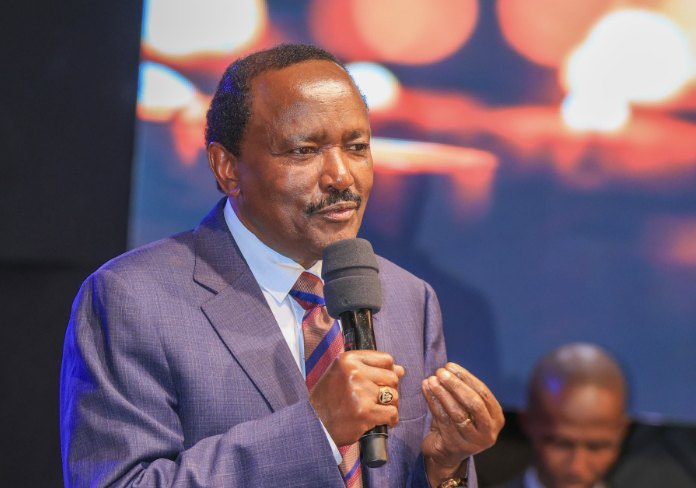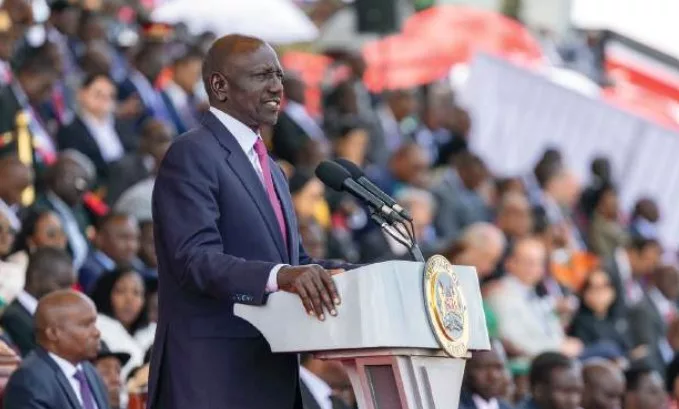
Former impeached Deputy President Rigathi Gachagua’s 2027 game plan has raised questions over whether he can marshal the Mt Kenya vote to defeat President William Ruto and influence his successor, or whether his political clout is overrated.
After his falling out with Ruto, he has sought to reposition himself as the principal political voice of a region whose support was instrumental in the Kenya Kwanza victory in 2022.
Through his Democracy for the Citizens Party, Gachagua is building a political platform around opposition to the President, regional unity and the argument that Mt Kenya needs a stronger bargaining position in the next government.
Political analysts argue that his strategy appears to have two objectives: to consolidate his support at home and use that political base to influence the formation of a national opposition coalition away from the Kalonzo Musyoka-led ‘Ukombozi Coalition’.
Political analyst Prof Macharia Munene, speaking to the Star on Wednesday, argued that Gachagua has in recent months attracted political attention, built relationships with opposition figures and secured public endorsements from allies in Mt Kenya.
“The presence of notable political leaders around him does not automatically establish that he controls the choices of the region’s electorate. His challenge is to prove that his personal popularity can translate into votes for another candidate, particularly in a political environment where leaders have competing ambitions and voters have different priorities,” Munene said.
The university don argued that Mt Kenya remains a significant electoral bloc that could boost a candidate’s national prospects.
However, he questioned whether Gachagua could deliver the votes his political suitors seek or whether his influence would prove more valuable in political negotiations than at the ballot.
He went further, comparing Gachagua’s approach to the political strategy used by former Prime Minister Raila Odinga to maintain a dependable support base in Nyanza and Western.
“If you check on Gachagua, he is committed to be a kingmaker and will decide who becomes the sixth president of the Republic of Kenya in 2027. He wants to be seen as a unity force and create a formula that would ensure that Ruto won't be reelected,” Munene said.
He added that the DCP leader had benefited politically from the sympathy generated by his impeachment and subsequent warfare with Ruto.
“Gachagua is a beneficiary of sympathy and he is creating a political environment that would favour him in 2027 either through alliances or through his own political party in Mt Kenya, Anyone he will endorse will ultimately be elected.”
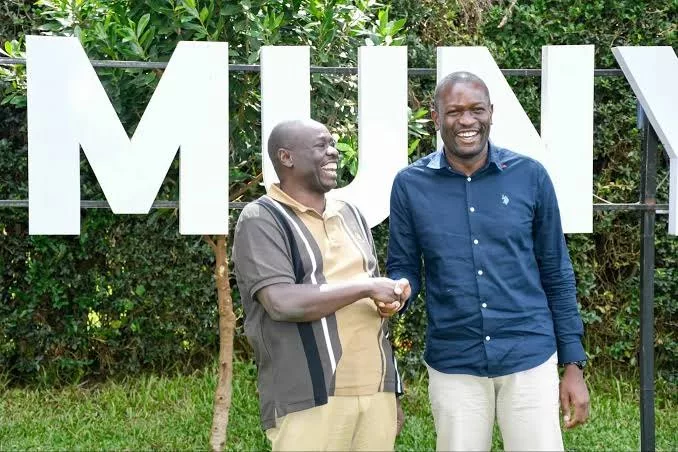
Munene said the former DP’s efforts to position himself at the centre of opposition unity were evident on Tuesday, October 20, when he met with Nairobi Senator Edwin Sifuna and leaders associated with the Linda Mwananchi movement at his Wamunyoro residence in Nyeri county.
The meeting focused on possible political arrangements ahead of 2027, including cooperation among opposition leaders and the eventual selection of a presidential candidate to challenge Ruto.
Kalonzo Musyoka, Sifuna and Gachagua featured in discussions about potential contenders, although no candidate was announced at the meeting.
Former Nyeri MP Ngunjiri Wambugu, in a social media post this week, questioned whether opposition leaders could sustain their unity efforts, saying competing party interests could complicate attempts to agree on a joint presidential candidate.
Wambugu questioned whether a handful of politicians should determine the opposition’s presidential candidate through private negotiations, rather than allowing voters to make their own choices.
He also highlighted the competing interests of opposition parties, which must contest parliamentary and county seats in 2027 to strengthen their political standing and secure a share of the Political Parties Fund.
“Why should fewer than 10 politicians decide what 20 million voters can decide for themselves?” Wambugu asked. “If they cannot agree on one candidate for MCA, MP or governor, how will they agree on one presidential candidate?”
Earlier, President Ruto had criticised Gachagua and opposition team over what he described as tribal politics, urging leaders to reject tribalism.
During Tuesday’s meeting, the DCP leader questioned why the head of state had not raised similar concerns when he campaigned for him in 2022, arguing that their political partnership had crossed ethnic lines.
“When we supported President William Ruto, he was a Kalenjin. He was not Kamau and he was not Njoroge,” Gachagua said at the Wamunyoro meeting.
Grocery seller Mary Waruinu in Maragua said in a phone interview on Wednesday that the debate over Gachagua’s influence had placed Mt Kenya at the centre of 2027 succession politics.
She said, however, that ordinary residents remained more concerned about their daily economic struggles than the political calculations of leaders.
Political leaders should not assume that regional support automatically translates into votes, Waruinu said, adding that voters would ultimately make independent choices based on their interests and various leaders’ abilities to address their concerns.
“Leaders can unite and agree on who they want to support, but wananchi also have a voice. At the end of the day, people will decide for themselves who deserves their vote,” she said.
Laikipia East MP Mwangi Kiunjuri has similarly urged Mt Kenya voters to make independent political decisions, cautioning against being swept up by political popularity and emotional mobilisation.
Speaking to the Star on Wednesday, October 21, the Service Party leader said voters should judge politicians by their performance, policies and ability to deliver, rather than automatically following a particular party or movement.
Kiunjuri, who supports Ruto’s reelection, said the region should approach the next election with a clear understanding of its development priorities and the choices available to voters.
“We have always chosen our leaders based on their ability to serve us, not based on political parties,” Kiunjuri said, emphasising the importance of a leader’s record over party affiliation.
He also defended multiparty democracy, arguing that political alliances should not necessarily require smaller parties to abandon their independent platforms.
Democratic Party national chairman Esau Kioni attributed Mt Kenya’s political divisions to rivalry and a lack of mutual respect among leaders, He urged Gachagua and other opposition figures to put aside personal ambitions and work towards a common agenda.
Prolonged infighting and delays in settling on a joint presidential candidate could complicate the opposition’s preparations for the 2027 election, Kioni said.
He called on leaders across the region, including Gachagua, DP Kithure Kindiki, former President Uhuru Kenyatta and former Attorney General Justin Muturi, to adopt dialogue and cooperation regardless of their party affiliations.
Kioni argued that unity will serve as a key asset for the region’s political future and development.
“What is ailing Mt Kenya is political jealousy and the politics of ‘why not me?’ Unless we stop that habit, we may not move forward politically as a region. Let us embrace one another irrespective of our party affiliations,” he said.
Gachagua’s allies have frequently pushed back against concerns over political divisions in Mt Kenya, maintaining that his (Gachagua) mobilisation aims consolidate the region’s voice and strengthen the wider opposition ahead of 2027.
Kiambu Senator Karungo Thang’wa, speaking to the Star, said Gachagua remained a central figure in the region’s political debate, adding that his return from the United States had revived opposition activity.
A huge welcome home rally and procession on October 20 had been talked about - along the lines of the 2014 welcome, ‘Baba, While You Were Gone’ - but it didn’t materialise for Gachagua who launched into meetings.
“Gachagua is ultimately the region leader and the face of the opposition. I think you can feel the political temperature in the country is back since his return from the USA. We are doing what is needed to make sure that Gachagua is leading the community,” Thang’wa said.
He dismissed suggestions that competing political voices could derail the unity campaign, insisting that the DCP leader’s allies would continue mobilising despite differences within the region.
“Not everyone shouting one term is one of us and we know them. We will continue with our gospel and nothing will divide us,” the senator said.
Thang’wa maintained that the region would continue championing a common agenda, despite differences in political ideology, arguing that Gachagua is committed to reaching out to leaders and forging alliances across Mt Kenya and beyond.
Kipipiri MP Wanjiku Muhia also defended Gachagua’s leadership, describing him as a central figure in Mt Kenya politics and urging residents to remain united despite competing interests and what she characterised as pressure against the region.
She maintained that the former DP continued to enjoy support among leaders and residents who believe he should play a leading role in shaping Mt Kenya’s political direction.
Muhia said that political disagreements should not distract the region from rallying behind its preferred leadership, insisting that attempts to challenge Gachagua’s position would not weaken the resolve of his supporters.
“Gachagua is the man of the moment in the country and in Mt Kenya and everyone knows that. We will rally behind him despite the threats we are receiving,” Muhia said.
Voter Simon Kariuki from Juja constituency said Mt Kenya leaders should unite while remaining accountable to the electorate. He said political alliances should be judged by their plans to tackle unemployment, the cost of living and other economic challenges facing families.
He said voters should be free to assess leaders on their policies and track records rather than being expected to support them because of regional or political loyalties.
“We hear different leaders talking about who should lead the community, but young people also want opportunities.
“Whoever gets our support should explain how their policies will help young people find work, acquire skills and start businesses. We should not be expected to follow a leader without asking what is in the plan for us,” Kariuki said.