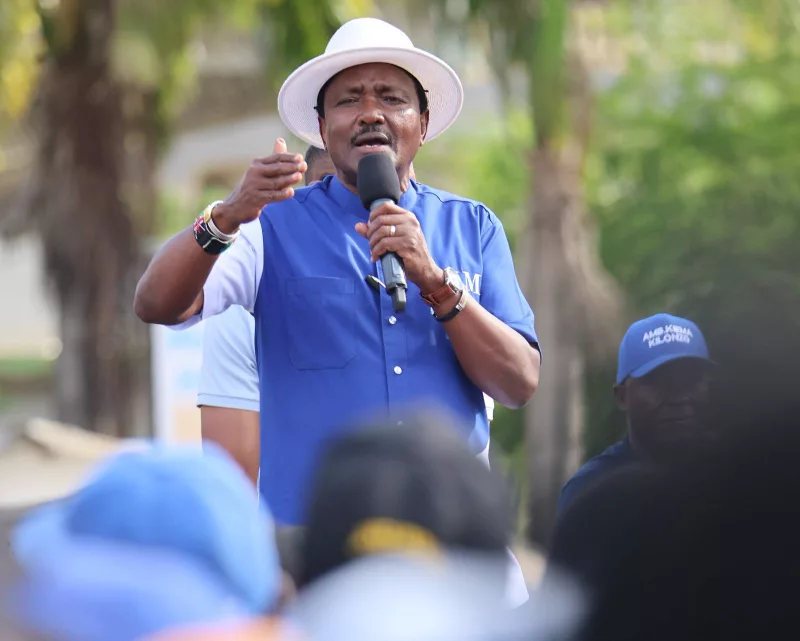
In Kenya’s ever-changing political landscape, where alliances shift and loyalties are constantly tested, one politician’s enduring relevance deserves renewed attention: Kalonzo Musyoka, leader of the Wiper Patriotic Front.
From Daniel Moi’s Kanu to Mwai Kibaki’s government and Raila Odinga’s opposition coalitions, Kalonzo has repeatedly demonstrated a political value that successive leaders have recognised.
As the country gears up for next year’s hotly contested elections and political realignments begin to take shape, neither the government nor the United Opposition should underestimate his political acumen.
Moi, a shrewd political strategist, understood the importance of building alliances beyond traditional centres of power. He recognised Kalonzo’s potential and considered him an asset within Kanu.
This was not merely about accommodating another politician; it reflected an appreciation of Kalonzo’s ability to mobilise support, negotiate across political divides and influence the national political equation.
Moi understood a fundamental truth about Kenyan elections: popularity alone does not guarantee victory. Political arithmetic, trusted relationships and an understanding of regional interests are equally important. Kalonzo possessed qualities that made him a valuable player in that equation.
Kibaki, despite emerging from a different political tradition, similarly recognised Kalonzo’s worth. His appointment of Kalonzo as vice-president demonstrated confidence in his capacity to contribute to national leadership and strengthen a broader political coalition.
It confirmed that Kalonzo was more than a regional leader; he was a politician whose influence could matter significantly in government.
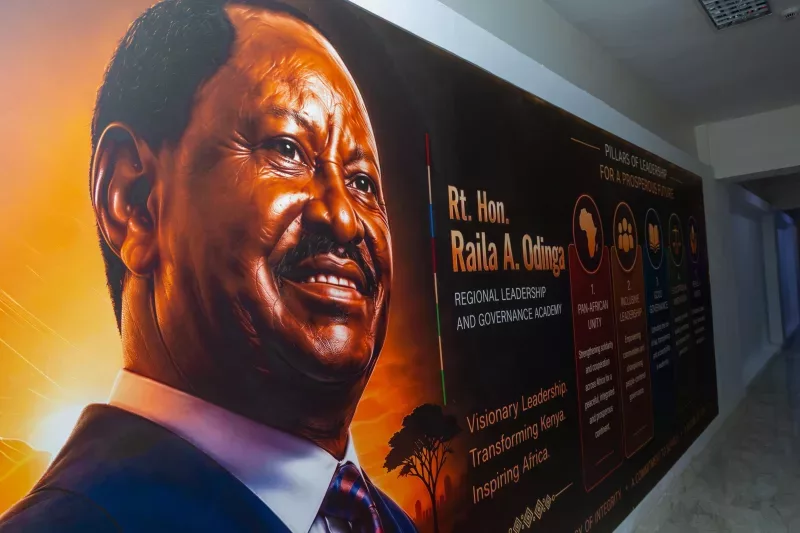
Raila shared this assessment. His decision to select the Wiper leader as running mate twice demonstrated sustained confidence in his political relevance. A running mate is not simply a constitutional accessory.
The position carries political weight, requiring someone capable of strengthening alliances, mobilising support and complementing the presidential candidate’s national appeal. Both in Cord and Nasa, campaigns were taken down to the wire and to date, no one can elucidate how Raila lost those two elections.
Their partnership was not without its complexities, but Raila’s repeated choice of Kalonzo underlined a central reality: political cooperation can offer advantages that competing separately may not deliver.
Baba’s defeat in 2022 is a good example of Kalonzo’s political immense weight because his failure to be Raila’s running mate disgruntled many Kenyans and their disappointment was so loud in the voting.
My own conversations with Raila brought this point into sharper focus. Before the burial of former Kasipul MP Ong’ondo Were, I met Baba in an undisclosed location in Nairobi. During our discussion, he reflected on his defeat in the 2022 presidential election and was looking forward to continue working closely with Kalonzo and me closely.
His remarks offered an insight into how he assessed the shortcomings of that electoral contest. They were his personal assessment, rather than proof that different alliances would automatically have changed the outcome.
Nevertheless, they demonstrated the importance he attached to Kalonzo’s participation and my own contribution to his political team.
Raila also expressed his desire to have me back in his camp ahead of 2027, serving as a striker in his team wearing jersey “Number 9” alongside Kalonzo.
During Were’s burial, I told people that I had gone to see Raila and that I hadn’t gone at night, as did Nicodemus, in front of Baba himself, explaining that Baba had asked me to return and had instructed me on the role I was to undertake.
These conversations reinforced an important lesson: political movements are built not by personalities alone, but by trusted relationships, capable lieutenants and alliances that bring different constituencies together around a common purpose.
As the 2027 election approaches, political realignments will intensify. The government will seek to consolidate its support, while the United Opposition will attempt to assemble a formidable coalition.
In this contest, neither side should make the mistake of dismissing Kalonzo as merely a regional kingpin or assuming that his political support can be taken for granted.
His experience, negotiating ability, political networks and demonstrated capacity to remain relevant across successive administrations make him a consequential figure. His decisions could influence coalition arithmetic, campaign momentum and the balance of political forces.
Whether he ultimately joins a particular alliance or pursues a different strategy, his choices deserve serious consideration.
Kenyan politics is often driven by immediate calculations, but seasoned politicians understand that elections are won through a combination of numbers, strategy, credibility and relationships.
Kalonzo’s political journey illustrates why patience and consistency can preserve influence through changing circumstances.
Ultimately, his value should not be measured solely by the office he occupies or the presidential candidate he supports.
It should be assessed by his ability to contribute to a credible national coalition and help advance a vision that responds to citizens’ aspirations.
In my honest opinion, as a citizen and without being misconstrued that I am leaning towards any political formation, truth be told that any faction that will underestimate Kalonzo’s political value come next year will be making a suicidal move. Take this to the bank!
Commissioner, Parliamentary Service Commission