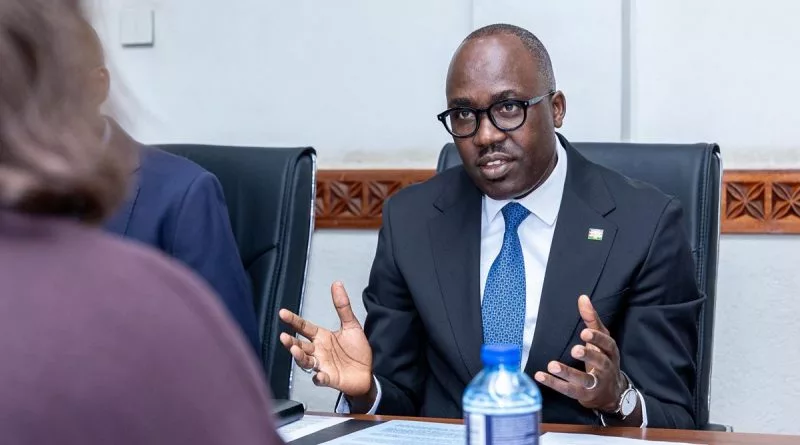
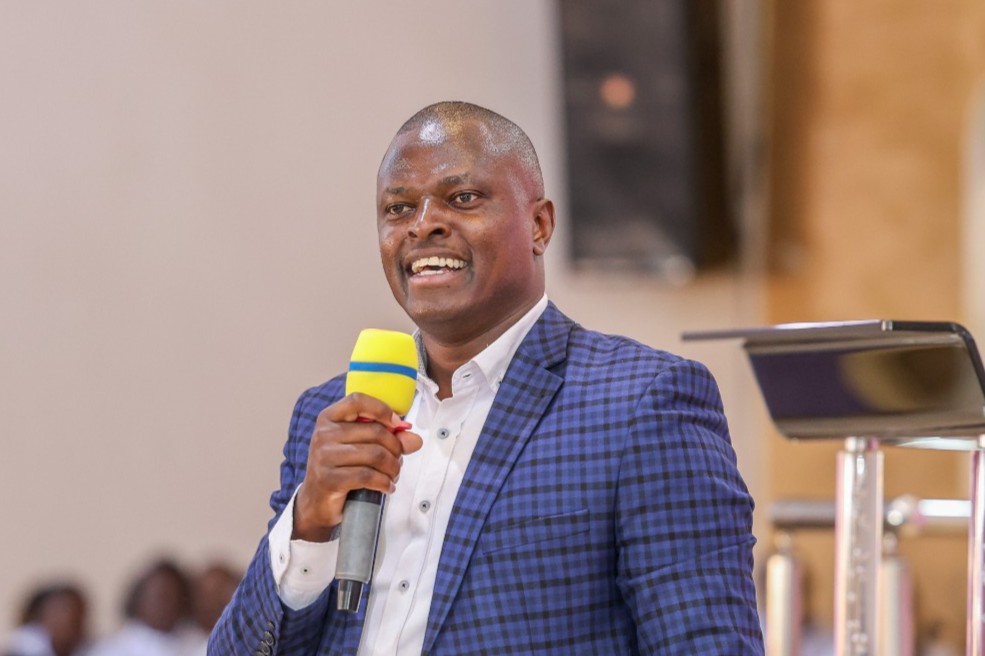
 Kiharu MP Ndindi Nyoro during a past event. /NDINDI NYORO/X
Kenya’s political landscape is undergoing quiet, significant changes as prominent politicians are acquiring lesser-known or dormant political parties to prepare for the 2027 General Election.
In recent months, the Registrar of Political Parties has gazetted a number of political outfits that have applied to change their leadership or even rename themselves, signaling fresh alignments.
Political analysts say what appear to be routine party reactivations are, in reality, carefully coordinated strategies by politicians seeking to either dodge tough nominations, stay politically relevant, or secure positions in future coalitions.
Political analyst Barrack Muluka told the Star these maneuvers, though often dismissed as opportunistic, are part of Kenya’s democratic evolution.
Muluka argued that not all politicians should be judged harshly for their new party strategy, saying some acquire parties genuinely to champion reforms and strengthen democracy.
“Political parties are protected by the constitution because they are the vehicles through which democracy thrives,” he said. “We should not be too quick to condemn politicians for owning parties. Politics is about opportunities, and parties are instruments of competition and survival.”
He added that several dominant parties started as fringe movements that later grew into national forces.
“Look at NDP, LDP, and others,” he said. “They were once small, almost forgotten entities, but eventually became the centres of power, those parties we are calling fringe have the potential of becoming strong and powerful.”
Thuo Mathenge, leader of The New Democrats Party (TND), disagreed, saying the recent takeovers of political parties have little to do with ideology or reform.
He said most takeovers are purely transactional, meant to give politicians a bargaining advantage ahead of the 2027 elections through either pre- or post-election arrangements similar to those in 2022 polls.
“Most of these politicians are not forming parties for change, they’re forming them for deals,” he said. “You are aware of past election deals from 2017 to 2022 and the trend will continue in 2027.
“Many party leaders have either finished their terms in leadership and are calculating how to stay relevant. The only way they can remain relevant is by owning a political party as it will give them leverage when coalitions are being negotiated.”
In recent months, an increasing number of politicians has quietly, through their proxies, taken over dormant but fully registered political outfits in preparation for 2027.
However, during a Democracy for the Citizens Party (DCP) delegates meeting in Kiambu, Jungle confirmed that he would contest the Kiambu governor seat under DCP, which is allied to former Deputy President Rigathi Gachagua.
In Murang’a, Kiharu MP Ndindi Nyoro reportedly has been linked to the People’s Party of Kenya (PPK), which insiders say could serve as a political insurance policy should UDA nominations turn contentious in the area.
In Meru, former Governor Kawira Mwangaza has rebranded the Umoja na Maendeleo Party, previously led by former Embu Governor Martin Wambora, positioning it as a platform for constitutionalism, inclusion and anti-corruption advocacy.
“We must respect the constitution and create a country where no one is victimised especially women and people living with disabilities,” Mwangaza said during the launch in Ntumburi.
Elsewhere, businessman Jimmy Wanjigi has taken over the Safina Party from senior lawyer Paul Muite, rebranding it with a populist economic message.
“Tukiingia hivi serikali ya Safina, deni bandia hatutalipa… na kwa sababu hatutalipa, tutakuwa na savings,” Wanjigi told supporters.
Some leaders have dismissed the trend as political opportunism disguised as democracy.
In Nairobi, businesswoman Agnes Kagure recently took over the Kenya Patriots Party, which she plans to use to run for governor. She is also is also expected to field candidates for positions under the party’s ticket.
Speaking to the Star, The Service Party leader Mwangi Kiunjuri said the mushrooming of political parties should not be viewed purely as a political game plan ahead of 2027, but as a sign of vibrancy within Kenya’s multiparty system.
“We must distinguish between democracy and opportunism, the right to form a party is protected by the constitution, but that right should come with responsibility. Political parties must stand for values, not vanity.” Kiunjuri said.
He emphasised that while every Kenyan has the freedom to form or join a political party, the motivation should be to serve the public interest and not to pursue personal ambition.
Kiambu Senator Karungo wa Thang’wa said many of the newly revived or formed parties are “state-sponsored tools” aimed at dividing Mt Kenya’s political unity.
“Most of these mushrooming parties are not innocent projects,” Thang’wa said. “They are tools of division, carefully planted to weaken the unity of the mountain and scatter our voting bloc.”
He said regional leaders serving the interest of ‘Wanjiku’ will traverse the region to expose what he called “state-backed projects”.
“We know them, and we will educate our people. We can tell which parties stand against oppression from the Ruto regime and which ones are being used to divide Mt Kenya,” he said.
Political analyst and Thika parliamentary aspirant Ephraim Wainaina said the rise of these new parties reflects deepening cracks within the UDA because aspirants doubt that party’s nominations are transparent and representative of the people’s will.
“Many leaders are simply creating political insurance policies,” he said. “They want fallback options if they’re denied tickets or clash with party power brokers. But this also signals mistrust within the ruling coalition.”
Unless these parties are rooted in genuine ideology, they will only confuse voters and weaken Kenya’s democracy, he said.
“Party politics should be issue-based, not personality-driven. If they are formed purely for 2027 survival, they will disappear after elections and leaving voters with nothing,” he warned.
National chairman Isaiah Gichu of the Party of Democratic Unity (PDU) said the current wave reflects ambition over ideology.
“This is about access to power, not necessarily transformation; we must refocus on representing the people’s real interests.” Gichu said.
He warned that endless splinter parties could dilute democracy rather than deepen it.
“What the country needs now are strong, value-driven parties that unite Kenyans around issues and not political vehicles built around individuals. We should focus on service, not survival,” he said.
In Kakamega, Senator Boni Khalwale recently acknowledged the shifting ground, confirming plans to ditch UDA for the newly launched United Patriotic Movement, a youth-led party managed by university students.
“The leaders of this party are young people basically from universities who are organised and ready to take charge of Kenya’s future,” Khalwale said during the launch at his Malinya home on July 14.
Former Deputy President Rigathi Gachagua has also accused President William Ruto of sponsoring new political outfits in Mt Kenya to weaken his influence.
“Ruto is planning to start many parties in Mt Kenya,” the impeached former DP said. There’s already the one by Moses Kuria—that’s Ruto’s party; the one by Kiunjuri is also Ruto’s; [former Kiambu Governor] William Kabogo’s too. He’s planning two more in Murang’a. If you hear of a new party that’s not DCP, just know it’s Ruto’s,” Gachagua alleged.
Kuria dismissed the claims as false and divisive.
“You’re misleading our people again and trying to vandalise parties we’ve built for years, even when you were blindly loyal to William Ruto,” Kuria fired back on X.
Kiamwangi MCA Kungu Smart from Kiambu South told the Star the recent rush to take over dormant parties speaks volumes about the unease and uncertainty ahead of the 2027 elections.
He said forming parties is every leader’s right but the trend shows many politicians no longer trust the big coalitions that brought them to power.
“What we’re seeing is fear and survival at play; most of these leaders’ acquiring parties want a backup plan if things go wrong in their current political homes,” Kungu said.
He said the increasing number of new parties could either inject fresh energy into Kenya’s democracy or leave voters even more confused.