For nearly eight decades, the United Nations Security Council (UNSC) has stood as the world’s most powerful decision-making body on matters of peace and security.
Its resolutions carry binding force, shaping responses to wars, sanctions, peacekeeping missions, and international crises.
Yet one continent remains glaringly absent from its permanent membership-Africa.
Despite being home to 54 member states, nearly a third of the UN’s membership, and contributing heavily to peacekeeping operations, Africa has no permanent seat on the Council.
This absence has fueled a long-running campaign by African leaders, who argue that the Security Council must reflect the realities of the 21st century rather than the power dynamics of 1945.
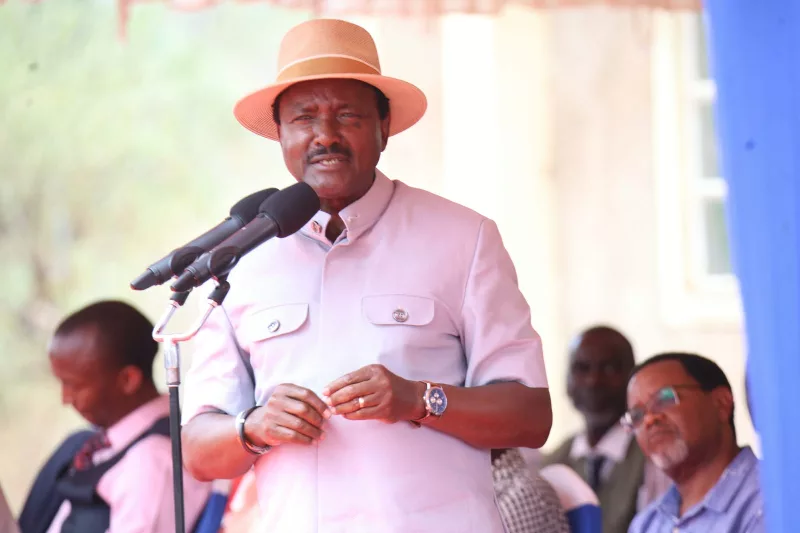
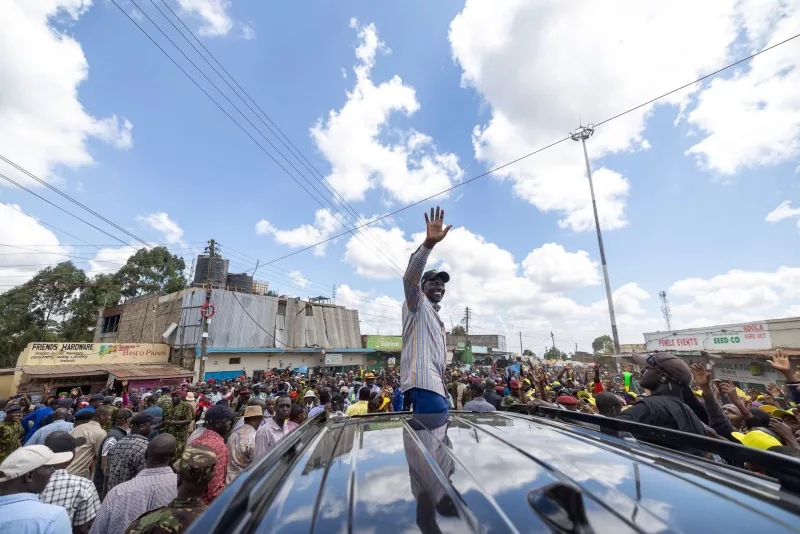
In his address during the United Nations General Assembly (UNGA), President William Ruto demanded reforms that would grant the continent “at least two permanent seats with full rights, including the power to veto, and two additional non-permanent seats.”
In his address to the world leaders, Ruto challenged the legitimacy of a system that continues to sideline Africa despite its central role in global peacekeeping and conflict resolution.
“You cannot claim to be the United Nations while disregarding the voice of 54 nations. It is not possible,” he said.
He argued that reforming the Security Council is not a favour to Africa, but “a necessity for the United Nations’ own survival.”
“If the United Nations is to remain relevant in this century, it must reflect today’s realities, not the postwar power arrangements of 1945,” he said.
At the heart of this campaign lies the Ezulwini Consensus, adopted in 2005, which demands two permanent seats with veto powers and at least five non-permanent seats for Africa.
The case for reform is strong, but the path is lined with obstacles that make this one of the toughest battles in international diplomacy.
How the UNSC works
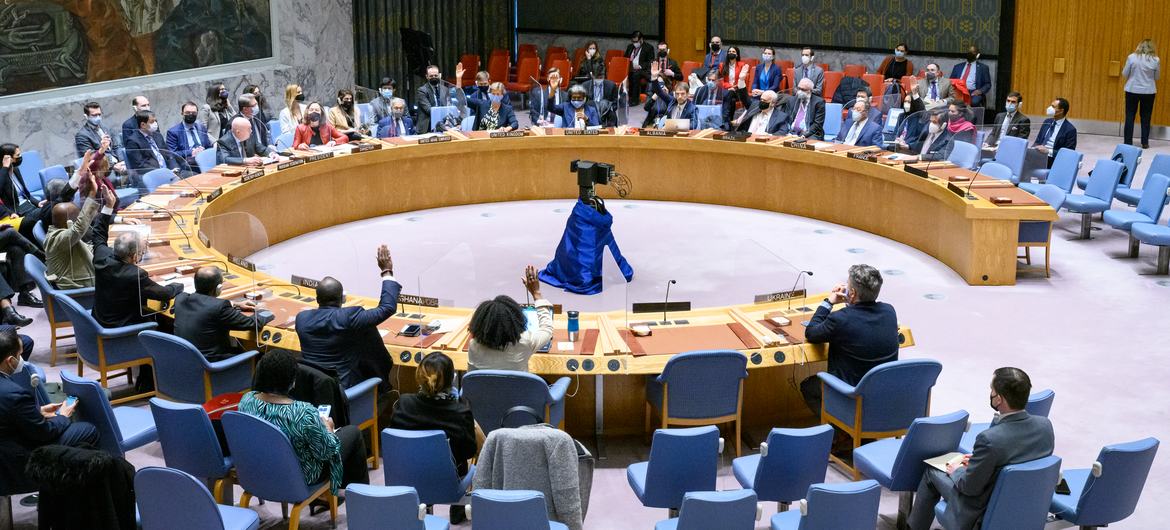
The UNSC is made up of 15 members.
Five of them, the United States, Russia, China, the United Kingdom, and France, are permanent members with the right to veto any decision.
The other ten are elected for two-year terms on a regional rotation and have no veto rights.
This structure was crafted in the aftermath of World War II, when the victorious powers sought to institutionalise their dominance in global affairs.
While it reflected the geopolitical order of the mid-20th century, critics argue that it is outdated and unfair in a world where regions like Africa, Latin America, and South Asia play an increasingly central role.
Why Africa wants change
Africa is the only continent without permanent representation on the Council, despite being central to its agenda.
Roughly 70 per cent of UNSC deliberations involve African conflicts, peacekeeping operations, or sanctions regimes.
Moreover, African countries are among the largest contributors of troops and police to UN peacekeeping missions.
Leaders on the continent insist that this imbalance undermines both the Council’s legitimacy and its effectiveness.
For them, reform is not about privilege but about fairness and the survival of the institution. Unless the UN adapts, they warn, it risks losing credibility in a multipolar world.
The legal roadblocks
Reforming the Council is easier said than done.
Any change requires amending the UN Charter, a process deliberately made difficult to protect the status quo.
Under Article 108, amendments must be approved by two-thirds of the General Assembly, at least 128 of 193 member states, and then ratified by two-thirds of national parliaments, including all five permanent members of the Council.
This effectively gives each P5 member a veto over reform.
Another path exists under Article 109, through an international conference on UN reform.
But, this too requires two-thirds support in the Assembly and ratification by the P5.
As history shows, the Council’s membership has only changed once, in 1963, when it expanded from 11 to 15 members.
That precedent underscores how difficult it is to achieve consensus on reform.
Rivalries within Africa
Even if the world agreed in principle to Africa’s inclusion, the question of who would occupy the permanent seats remains divisive.
Nigeria, South Africa, and Egypt are frequently mentioned as frontrunners due to their economic size, military capabilities, and diplomatic influence.
Yet rivalries complicate the picture.
South Africa is reluctant to cede the role to Nigeria, Algeria and Morocco are locked in mutual suspicion, and regional blocs within Africa often push competing candidates.
This lack of consensus weakens Africa’s bargaining position.
As analysts note, one of the main arguments used to delay Security Council reform globally is the absence of unity among regions over who should represent them.
Africa’s demands are part of a broader global conversation about UNSC reform.
The so-called G4 nations, Germany, Japan, India, and Brazil, also want permanent seats, arguing that they are major powers whose voices should count more in global governance.
Meanwhile, smaller states and reform advocates push for limiting or even eliminating veto powers, which often paralyse the Council when permanent members disagree.
This means Africa’s case will likely only advance as part of a grand bargain that balances the interests of multiple regions.
Winning two permanent African seats will require aligning with others seeking reform while overcoming opposition from those who benefit from the status quo.
For Africa, the demand is about more than symbolism.
Having permanent seats would give the continent a decisive role in shaping international responses to conflicts, sanctions, and interventions that directly affect its people.
It would also acknowledge Africa’s growing economic and political importance in the global system.
For the UN, the stakes are about legitimacy.
Critics argue that a Security Council stuck in the past risks irrelevance.
"If the world’s most powerful security body cannot adapt to today’s realities, alternative platforms and regional blocs may increasingly take its place," says one of the foreign relations experts.
To succeed, Africa must clear three hurdles:
Legal rigidity- Persuading two-thirds of the General Assembly and all P5 members to ratify reforms.
Internal rivalries- Agreeing on which African states would occupy permanent seats.
Operational capacity- Proving readiness to shoulder greater financial and security responsibilities within the UN.
Although African leaders acknowledge that this journey will be long and challenging, they insist it is inevitable.
They argue that a fairer and more inclusive Security Council is not just in Africa’s interest but in the world’s, ensuring decisions reflect global realities rather than the dictates of five powers from a bygone era.