A heartfelt post by a Kenyan woman struggling to conceive has sparked conversations online about the immense pressure society places on women to have children after marriage.
In her viral post, the lady revealed that despite being married and actively trying to have children, her journey has been filled with challenges.
She explained that she had undergone ultrasound scans in both private and public hospitals, and the results showed no problems.
She also tried herbal remedies and even birth control pills—hoping to balance her hormones—but none of these worked.
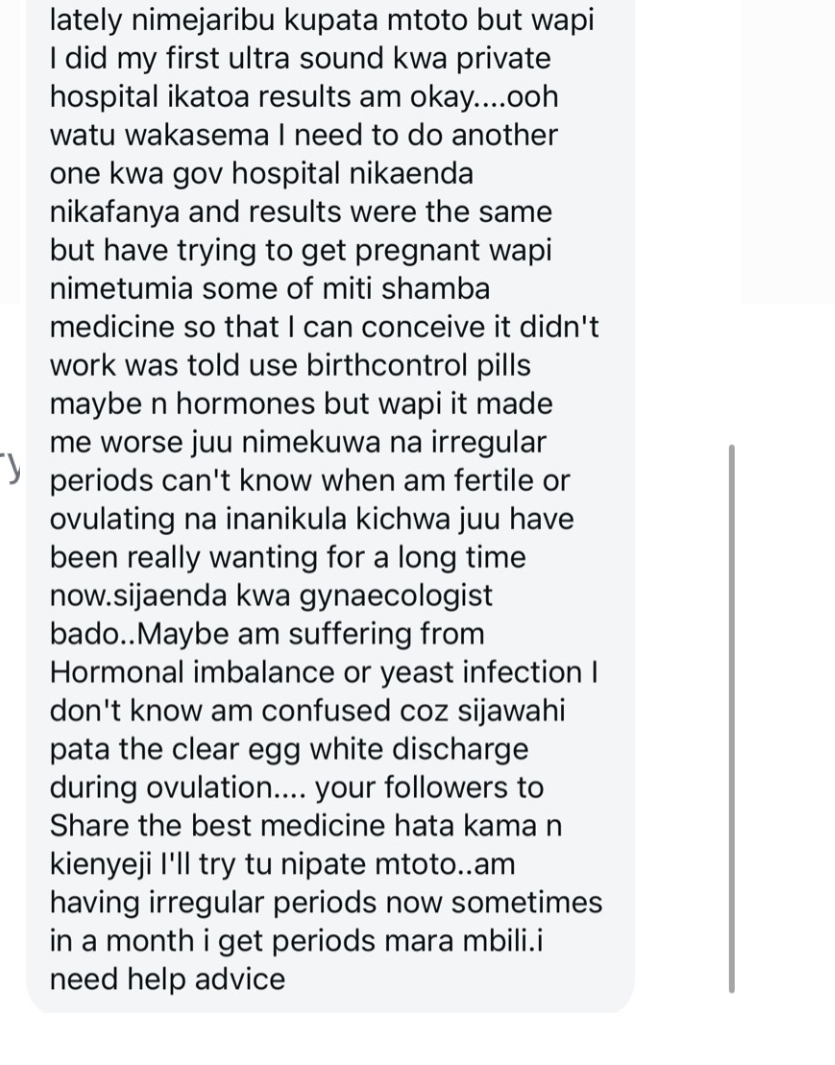
Instead, the pills worsened her condition, leaving her with irregular periods and making it difficult to track ovulation.
A Shared Struggle and Unsolicited Advice
"I need some advice so I can get help. I am married and I am trying to get kids… I was told to use birth control pills because it might be hormones, but it even made it worse. Now I can’t know when I am fertile or ovulating, and it is stressing me out,” she wrote.
The post drew dozens of responses, with many people offering support and advice.
One comment urged her not to shoulder the blame alone, reminding her that infertility can also affect men:

“Don’t massage the ego of the man, he too should get checked.” Another advised her to take things easy: “Stop giving yourself stress, it will come at its time.”
The Weight of Societal Expectations
Beyond the advice, her story highlights a deeper issue that many married women face in Kenya and across Africa—the societal pressure to have children immediately after marriage.
Read More:
Prominent celebrities who struggled for years before bearing kidsProminent celebrities who struggled for years before bearing kids

For many, the expectation is that a woman’s value in marriage is tied to motherhood, and when conception delays, the weight of judgment and unsolicited advice can become overwhelming.
Experts say that such pressure often leads to anxiety, shame, and unnecessary self-blame for women, even when fertility challenges may lie with either partner or be due to medical issues beyond their control.
While the online community rallied around the woman with words of encouragement, the conversation also exposed how deeply ingrained "baby fever" expectations are in marriages.