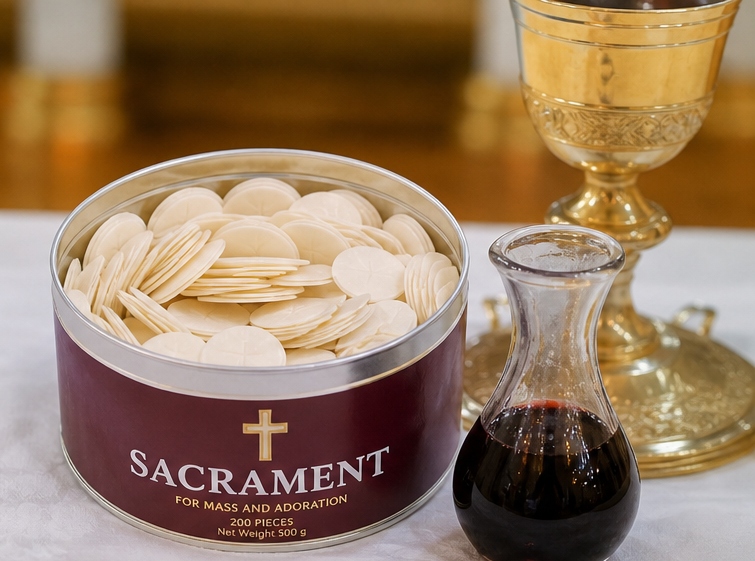
A video shared on social media has triggered widespread discussion after a woman filmed herself at home consuming a full bottle of wine labelled “Divine” alongside an entire tin of sacramental bread, commonly associated with Christian worship.

The clip quickly circulated across platforms, drawing mixed reactions from viewers in Kenya and beyond. While some found humour in the situation, others expressed discomfort over the use of items linked to the Christian sacrament.

                        Communion at home // AI generated

Symbolism of the Sacrament

In Christian tradition, the act of consuming bread and wine is known as the Eucharist. It represents the body and blood of Jesus Christ and is typically performed in a structured church setting.
Enjoying this article? Subscribe for unlimited access to premium sports coverage.
View Plans
The elements used are usually consecrated by clergy and shared among congregants during services. For many believers, the ritual carries deep spiritual meaning and is treated with reverence.
×

Mixed Reactions Online

Social media users responded in real time, reflecting a broad spectrum of opinions.
“But si we also realise religion… is just a social contract to create law and order… Sielewi rage ni ya nini for real.”
Others took a lighter tone:
“Kenya ni wapi surely 😂😂”“Avoid taking alcohol on an empty stomach coz hizi ni ma-what 😂😂”“Unakula mwana kondoo wewe 😂😂”
Some questioned the outrage altogether:
“Na sasa shida iko wapi jameni?”“Si ni consumable ama?”“Free will.”
At the same time, a section of users framed the act in religious terms, referencing the symbolic meaning of communion:

“Form ni damu na mwili ya Yesu 😂😂😂”“The Last Supper.”

                                          Holy Communion // AI generated

Research and Context on Consumption

There is no universal legal restriction on consuming sacramental bread or wine outside the church. However, most denominations discourage casual or non-religious use due to its spiritual significance.

On the health side, general guidance from public health bodies advises moderation in alcohol consumption. The World Health Organisation notes that harmful alcohol use contributes to over 3 million deaths globally each year, reinforcing caution regardless of context.