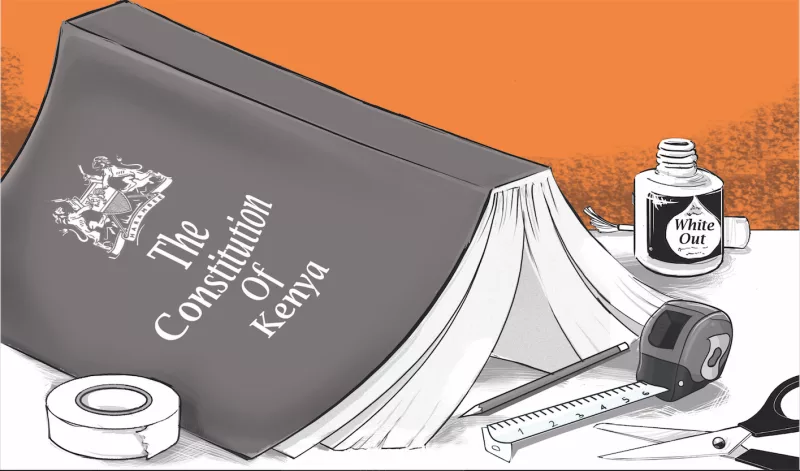
Since Kenya’s return to multiparty democracy in 1992, its presidential elections and referenda have been a battleground of fierce competition, ethnic loyalties and, at times, resounding mandates. A clear pattern emerges. Kenyans deliver decisive victories—typically above 55 per cent—in credible elections, while narrower margins often coincide with allegations of electoral malpractice.
This trend suggests that when victory margins fall below this threshold, irregularities must be scrutinised. To ensure elections reflect the true will of Kenyans, reforms must go beyond civic awareness, integrating anthropological and social awareness to address the historical and contemporary drivers of ethnic polarisation and mobilisation.
The 2002 presidential election remains Kenya’s benchmark for electoral integrity. Mwai Kibaki’s National Rainbow Coalition secured 62 per cent of the vote against Uhuru Kenyatta’s 31 per cent, with the runner-up conceding early in a widely praised process.
Similarly, the 2010 constitutional referendum saw a 68.55 per cent approval rate, uncontested due to its transparency and broad consensus. The 2005 referendum, where 58 per cent rejected the Wako Draft put forward unilaterally by the government and seen as perpetuating an imperial presidency, further demonstrated Kenyans’ decisiveness when unified on pivotal issues.
These outcomes show that when electoral processes are transparent and resonate with public aspirations—whether rejecting autocracy or embracing reform—Kenyans deliver clear verdicts. Margins above 55 per cent typically signal a genuine consensus, free from significant manipulation.
Elections with tight margins, however, are often marred by allegations of irregularities and ethnic divisions. In 1992, Daniel arap Moi won with 36 per cent, exploiting a fragmented opposition that collectively garnered over 60 per cent. Vote rigging allegations and state control of the electoral system tainted the process.
In 1997, Moi’s 40 per cent victory over Mwai Kibaki’s 30 per cent was similarly plagued by tribal clashes, suppressing turnout and reports of ballot stuffing.
The 2007 election was a flashpoint. Kibaki’s 46 per cent to Raila Odinga’s 44 per cent was riddled with malpractices, including voter turnouts exceeding 100 per cent in some areas. The Kriegler Commission deemed the process so flawed that the true winner was indeterminable.
The parliamentary results—Raila’s Orange Democratic Movement (ODM) securing 99 seats to Kibaki’s Party of National Unity 43—suggested a broader public preference for ODM, highlighting discrepancies likely fuelled by ethnic voting and manipulation and giving rise to the “41 against 1” slogan.
In 2013, Uhuru Kenyatta’s 50.51 per cent win over Raila’s 43.7 per cent avoided a runoff by a razor-thin margin. The Supreme Court’s exclusion of 100,000 spoilt votes from “votes cast” raised questions, as their inclusion could have forced a second round. Allegations of digital system tampering, with the tallying process reverting to manual methods, further eroded trust.
Similarly, in 2022, William Ruto’s 50.49 per cent victory over Raila’s 48.85 per cent—a 200,000-vote margin—faced petitions alleging system tampering, with 81,000 spoilt votes discounted.
The 2017 election encapsulates this pattern. Uhuru Kenyatta’s initial 54.17 per cent win was nullified by the Supreme Court for irregularities, including the murder of the Independent Electoral and Boundaries Commission IT manager. Raila’s boycott of the repeat election led to a landslide for Kenyatta, but low turnout undermined its legitimacy, with fewer than 34 per cent of registered voters taking part in the re-run of the presidential election compared to 79.51 per cent turnout in the same general election in August.
These cases illustrate that margins below 55 per cent often align with procedural flaws and ethnic polarisation, which amplify opportunities for manipulation.
Opposition fragmentation, as seen in 1992 and 1997, allows minority victories by diluting the majority’s voice. Judicial rulings, such as the 2013 spoilt-vote interpretation, introduce ambiguities that can sway outcomes.
Ethnic biases, however, are a critical underlying factor. Colonial divide-and-rule policies entrenched ethnic identities, and post-independence patronage systems rewarded loyalty to ethnic-based political elites and have been a watermark of contentious elections.
Civic awareness campaigns, which focus on voter education and democratic principles, have failed to dismantle these loyalties. They assume rational decision-making but overlook the emotional and cultural weight of ethnic identities, rooted in historical grievances such as land disputes or economic exclusion.
Anthropological understanding of the cultural narratives, myths and colonial legacies that shape ethnic identities can guide reconciliation efforts, while social awareness tackles contemporary manifestations, like urban youth unemployment, which fuel ethnic scapegoating.
The 55 per cent threshold reflects a pattern. Decisive victories (2002, 2005 and 2010) align with credible processes, while narrow margins (2007, 2013, 2017 and 2022) invite suspicion. Close races provide fertile ground for manipulation – whether through ballot stuffing, system failures or judicial ambiguities – especially when ethnic loyalties polarise voters.
Social consciousness theorist, a corporate trainer and speaker, agronomist consultant for golf courses and sportsfields, and author of 'The Gigantomachy of Samaismela' and 'The Trouble with Kenya: McKenzian Blueprint'