
A report by the Auditor General has exposed the alarming financial state of dozens of state corporations, especially those in the energy, agriculture, and industrial sectors.
The review reveals entities that are technically bankrupt and surviving solely on government bailouts and taxpayer-funded debt, casting severe doubt on their ability to continue operations.
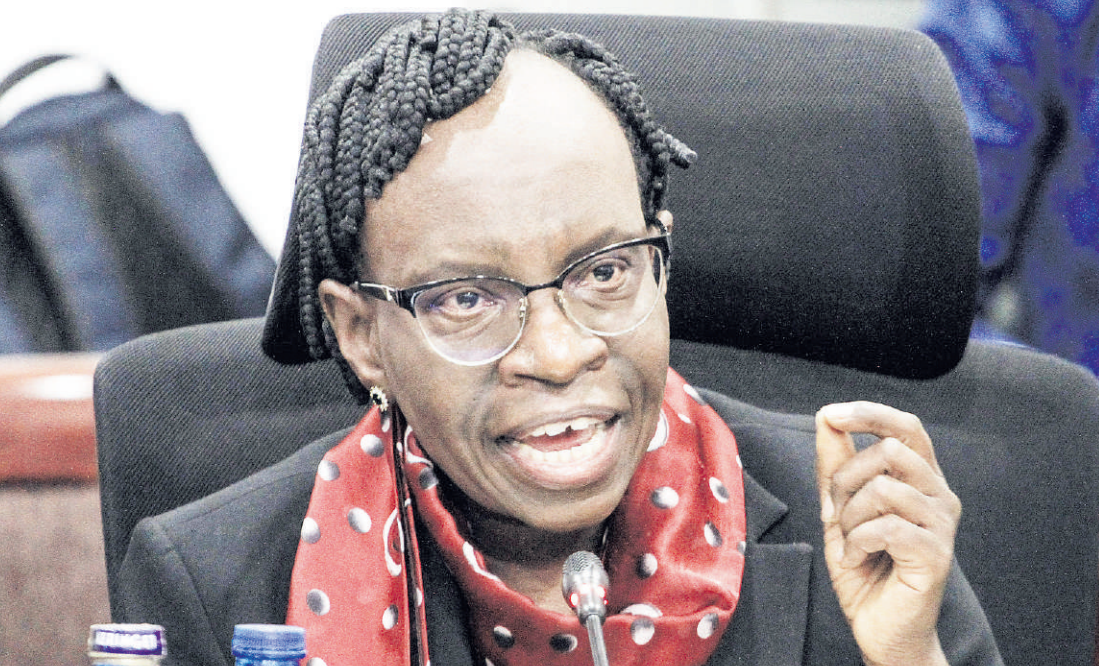
Auditor General Nancy Gathungu says her review for the year ending June 30, 2024, established a worrying pattern of insolvency and massive accumulated losses.
The auditor raised concerns about the failure by management to disclose the grave financial uncertainties facing the parastatals.
The energy sector is particularly afflicted. Kenya Power recorded a negative working capital of Sh27.4 billion.
This was a reduction from Sh51 billion the previous year, marking the eighth consecutive year it has been in the red.
The audit indicates that despite the board’s assurances of strategic initiatives to improve finances, these measures have yet to yield results.
Gathungu said the developments indicate “material uncertainty that may cast significant doubt on the company’s ability to continue as a going concern”.
Similarly, the Kenya Electricity Transmission Company (Ketraco) is labouring under negative working capital of Sh16 billion and total liabilities of Sh35.8 billion, a situation that management failed to disclose.
The sugar sector also has stood out for being in financial trouble,consuming billions of shillings in bailouts funded from public coffers.
Sony Sugar Company reported a net loss of Sh635 million, pushing its net losses to Sh4.9 billion. It has a negative working capital of Sh2.5 billion.
The company admitted it has been unable to rehabilitate its factory annually and said staff members suffer from low morale at a time MPs from the region have opposed its sale to private investors.
Muhoroni Sugar, despite a government write-off of Sh26 billion that reduced losses to Sh2.9 billion, still has a negative working capital of Sh3 billion and is unable to meet its liabilities.
Nzoia Sugar is in an identical position, with a negative working capital of Sh3 billion and accumulated losses of Sh4 billion, rendering it technically insolvent.
At Chemelil Sugar, long-standing payroll arrears and unremitted statutory deductions were noted by the Auditor General. The company did not remit Sh1.3 billion in NSSF, NHIF, pension deductions and reported salary arrears.
Penalties were imposed on pension arrears of Sh134 million ¾ to be borne by taxpayers. Gathungu said the payout would have been avoidable, if the statutory deductions had been remitted in a timely manner.
The audit report further details how industrial and manufacturing parastatals are faring no better. A separate report reveals that universities alone are in the red by more than Sh42.5 billion.
Rivatex East Africa Limited posted a gross loss of Sh287 million, with accumulated losses of Sh3.4 billion. Management blamed constant shortages of raw cotton and exorbitant costs of inputs.
The Pyrethrum Processing Company of Kenya was also found to be technically insolvent with a negative working capital of Sh946 million and a growing accumulated deficit.
The education sector’s Jomo Kenyatta Foundation made a loss of Sh303 million, with assets of Sh416 million against liabilities of Sh1.1 billion.
Gathungu observed that loss resulted in “substantial erosion of the foundation’s net worth” and raised the alarm that it cannot meet its obligations.
“The foundation may be unable to meet its financial obligations as and when they fall due and may, therefore, be technically insolvent on the basis of the negative working capital position,” she said.
The tourism sector is also bleeding due to lack of a legal framework to guide the sale of key hospitality agencies.
Kisumu’s Sunset Hotel posted a negative working capital of Sh112 million, and its going concern is dependent on government and creditor support.
Kenya Safari Lodges and Hotels faces a liquidity risk due to its negative working capital of Sh592 million and accumulated losses of Sh566 million.
Despite management’s claims that it revamped its marketing strategies, the hotel’s overall financial performance continues to decline. Mt Elgon Lodge reported a negative working capital of Sh29 million.
The audit revealed the Kenya Bureau of Standards, a crucial standard-setting agency, is not immune to serious financial problems.
Auditors established that it is technically insolvent with a negative working capital of Sh1.3 billion. In conclusion, Gathungu said, “My opinion is not modified in respect of this matter.”
The report highlights a trend where entities are operating on the hope of state support without formally disclosing their dependency.
The Postal Corporation of Kenya had a negative working capital of Sh7.7 billion and was operating on the hope of government support, making its viability as a going concern uncertain without state rescue.
Also in the same situation was the Western Kenya Rice Mills, with an undisclosed budget deficit of Sh86 million during the 2024 review period.
The situation is so dire at Postbank that it has been approved for dissolution by President William Ruto’s Cabinet. It recorded a net loss of Sh623 million and a negative working capital of Sh14 billion.
The auditors warn that the proposed dissolution introduces a “material uncertainty”, as it implies a fundamental change to its operational structure.
The New Kenya Cooperative Creameries relied heavily on bank loans and overdrafts, incurring finance costs of Sh192 million, and has a negative working capital of Sh1.2 billion.
The situation of the Agricultural Development Corporation, the custodian of public lands for agricultural use, deteriorated rapidly and moved from a surplus to a loss of Sh992 million.
Its cash flow, or rather liquidity, is declining, and Gathungu said the entity may not be able to honour short-term commitments.
The Public Benefit Organisations Regulatory Authority’s financial position reflected current assets of Sh3.2 million against current liabilities of Sh13.6 million, resulting in a negative working capital of Sh10.4 million.
It recorded a deficit of Sh8.7 million, further depleting its accumulated surplus.
“The authority is, therefore, technically insolvent and its continued operation as a going concern is dependent upon support from the national government and its creditors,” the auditors state, noting that this material uncertainty was not disclosed.
MPs are currently considering a bill that, if enacted, would see some of the cash-strapped corporations listed on the Nairobi Securities Exchange.
NSE is part of a privatisation strategy aimed at raising funds, improving corporate governance, and deepening the country's capital markets.
The most prominent candidate is Kenya Pipeline Company, a critical energy logistics firm, which the Cabinet has formally approved for partial privatisation.
Among other state corporations set for conversion to private companies are the Kenya Ports Authority, Kenya Airports Authority, Kenya Railways Corporation, and Kenya Literature Bureau.
Also on the list of agencies set for the conversion are KICC, the Postal Corporation of Kenya, Kenya Post Office Savings Bank, Kenya Broadcasting Corporation, and Kenya Meat Commission.






