
DOZENS of universities are on the spot for brewing ethnic imbalance in their ranks amid revelations of widespread violation of the law mandating an equitable share in employment.
A new audit has revealed a pattern of significant ethnic disparity in the composition of staff of the country’s public universities, raising serious concerns about equity and representation in higher education.
The report by Auditor General Nancy Gathungu covering the financial year ending June 30, 2024, shows that 19 out of 42 universities exceeded the legal limit for hiring staff from a single ethnic community.
The National Cohesion and Integration Act of 2008 states that no public institution should have more than 33 per cent of its employees from the same ethnic group.
Despite this, the audit found numerous universities where one community made up nearly half or more of the staff, with some institutions reaching as high as 73 per cent.
The affected universities recorded dominant ethnic representation levels ranging from 45 per cent to 73 per cent.
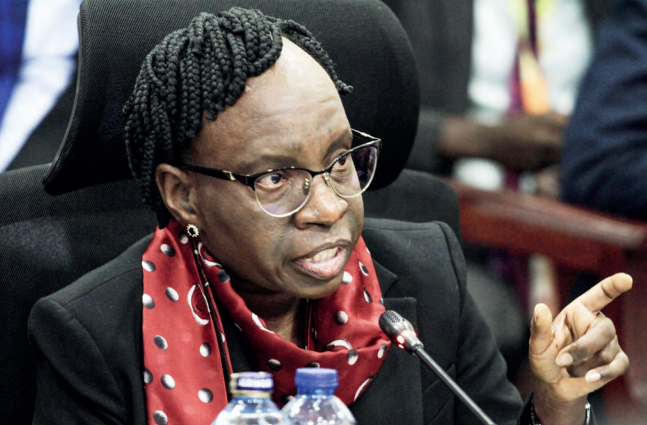
“This indicates notable shortcomings in upholding the principles of diversity, equity, and fair representation in these public universities,” Gathungu said.
Top on the list detailing a clear trend of imbalance is Koitaleel Samoei University College, which auditors found had 73 per cent of its staff from the local community.
A similar case was flagged at Rongo University, where locals took up 72 per cent of the job slots. Kaimosi Friends University had 70 per cent representation from one community.
Adverse cases were also reported at Mama Ngina University (70 per cent), Kabianga (70 per cent), Maseno (66 per cent), while Dedan Kimathi University of Technology had 67 per cent.
Masinde Muliro University of Science and Technology (66 per cent), Kisii University (65 per cent), and Tom Mboya (61 per cent) surpassed the legal cap significantly.
The Luhya, Gusii, and Luo communities were the majority at the cited institutions, respectively, while Kalenjins dominate the staff composition in universities in their backyard.
Moi University had 64 per cent of staff from the local community. Auditors determined that out of 2,318 staff members, at least 1,491 were from the dominant ethnic community.
“This was contrary to the NCIC Act, 2008. In the circumstances, management was in breach of the law,” Gathungu said.
Even universities located in ethnically diverse regions like Machakos reflected the disparity, with locals accounting for 60 per cent of the staff.
Garissa University also reported 60 per cent of staff belonging to one community, while Jomo Kenyatta University of Agriculture and Technology, one of the largest universities, registered 45 per cent.
The agriculture and technology university has about 2,600 officers and did not consider ethnic balance in its recruitments for the year under review.
The University of Eldoret also had 60 per cent of its staff from the dominant ethnic group, even as Laikipia reported 35 per cent despite being at the heart of the Kikuyu community, though still in breach.
South Eastern Kenya University had 51 per cent of staff from the local community (Kamba), and Murang’a University of Technology had 58 per cent (Kikuyu).
Education analysts and cohesion advocates have expressed concern, noting that these imbalances undermine efforts to build an inclusive society.
“When universities fail to reflect the nation’s diversity, they miss out on rich perspectives and talents,” Janet Ouko, a policy expert on matters of education, said.
At Kenyatta University, the audit established that the Kikuyu dominated the workforce, leaving the other communities to collectively share about 1,670 slots.
Maseno had about 750 Luos in its payroll out of the nearly 1,200 staffers, while Machakos University had about 300 staff from the host community.
Gathungu raised concerns that new recruitments conducted by most of the flagged universities in the year did not factor in the much-needed balance.
Past audit queries had called out the imbalance, which permeates a number of state departments and agencies as well.
The Public Service Commission, in the wake of the glaring ethnic disparities in state jobs, has many times advised government agencies to deliberately accommodate all the country’s 45 ethnic groups.
Its report covering December 2024 revealed that 29 institutions had one ethnic community constituting over 50 per cent of the workforce.
As of December 2024, there were 47,543 Kikuyus and 40,820 Kalenjins in the public service, being 20 per cent and 17.6 per cent respectively.
The PSC attributed the violations in respect of ministries, departments and agencies (MDAs) to non-competitive recruitments, especially for casuals and advisers.
Possible factors include informal hiring networks, biased recruitment processes, or insufficient oversight from university councils and management bodies.
Public institutions are required to adhere to the principle of fair competition and merit as a basis for appointments and promotions.
Exceptions are given where an appointment is made to address the underrepresentation of gender, an ethnic community, or persons with disability.
The PSC compliance report for 2023-24 showed that 39 of the 43 communities represented in the service had normal representation. Some 4.4 per cent of the ethnic communities were not represented in the public service at all.
From the findings, the PSC directed all public institutions to develop affirmative action programmes to redress ethnic representation gaps in their institutions by June 30, 2025.
Inequality in the public service, not just universities, has been a concern for many action groups and concerned regulatory agencies.
As a result, the PSC is seeking to stop ministries, state departments and agencies from recruiting dominant tribes until an optimum ethnic balance is achieved.
The Public Service Commission (Affirmative Action) Regulations, 2025 state that dominant tribes would only be considered after those that are grossly underrepresented are hired.
The commission says it would recommend that the underrepresented communities be given a free pass [recruited non-competitively] to state jobs.
The findings by the Auditor General point to broader systemic issues in hiring practices and governance.
Such disparities not only breach national law but also risk perpetuating exclusion and limiting diversity of thought and experience within academic environments.
Universities are public institutions meant to serve all Kenyans, and like other state agencies, equitable employment practices are essential to their mission.
INSTANT ANALYSIS
The audit reveals a systemic failure by public universities to comply with the National Cohesion and Integration Act, which mandates that no single ethnic group exceeds 33 per cent of staff. The widespread violations, with some institutions reaching 73 per cent dominance from one community, indicate a deep-rooted issue in hiring practices. This undermines national unity, limits diversity of thought, and breaches the principle of equitable representation. The findings point to a critical need for stringent oversight and affirmative action to reform recruitment processes and ensure universities truly reflect the nation's diversity.






