The report paints a picture of a sector on life support, sustained only by the leniency of creditors and the hope of government bailouts, which are equally fading.
One figure summarises the dire situation of the institutions of higher learning: Sh42.5 billion.
This is the combined negative working capital (deficit) reported by 21 public universities, meaning they are basically unable to pay their bills.
In each case, their immediate debts vastly exceed their assets, posing a direct threat to their very operations.
The report by Auditor General Nancy Gathungu covers the financial year ending June 30, 2024.
The crisis is particularly acute at the country’s largest and most prestigious universities, a situation starkly exacerbated by a state directive to reduce tuition fees without a corresponding and guaranteed increase in exchequer funding to cover the resulting revenue shortfall.
Kenyatta University leads the grim parade with a negative working capital of nearly Sh11 billion, followed closely by the University of Nairobi at over Sh8 billion.
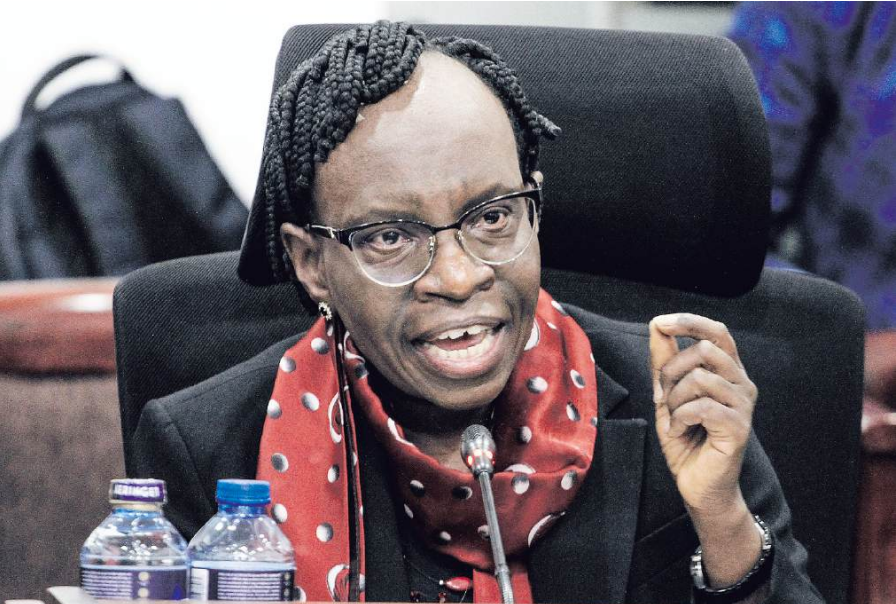
Gathungu has concluded that the entities are technically insolvent. She said the only reason many have not already ground to a halt is the leniency of their creditors.
“In many cases, continued operations were sustained only on the assumption of support from the national government or creditors’ leniency,” the Auditor General notes.
The report shows Egerton University is also in the red to the tune of Sh7.5 billion, Sh6.6 billion at JKUAT, and Sh5.7 billion at the Technical University of Kenya.
“These challenges not only compromise operational stability and continuity but also expose the public universities to penalties and litigation risks,” Gathungu says.
Substantial deficits were also reported at Multimedia University (Sh1.6 billion), Kabianga (Sh609 million), Technical University of Mombasa (Sh334 million), Maasai Mara University (Sh280 million), Taita Taveta (Sh259 million), Chuka University (Sh240 million), and Meru University (Sh198 million).
Laikipia University (Sh55 million), Alupe (Sh49 million), Garissa University (Sh22 million), and Dedan Kimathi (Sh21 million) also reported deficits.
“These substantial deficits reflect serious liquidity challenges, with implications on creditor payments, staff remuneration, and overall service delivery,” Gathungu explains.
The universities’ total liabilities hit Sh79 billion during the period. The UoN accounted for Sh17.8 billion, Kenyatta University (Sh14 billion), JKUAT (Sh12 billion), Egerton (Sh9 billion), and TUK (Sh7.6 billion).
As the cash crisis persists, the institutions have failed to remit statutory deductions, including Sacco and bank loans, member subscriptions, and taxes.
The situation has exposed thousands of employees to penalties by lenders and long-term bad credit ratings, and auctions.
It emerged that 17 universities are holding Sh29.6 billion deducted from employees' salaries for taxes and pension contributions, a situation worsened by reduced fee income crippling their cash flow.
Kenyatta University alone was holding Sh17.3 billion in unremitted deductions, including a KRA demand for Sh7.5 billion in taxes, penalties, and interest.
Gathungu raises concerns that the situation’s full extent was not disclosed. “Unremitted statutory deductions have attracted undetermined penalties and interests which have not been disclosed,” she says.
Egerton University had yet to remit staff deductions amounting to Sh7.7 billion. They include pension contributions (Sh7.6 million), internal creditors (Sh26 million), withholding tax (Sh15 million), VAT (Sh30 million), and remittances to the Higher Education Loans Board (Sh25 million).
TUK had not remitted Sh2 billion in PAYE, NHIF, and NSSF. Multimedia University held Sh1.3 billion, comprising taxes (Sh527 million), PAYE (Sh474 million), and withholding tax (Sh52 million), with auditors questioning where the deducted money was.
Unremitted staff pension at Multimedia University amounted to Sh727 million, with Kisii University following at Sh561 million. The University of Kabianga did not remit Sh237 million, Maasai Mara (Sh224 million), Rongo University (Sh219 million), Masinde Muliro (Sh156 million), and Murang’a University of Technology (Sh105 million).
Seven of the flagged universities lacked disclosures on accrued penalties or evidence of structured settlement plans, contravening the law.
The Retirement Benefits Act imposes a five per cent penalty on unremitted contributions or Sh20,000, whichever is higher, plus interest.
The Income Tax Act also mandates penalties of five per cent of the unpaid tax and a one per cent monthly interest for late PAYE remittance.
Amid the struggle to stay afloat, auditors found a major hitch: a profound failure in revenue collection. At least 20 institutions are owed Sh5.6 billion in long-outstanding receivables, primarily student fee arrears.
JKUAT and the Technical University of Kenya are each owed over Sh1.7 billion. The audit found eight universities had not prepared an ageing analysis of these debts, making it impossible to know what is recoverable.
Gathungu notes little evidence of structured recovery efforts, reflecting a culture of financial apathy. “These pose risks to financial sustainability,” she says.
The audit reveals deep, systemic, and interconnected problems affecting public universities, the top of which is a plague of pending bills.
Thirteen universities are saddled with long-outstanding unpaid debts totalling Sh8.5 billion—money owed to vendors, part-time lecturers, contractors, and staff. At JKUAT, Sh5.7 billion was owed to creditors for over two years. TUK owes over Sh1 billion, including unpaid audit fees, staff dues, and contractors’ claims.
At Garissa University and Murang’a University of Technology, management could not provide basic documentation like invoices or contracts.
“The lack of clear debt ageing structures and follow-up processes limits the ability to prioritise payments and assess the risk of accruing penalties or legal exposure,” Gathungu says.
For pundits, the universities’ cash crisis is fueled by chronic mismanagement, bloated payrolls, and unchecked expansion.
However, the government’s well-intentioned but financially crippling move to reduce fees to increase access has poured fuel on the flames.
This policy directive was not matched with a commitment to bridge the resulting revenue gap.
While universities were ordered to reduce their primary income source, their operational costs, including salaries, utilities, and maintenance, continued to rise.
The dramatic decline in student capitation, coupled with the Treasury’s delays in disbursing funds, has shattered cash flow.
The report also flags cases of stalled projects (Sh6 billion), delayed projects (Sh7 billion), Sh743 million goods paid for but not delivered, and irregular payments of Sh269 million.
Several procurement flaws have also been flagged in the report tabled in Parliament recently. To rescue the institutions, the Auditor General has called for urgent “coordinated and strategic interventions”.
INSTANT ANALYSIS
Universities cannot pay their bills. To survive, they are robbing Peter (their employees' statutory deductions) to pay Paul (their most pressing creditors). This is a key reason their debt to commercial banks has shot up. The state-mandated fee reduction is not a separate issue but the central catalyst that has accelerated the collapse, creating a structural deficit that has pushed the entire sector to the brink of insolvency.