On Monday May 14, Cabinet Secretary nominee for Gender, Hannah Cheptumo, was before the National Assembly's Parliamentary Appointments Committee for vetting.
During the interview, when asked to comment on the rising cases of femicide in the country, she noted that the women killed are those who are after money, are uneducated, or not empowered. Cheptumo added that educated victims were also after money.
As part of the solutions to this challenge, she stated that she would ensure women are educated and empowered so as to address the cases of femicide and GBV in the country.
The remarks made by the CS nominee were not only misguided but very concerning, given that the office she will occupy will be tasked, among other duties, with addressing the rising cases of femicide and gender-based violence, including sexual gender-based violence.
It was wrong on her part to make assumptions that the numerous women killed died as a misfortune of their own making. It is rather concerning that one would assume that not having an education or not being empowered are grounds to be a victim of femicide.
In March this year, in the county of Wajir, a seventeen-year-old girl became a victim of femicide after refusing to be forcibly married to an old man. She could not be said to be either after money or to have lacked empowerment.
In the same month, several mutilated, decomposing bodies, mostly of women, were found within the Kware area of Mathare. While investigations are ongoing, the only mistake the victims made was being women.
In April, a university student was killed in her hostel room by her alleged boyfriend. She was in university, thus was educated. I would doubt that she was demanding money from the said boyfriend.
According to Africa Uncensored, there were at least 170 reported cases of femicide in the country in 2024 alone.
From 2016 to December 2024, according to Africa Data Hub, there have been at least 930 reported cases of femicide.
Movements such as EndFemicideKE and organisations including Defenders Coalition among others, are making deliberate efforts to comprehensively address and find a permanent solution to ending femicide.
During the Ni Mama Forum, a collective that brings together women human rights defenders from across the country, it focused on addressing femicide and ways to combat it. Through their interactions, a memorandum was drafted and submitted to the Task Force on GBV and Femicide.
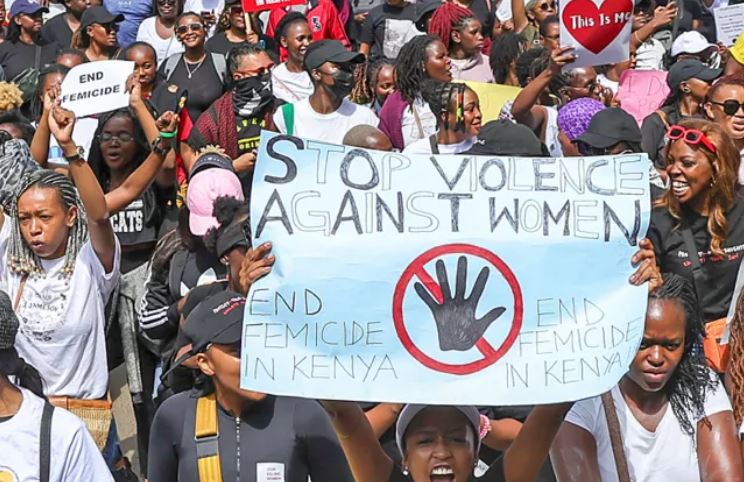
We have witnessed marches that not only brought human rights defenders together but also the nation at large, condemning the heinous killing of women and girls while calling for, among other things, legal reforms – including the criminalisation of femicide.
There is no reason that would justify the killing of women and girls regardless of our beliefs, ideologies, religious inclinations, or cultural biases. Women and girls in our society need to feel safe within their communities.
One cannot then try to justify when women have been killed in some of the most brutal and barbaric ways. There is a need for the Cabinet Secretary for Gender, even as she assumes her position, to make a deliberate effort to appreciate the current and emerging gender issues, holistically, within the country.
It will be through her office that women and those who champion women’s rights will seek to address pressing gender issues. Where such sentiments are made, especially in public, they enhance victim blaming and empower the perpetrator; they need to be condemned in totality.
I would have imagined that an appropriate response should have focused on indicating the need to criminalise femicide; innovative ways of dealing with GBV, including emerging trends such as technology-facilitated GBV; the low rate of prosecution of femicide cases; the effectiveness of gender-desks within police stations; collaborating with the Judiciary on the GBV Courts; and implementing the recommendations in the report presented by the Task Force on GBV and Femicide.
There is a need for continued collective engagement with diverse stakeholders to ensure the safety and security of women and girls within our society and communities.
Wallace M Nderu is a Research and Advocacy Advisor Defenders Coalition