In Nyamira County, Faith Kwamboka is leading a quiet food revolution by helping smallholder farmers fight post-harvest losses and turning perishable fruits and vegetables into nutritious, long-shelf-life products, using the power of the sun.
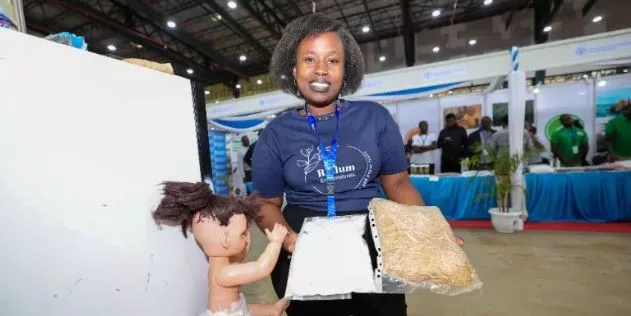
Faith Kwamboka, the co-founder and CEO of Desecrated Sweetness, a food processing company based in the county, is on a mission to increase farmers' incomes and reduce food waste through innovative value addition. Her company specialises in solar-dried products, mainly fruits and vegetables.
“We focus on transforming highly perishable produce like mangoes, pineapples, leafy greens, pumpkins and sweet potatoes into shelf-stable, nutritious products,” she explains.
“Our aim is to create healthy food alternatives while extending shelf life and reducing post-harvest losses.”
On the fruit side, Desecrated Sweetness produces dried mango and pineapple flakes. For vegetables, the focus is on indigenous leafy greens like managu and saga.
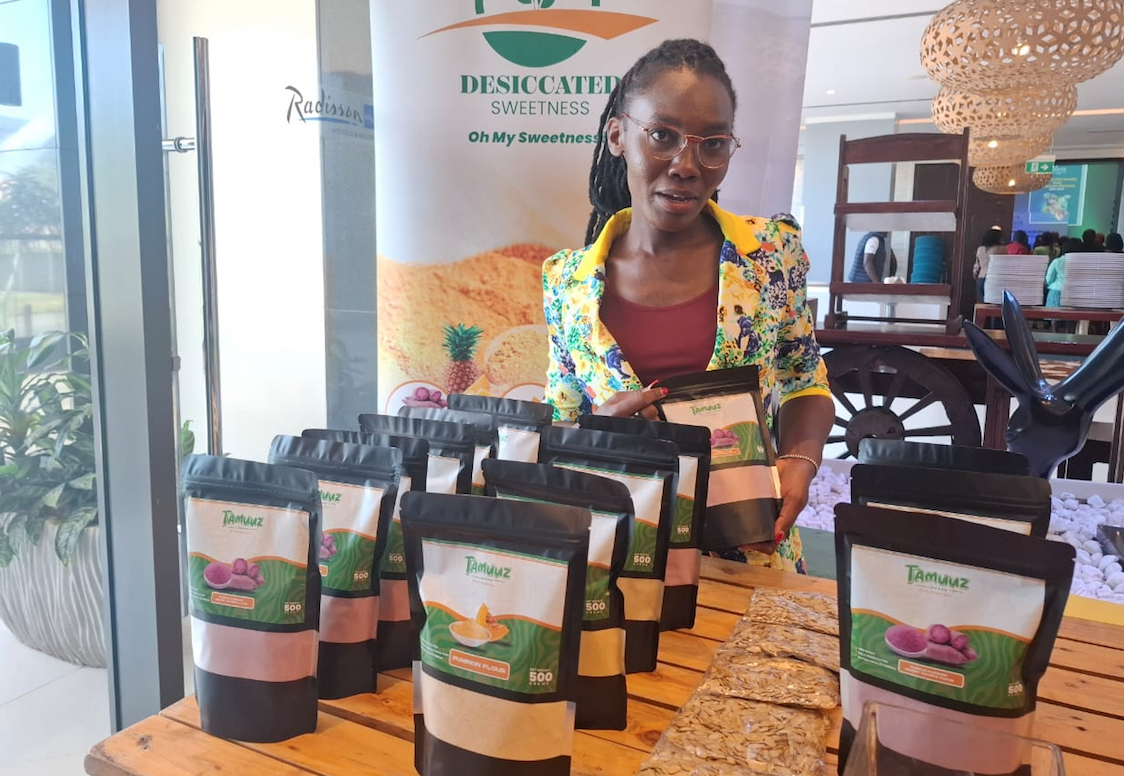
The company also processes root tubers, such as sweet potatoes, particularly the nutrient-rich purple and orange flesh varieties into flour.
“Sweet potatoes are packed with nutrients like anthocyanins and essential vitamins that promote gut health, regulate blood sugar and support heart health,” Kwamboka said.
Vegetables are cleaned, blanched and then dried using solar dryers at the company’s facility. Final products are packed in resealable bags ranging from 500 grammes to one kilogramme, making them convenient for household use with a shelf life of up to a year.
In line with the principles of a circular economy, Kwamboka says the company is working toward zero waste.
“We're exploring the use of by-products like pumpkin peels to develop animal feeds. For now, farmers use waste as compost or livestock feed.”
Their product line continues to expand and now includes pumpkin flour, pumpkin seeds (whole and powdered), spinach powder, mango crisps and more.
But the road has not been without challenges. “We rely on solar dryers, so when it rains, production slows down. And many people still don’t know how to use these products or understand their benefits,” she says.
To address this, Desecrated Sweetness is raising public awareness and conducting training with farmers to ensure food safety.
“We build capacity among our farmers, teaching them quality standards and the importance of reducing pesticide use,” Kwamboka said.
Most raw materials are sourced from smallholder farmers in Nyamira, Kisii, Migori, Siaya and Kitui counties.
Currently, the company is working toward obtaining a KEBS certification to scale into commercial retail and get their products on supermarket shelves.
Kwamboka, 30, holds an undergraduate degree in economics, is a CPA finalist, and has a masters in social statistics. She credits her data-driven background for guiding her into the food value-addition space.
“I grew up in Nyamira, where I saw so much food waste, especially fruits and vegetables. My academic work made it clear that post-harvest losses are a massive, solvable issue,” she said.
Founded in September 2021, Desecrated Sweetness began operations in 2022 after receiving a proof-of-concept grant through the Vijana na Agribiz programme, which helped her purchase equipment and conduct product testing.
She is also a beneficiary of the AYuTe Africa Challenge by Heifer International Kenya, which gave her a platform to showcase her innovation and gain vital entrepreneurial mentorship.
“The insights and mentorship have been invaluable. They strengthened our operations and helped us address post-harvest losses more effectively.”
Clarice Kionge, Interim Country Director for Heifer International Kenya, noted the importance of youth and women in agriculture.
“Young people are great innovators,” Kionge said. “They are bringing tech solutions that improve production, market access and farming practices.”
She added that Heifer's new Practice for Change Signature Programme aims to reach 625,000 smallholder farmers in the next seven years to build sustainable livelihoods.
The programme will look at a holistic support system, including access to finance, markets and technical training.
To young aspiring entrepreneurs, Kwamboka says, “If something is burning inside you, like an idea that can change your community, just start. There are so many resources online and organisations willing to support you.”