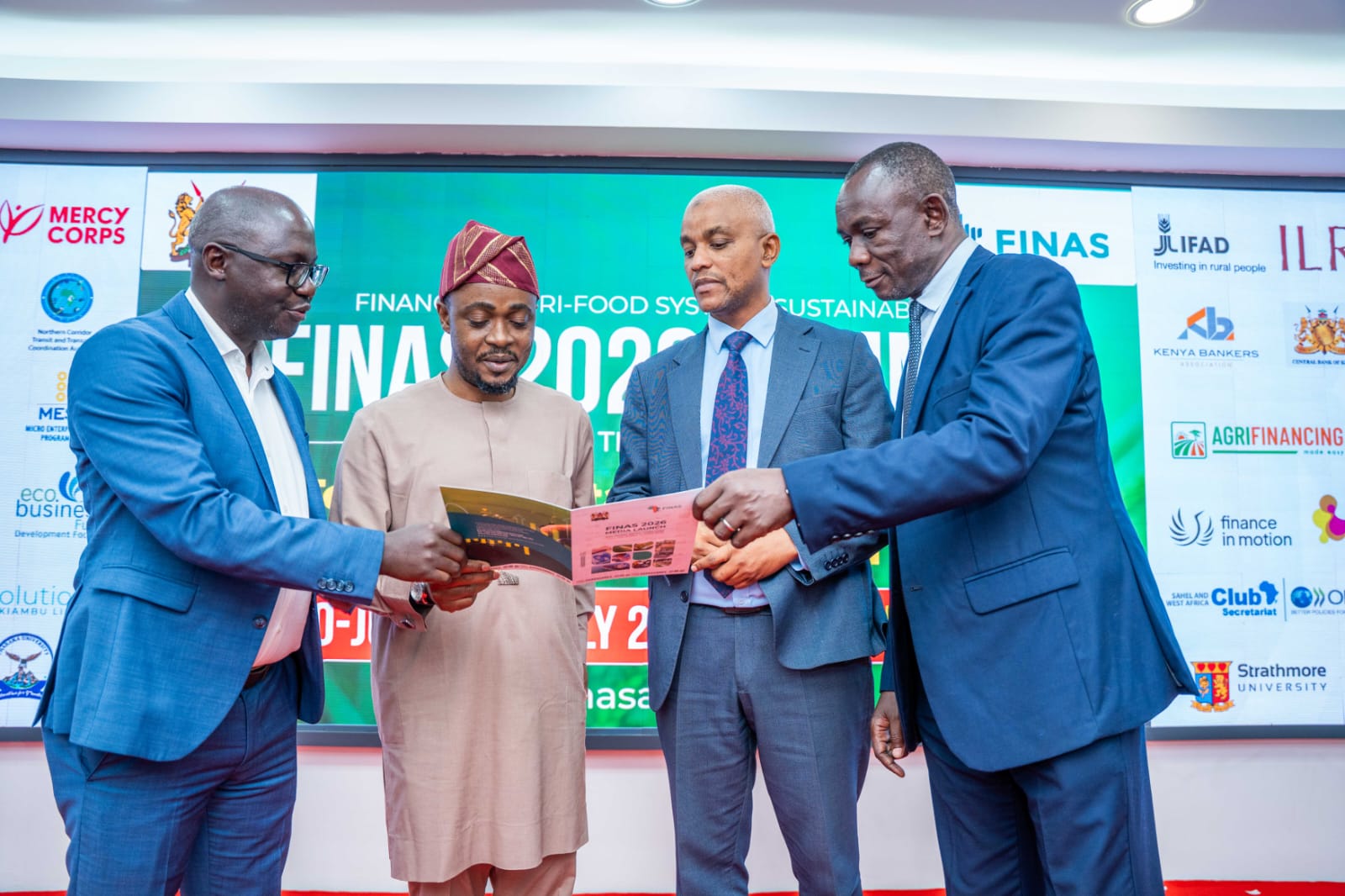
 From Left: Kennedy Oketch, Agriculture Economy and Financial Advisor, GIZ Kenya, David Adama, Senior Policy Officer, AGRA, Rashid Khator, Secretary of Administration in the State Department of Agriculture and Peter Owoko, Director of Policy at the State Department of Agriculture during the FINAS2026 media launch in Nairobi.
Africa’s agriculture sector continues to grapple with a massive financing gap of over Sh13 trillion ($100 billion) annually, it has emerged.
The figure raises concerns over the continent’s ability to achieve food security and climate resilience despite its central role in economies and livelihoods.
The sector contributes between 20 and 30 per cent of GDP in many African countries and employs more than 60 percent of the workforce.
Yet, it receives less than five per cent of total commercial bank lending, according to industry estimates.
Smallholder farmers who produce up to 70–80 percent of the continent’s food, remain the most excluded from formal financing, alongside women, youth, and agri-based small and medium enterprises.
Recent data from the African Development Bank shows that Africa’s food import bill has also been rising, projected to exceed $110 billion by 2025, underscoring the urgency of investing in domestic food production systems.
At the same time, only a handful of countries have consistently met the Maputo Declaration target of allocating at least 10 percent of national budgets to agriculture.
Climate change, rising input costs, and market volatility are further straining already underfunded food systems, making access to affordable and patient capital increasingly critical. It is against this backdrop that government and sector leaders say the continent must shift focus from pledges to measurable financing outcomes.
Speaking during the media launch ahead of the Financing Agri-Food Systems Sustainably (FINAS) 2026 Summit, Principal Secretary for Agriculture Paul Ronoh said the moment calls for a critical review of how agricultural financing is deployed.
“The FINAS summit provides an opportunity to take stock of the funding in the sector and assess whether our goals have been realised. Financing must be results-oriented, delivering measurable outcomes to enhance agri-food sustainability,” he said in remarks delivered on his behalf.
Stakeholders note that while policy frameworks and commitments have increased in recent years, actual capital flows, especially to smallholder farmers and agri-SMEs remain limited, fragmented, or poorly structured.
Dr Sophia Baumert, Project Manager, Sustainable Agricultural Systems and Policies (AgSys) at GIZ Kenya said the summit as crucial platform for advancing collaboration and partnerships towards reliable, secure and timely agri-food systems in Africa.
“FINAS began as a national platform in 2024 and has advanced into a continental forum advancing agri-systems dialogue from a pan African perspective,” she said.
“The platform holds all actors accountable and as GIZ, we are coming to drive the dialogue as process facilitator and foster stronger collaborations towards our common goal. We look forward to a strong FINAS 2026 summit and rally more partners to join us in this cause.”
According to Prof Hamadi Boga, Vice President in charge of Programme Delivery at AGRA and the Chair FINAS Secretariat, the summit represents a turning point for the food systems finance agenda:
“FINAS 2026 is about moving beyond commitments to coordinated delivery. By bringing together policymakers, financiers, and practitioners, the summit provides a platform to unlock capital at scale and translate policy ambitions into bankable investments that reach farmers and agri-enterprises.”
Jared Ochieng', Agriculture Finance Lead at FSD Kenya pointed out the need for new financial models that respond to emerging risks such as climate shocks and global market disruptions.
“Food systems in Africa are facing multiple pressures from funding constraints to climate change and require coordinated solutions that reshape how we finance agriculture,” he said.
As part of ongoing efforts to address these gaps, stakeholders will convene in Nairobi later this year for the FINAS 2026 Summit, which is expected to bring together over 1,000 participants from government, finance, and the private sector. The summit will be held under the theme: “Towards Sustainable Financial Architecture for Africa’s Food Systems.”
The summit will focus on mobilising investment, strengthening policy alignment, and advancing practical financing solutions, including discussions around an agricultural development fund, green finance, and private sector-led initiatives.
Organisers say the meeting will build on previous engagements but place greater emphasis on implementation and measurable outcomes in agricultural financing across the continent.