Kenya's education system is not merely in crisis—it is a battleground for the soul of our nation.
The missteps in the rollout of the Competency-Based Curriculum exposed more than administrative incompetence; it revealed a system held hostage by political opportunism and elitist commercial and agendas towards preserving.
As a social consciousness theorist, I argue that true educational reform begins with emancipating the Kenya Institute of Curriculum Development from the clutches of state control.
Only then can we cultivate a curriculum that reflects the lived realities of all Kenyans, not just the privileged few.
Social consciousness theory posits that education is never neutral. It either reinforces oppressive hierarchies or dismantles them. For decades, Kenya’s curriculum has been weaponised to entrench a colonial legacy of exclusion, where power brokers—politicians, bureaucrats and corporate interests—dictate what knowledge is ‘valid’.
This reproduces a stratified society, silencing rural voices, women and minorities. This epistemic violence (the erasure of marginalised narratives to sustain a status quo that serves the powerful) took centre-stage at the recent desist order for vetting of Kenyans living in the former North Eastern province. Between 1963 and 1967, the Kenyatta government occasioned a crackdown of community members of the Borana, Sakuye, Gabbra and Rendille who attempted to secede and merge with the Republic of Somalia.
This incident was christened the Shifta War. Calm was restored on October 23, 1967, when the Somali Republic signed a ceasefire with Kenya at the Arusha Conference.
The Truth, Justice and Reconciliation Commission says officially 2,000 people were killed during this four-year war.
Hard to believe! In the 1980s, under the Moi regime, the alleged clan war pitting the Degodia against neighbouring clans led to the infamous Wagalla massacre where an estimated 5,000 people lost their lives.
The Wagalla massacre was not investigated until 2011, the findings of which remain contentious and are available in the TJRC report. Which curriculum books can one read about these atrocities? Observably, book publishers have pivoted to only publishing or promoting curriculum books that will pass KICD approvals.
Suffice to say that the approval comes with heavily redacted knowledge along with exorbitant curriculum approval fees.
According to a statement attributed to Publishing Perspectives in October 2023, the Kenyan publishing industry is estimated to be about Sh12 billion a year ($150 million), of which 95 per cent comes from textbooks sales.
In the absence of an independent curriculum body, many generations grow up hearing of marginalisation as a distant phenomenon and those trying to address that element of history through the national ID vetting desist order are regarded as blubbering hornets. Inversely, there are those who fail to appreciate the concerns of the contiguous border relations arising from that history.
Consider the CBC debacle. Its chaotic implementation was not an accident but a symptom of a system designed to prioritise political expediency over pedagogical integrity.
When curricula are drafted in boardrooms disconnected from classrooms, they become tools of control, not liberation. Indeed, Dr Wandia Njoya highlighted this at a conference in 2019, two years after CBC was introduced in Kenya.
She enumerated the history of CBC from the 19th century West, where manufacturers needed workers to enable income for the industrialists.
She traced this further to the 1970s where it had a brief stint in America and then made a resurgence some 11 years ago when the tech buzz in the US inspired then Kenyan government to designate the failed laptops for schoolchildren project.
She accused the KICD of conducting PR on behalf of the government with regard to CBC. The current KICD structure is akin to a kite at Diani beach, beholden to shifting political winds.
Each administration tinkers with the curriculum to garnish its legacy, as if children’s minds are clay to be molded by partisan hands. This cycle stifles innovation and perpetuates a Eurocentric worldview that alienates learners from their own heritage.
For instance, where is the robust integration of indigenous knowledge systems? Where is the critical examination of Kenya’s post-colonial identity? Instead, we get performative reforms like the CBC, which, while wellintentioned, collapsed under the weight of poor planning and a lack of grassroots input. This is not education—it is indoctrination by neglect.
Autonomy for KICD is not a bureaucratic tweak; it is a revolutionary act. An independent KICD must become a democratic space where: One, marginalised voices lead. Mothers in Kibera, pastoralists in Turkana and disability advocates must co-create curricula.
Two, knowledge is decolonised. Centre African philosophies, histories and languages—not as token modules, but as foundational pillars.
And three, power is redistributed. Strip politicians of veto power on curricula and curricula budgeting and replace it with communitydriven accountability.
The proposed hybrid model— operational independence paired with strategic public oversight—is a pragmatic start. Legally guaranteed funding prevents donor capture, while civil society oversight ensures transparency.
I advocate the dissolution of the KICD and the establishment of a new body with an empowering foundation for its independence christened the Commission on Curriculum Development funded from the consolidated fund. The composition of CCD’s board would be a litmus test for Kenya’s commitment to inclusivity.
My blueprint demands: First, 50 per cent grassroots representation—teachers, parents, students and elders, not just ‘experts’ from Nairobi, urban areas and universities Second, 30 per cent civil society—NGOs focused on gender justice, climate action and disability rights.
Third, 20 per cent technical advisors—pedagogues and researchers accountable to communities, not corporations and government institutions. This structure rejects the myth that only elites (political, academic or enterprise) can dictate what our children learn.
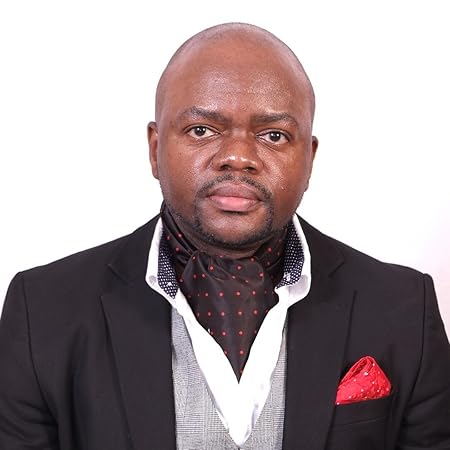
Lawi Sultan is a Social consciousness theorist, corporate trainer and speaker.