WITH 22 years as a prison chaplain, Fr Paul Miring’u has seen it all: the highs and lows of Kenya’s correctional services.
He has witnessed many prisoners transform into devout Christians or Muslims, with some becoming successful pastors after completing their sentences.
“Religion plays a major role in rehabilitation. You can rehabilitate someone with all the other aspects: vocational training, education and behaviour change,” said Miring’u, a counselling psychologist.
“But unless the heart of a person is touched and the person is converted, or he realises the need to change, other forms of rehabilitation may not amount to anything.”
The chaplain has also seen heartbreaking cases of former inmates reoffending and returning to prison.
“But if someone really changes from within, then they have a purpose in their lives and are able to carry on after prison.”
But the chaplaincy does more than spiritual care and counselling of prisoners. It also coordinates humanitarian support for the inmates and attends to those with special needs like patients with terminal illnesses, pregnant mothers and those with babies.
Some prisoners, especially those serving long sentences, are abandoned by their families. “We reach out to the dioceses, the parishes, and ask the Christians if they could visit. We ask them to adopt or mentor a prisoner, so they would be visiting him or her from time to time,” he said.
Kenya’s correctional infrastructure has evolved over the years, with some of the prison facilities dating back to the colonial era.
Over time, the increasing offender population and changing demands of correctional services have placed considerable pressure on available infrastructure.
Currently, the Kenya Prisons Service operates 135 correctional institutions, with an inmate population of 62,000 against an estimated holding capacity of 29,000.
This represents a significant challenge in terms of accommodation, sanitation, healthcare and the overall delivery of rehabilitative services.
The department has approximately 8,000 staff housing units for about 32,000 officers.
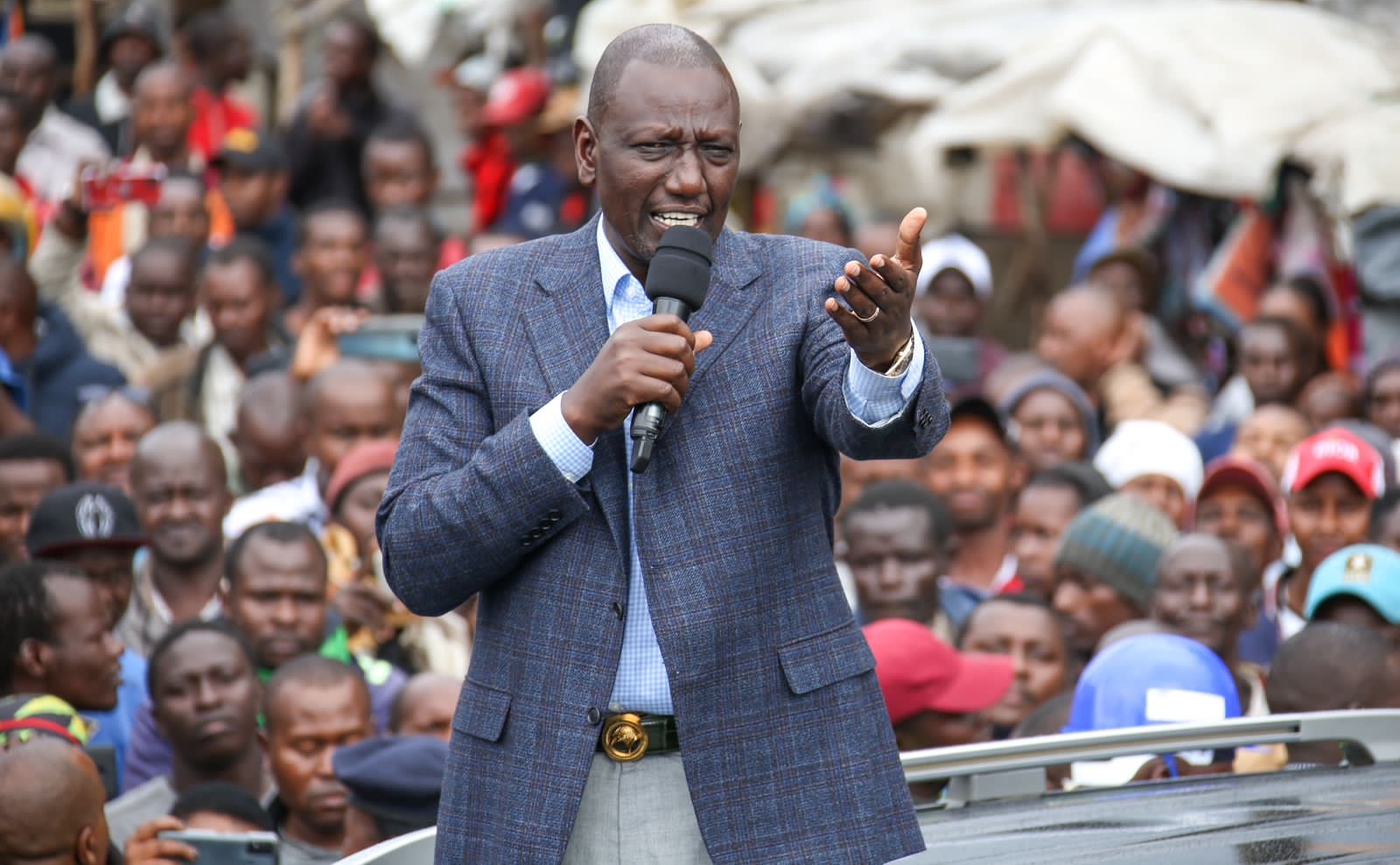
“Since the assumption of office by President William Ruto in 2022, the government has initiated a host of reforms aimed at transforming correctional services, strengthening institutional capacity and improving the welfare of both officers and persons under correctional supervision,” Correctional Services Principal Secretary Salome Beacco told the Star.
Exactly 100 days after taking his oath of office, Ruto created a task force headed by former Chief Justice David Maraga to look into the improvement of the terms and conditions of service and other reforms for members of the National Police Service, Kenya Prisons Service and National Youth Service.
The Kenya Kwanza administration’s commitment to reforms in the correctional services has seen the enhanced year-on-year budget allocations from about Sh32 billion in 2022 to Sh42 billion this financial year.
The Department of Correctional Services is running the Adopt aTriple-Decker Bed Campaign to end the practice of prisoners sleeping on the floor.
“The objective is to fabricate and distribute 20,000 triple-decker beds to approximately 57,000 male inmates across Kenyan prisons, with about 2,000 beds already distributed,” the PS said.
“Our position is clear: deprivation of liberty must never translate into deprivation of human dignity. Every person in correctional custody retains fundamental rights guaranteed under the Constitution, subject only to lawful limitations.”
In August, Deputy President Kithure Kindiki commissioned the 150-bed Magereza Level 4 Hospital in Ruiru to serve officers and inmates. Plans are underway to construct a similar hospital at the Busia GK Prison.
“The recruitment and enlistment of 3,862 additional officers, including cadet officers, has strengthened the department’s human resource capacity to support offender management, rehabilitation and multi-agency operations,” Beacco said.
The Maraga task force found that low pay, poor working and living conditions, outdated tools and equipment as well as lack of support for welfare concerns, among other issues, were the main causes of ineptitude and low morale among prison staff.
Beacco said the government has implemented phased salary improvements pursuant to the presidential directive, enhanced access to staff housing through housing supplementation allowances and facilitated the provision of new uniforms to officers together with promotion of officers across cadres.
The third and last phase of the salary review was effected on July 1, 2026, raising the entry-level pay for a prison constable by 36 per cent and the maximum point on the salary scale growing by 24 per cent.
The department is rolling out the Integrated Correctional Management Information System, which will digitise offender records, strengthen security, improve information management and enhance operational efficiency.
The PS said her department has planted over 10 million trees across its facilities and propagated over 30 million seedlings in its tree nurseries to support the President’s target of the country planting 15 billion trees by 2032.
Collaborations with faith-based organisations, development partners, and the private sector institutions have expanded opportunities for rehabilitation, education, vocational training, psychosocial support and reintegration, Beacco said.
A notable example is the collaboration with Justice Defenders and the University of London, through which more than 40 inmates have benefited from legal education.
In November 2024, 12 inmates graduated with law degrees froom the University of London.
PS Beacco also cited the example of Dr Ezekiel Gichuhi Maina, whose journey took him from serving a prison sentence at Naivasha Maximum Prison to graduating in medicine and surgery. “His story illustrates the value of sustained rehabilitation and access to education.”
In August, the M-Pesa Foundation constructed new tuition blocks and educational facilities at Kamiti and Embu prisons.
The department has retooled trainers and instructors in correctional educational centres to align with the Competency-Based Curriculum.
Journalist and former prisoner Moses Dola underlined the need to enhance education and training of inmates in preparation for their reintegration into society.
“Technology and the employment market are changing rapidly. Digital communication, online marketing, content creation and mobile journalism have become important economic opportunities,” he said.
“Imagine someone who has spent ten years in prison returning to a world where businesses advertise on TikTok, entrepreneurs sell products through Facebook and young people earn a living producing digital content. Without the relevant skills, such an individual is already disadvantaged.”
Beacco said through education, vocational training, counselling, talent development and community-based interventions, offenders are increasingly being equipped with skills and competencies that support their successful reintegration into society. Over 3,000 youths are currently engaged.
The Department of Correctional Services also provides opportunities for inmates to identify, nurture and showcase their talents in creative arts, music, crafts, sports and other disciplines.
A critical part of correctional services is the probation and aftercare programme that take care of non-custodial offenders and those who have completed their sentences.
“Probably you have been in prison for 20, 30 or 50 years. So much has changed. It's easy not to find your way around, even getting to where you knew as home,” said Fr Miring’u, the Catholic chaplain.
“Probably even your family moved. You had a wife and children. If they had not been coming to see you, probably they left. At least before the inmate leaves the prison, the discharge board sits to establish some of those issues.”
Perhaps the most difficult part of imprisonment begins when the prison gates open, Dola said.
Former prisoners often return to communities that have moved on without them. Some lost employment, family relationships and social support. Others struggle with stigma and discrimination.
“Without a structured reintegration programme, the risk of returning to criminal activities remains a real concern,” he said.
The Probation and Aftercare Service combines supervision, rehabilitation, reintegration, resettlement and practical support.
“In the past four years, PACS has supervised over 200,000 offenders in the community who all benefit from aftercare services in terms of support towards reintegration, supervision, counselling, family reconciliation and referrals for specialised support," Beacco said.