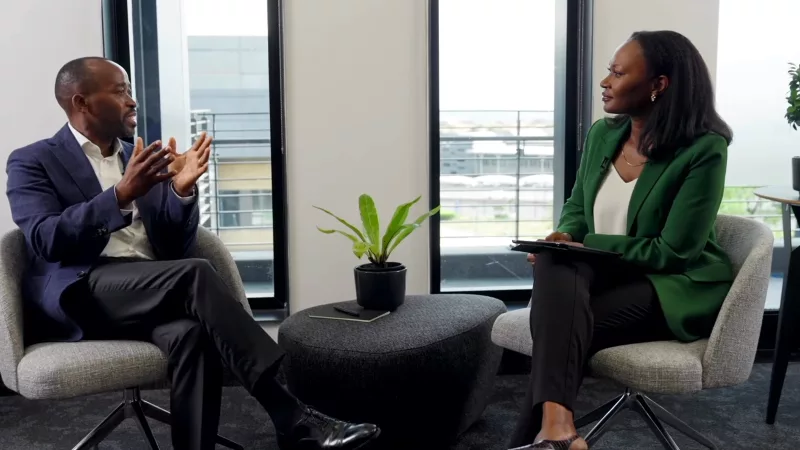
Africa’s economic future will depend on its ability to produce more goods locally, build its own digital infrastructure and mobilise investment in reliable energy, three entrepreneurs driving investments across the continent have said.
Hardy Pemhiwa, president and chief executive of Cassava Technologies; Aliko Dangote, founder and president of the Dangote Group; and Linda Mabhena-Olagunju, founder of renewable energy company DLO, say industrial production, artificial intelligence (AI) and clean energy present opportunities to create jobs and retain more economic value within Africa.
Speaking in separate interviews with the BBC’s Africa Enterprise programme, the entrepreneurs highlighted the need for African-led investment, stronger infrastructure and policies that give businesses the confidence to invest.
Africa accounts for just 1% of the global data centre population, despite the continent having an economy valued at approximately $3.5 trillion.
Pemhiwa said Cassava Technologies is developing its digital infrastructure and AI computing ambitions around five priority markets: South Africa, Kenya, Nigeria, Egypt and Morocco. These are intended to serve as regional hubs for neighbouring countries.
“If we don't have our own AI compute solutions and our own digital infrastructure on the continent, we are repeating exactly the same pattern that we've seen over the years. You know, produce coffee, sell the green beans, go and put others to work. We've done it with cocoa. We've done it with minerals. The data sits here with us. It doesn't have to be exported,” Pemhiwa said.
He sees locally generated data as an opportunity to build AI applications for industries such as mining and healthcare, where years of operational information could support solutions tailored to African needs.
AI could also expand access to education by reducing language barriers that prevent some learners from fully participating in technical subjects.
“I think we're talking about a 100x impact compared to what mobile money did,” Pemhiwa said, comparing AI's potential with the expansion of financial access through mobile money.
Dangote said Africa must turn its economic potential into productive industries capable of creating jobs and reducing dependence on imported products.
“You have to put that potential into reality. You have to. But the only way that you are going to do that is by us Africans to drive it. Nobody, and I repeat, nobody will come and drive it for us,” he said.
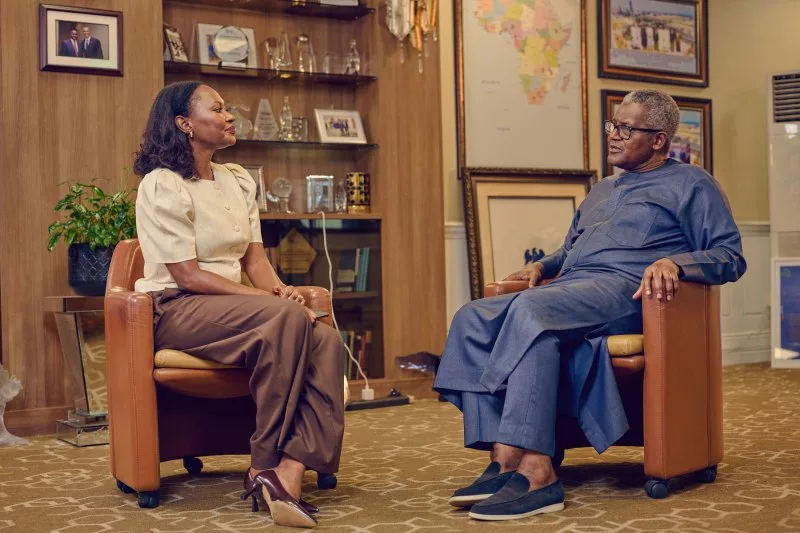
His comments come as his flagship refinery in Lagos, Nigeria, which began operations in 2024, targets an expansion of its processing capacity from 700,000 barrels of oil per day to double that level by 2029.
The refinery is expected to meet a substantial share of regional fuel demand, demonstrating the scale of investment required to reduce reliance on imported refined petroleum products.
Dangote linked industrial production directly to the continent’s ability to create employment and prosperity, particularly for its growing population.
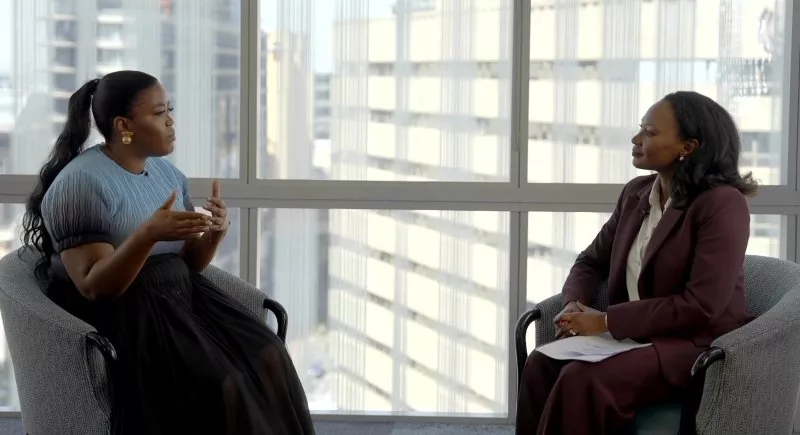
“You cannot imagine you have one-quarter of the world's population, and you are not producing anything. If you are not productive, how do you create prosperity? You have to create jobs. We have a very young population, and that's our job,” he said in an interview with Nancy Kacungira, host of the BBC’s Africa Enterprise programme.
Realising these ambitions will require more than computing facilities and industrial plants. Reliable electricity and water supplies will be essential to supporting the infrastructure behind the continent’s digital and industrial expansion.
Mabhena-Olagunju, whose company DLO helped raise $350 million for a South African wind farm expected to power 300,000 homes, said early-stage financing remains a major obstacle to developing renewable energy projects.
“Most of the funding we need on this continent is for early-stage development, when there’s a piece of land that has absolutely nothing on it, when it requires permitting, when it requires a feasibility study, when it requires grid studies,” she said.
“The challenge we currently have is that no one is looking at putting or deploying capital to the early-stage risk.”
She warned that the growing demand for infrastructure, particularly as AI expands, makes it urgent to address these funding gaps.
“If I look at where we're going globally, with the rise of AI, the most important infrastructure is going to be related to grid, electricity, and water. And when you don't address that issue, you're not going to address the volume of projects that this continent needs,” she said.
Mabhena-Olagunju also called for clearer regulatory frameworks and government procurement plans to give investors confidence in the energy market. Greater investment in African developers and manufacturers, she added, would help retain more financial returns and create jobs locally.
“When you have a developer like DLO, the capital, the dividends we make stay on this continent,” she said.
The three entrepreneurs’ perspectives highlight the links between productive industries, digital capabilities and reliable energy. Expanding manufacturing without adequate power, developing AI without local computing infrastructure or pursuing renewable energy without early-stage financing could limit the economic benefits of investment.
Turning these opportunities into sustained growth will require African economies to strengthen infrastructure, improve investment conditions and build businesses that create value locally while competing in global markets.