Members of Parliament now want University of Nairobi to come clear on its plan for Sh20 billion debt and steps to restore the institution’s financial stability.
The push follows an audit report that technically found the institution insolvent.
The National Assembly’s Public Investment Committee on Governance and Education on Thursday met the University’s top management to discuss the 2020/21 to 2024/25 audit reports.
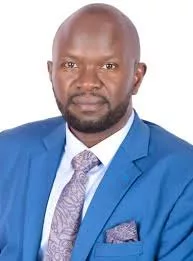
The oversight team chaired by Luanda MP Dick Maungu expressed concern over the institution’s accumulated deficits, outstanding statutory obligations and pension contributions, as well as losses reported by some of its income-generating units.
In her report, Auditor-General Nancy Gathungu indicated that the university's financial statements for the year ended June 30, 2022, attracted a qualified audit opinion, with a material uncertainty relating to its ability to continue operating as a going concern.
The report shows that UoN had reported a deficit of approximately Sh2.2 billion, pushing its accumulated deficit to Sh8.8 billion.
The institution also faced substantial statutory obligations, including taxes and pension contributions amounting to about Sh10.6 billion and had increased from the previous financial year.
The findings raised questions about the university's ability to meet its financial obligations despite holding valuable assets.
Appearing before the oversight team, Vice-Chancellor Prof Ayub Gitau acknowledged the financial challenges but maintained that the university remained a premier institution with a substantial asset base that could be leveraged to support its recovery.
“We have a debt of about Sh20 billion and an asset base of over Sh220 billion,” Prof Gitau told the MPs.
He said the university's management and council were exploring ways of maximising returns from its assets, including through renting and leasing some of its properties.
Prof. Gitau added that the institution had established a committee chaired by the Deputy Vice-Chancellor in charge of finance to examine the valuation of its assets and identify opportunities to improve revenue generation.
He also cited austerity measures intended to reduce financial leakages and improve the management of the university's resources.
MPs however remained adamant insisting that the management had failed to demonstrate how the proposed interventions would translate into measurable financial improvements.
Maungu challenged the vice-chancellor to move beyond citing the university's property portfolio and provide practical measures for addressing its outstanding obligations.
“The people who are suffering, some of whom are your creditors, will not mind about the asset base you have,” Maungu said.
“What members and I have not seen are pragmatic steps that you have put in place as management to secure the university from this condition. We need to see actionable, pragmatic steps to free the university from this yoke.”
Embakasi West MP Mark Mwenje, sought to know whether the institution's leadership was adequately responding to the financial crisis.
"Is the university solvent?" he asked.
In response, Deputy Vice-Chancellor Prof Josiah Aduda acknowledged that the institution had been declared technically insolvent for the financial year under review because its liabilities exceeded its assets.
Mwenje warned that the financial difficulties threatened the reputation of an institution that had long been regarded as one of Kenya's leading universities.
“When you start looking at these figures, and a whole university that was the first in this country is insolvent, then you have a crisis at the University of Nairobi,” he said.
Central Imenti MP Moses Kirima also demanded detailed evidence to support claims that austerity measures were helping the institution recover.
“Where is the analysis? Where are the figures to show that you are cutting down on expenses and taking steps to revive this university?” Kirima posed.
He expressed concern about the outstanding pension contributions, warning that delays in remitting the money could cause hardship to former university employees who depended on their retirement benefits.
The university's acting Director of Finance, Stephen Kimeli, attributed its financial difficulties partly to a reduction in government funding following the introduction of the Differentiated Unit Cost (DUC) funding model in 2017/2018.
He told the committee that the reduction in capitation had created a funding gap of about Sh1.6 billion, which continued to affect the institution's operations.
Kimeli explained rising payroll costs had compounded the problem, making it increasingly difficult for the university to meet its financial obligations while sustaining its operations.
He, however, said the university was implementing measures under its 2023–2027 strategic plan to improve its financial position.
These include increasing student enrolment, reviving income-generating units and expanding research activities to generate additional revenue.
Kasipul MP Boyd Were questioned the effectiveness of the income-generating strategy, noting that some of the university's commercial activities were themselves making losses.
Deputy Vice-Chancellor Aduda said management had engaged the heads of the income-generating units to identify ways of increasing revenue and had introduced stricter expenditure controls.
“We have also developed serious austerity and cost-management measures at the university because when you are in a hole, you don't continue digging,” Prof Aduda said.
He maintained that the measures were beginning to yield results through improved revenue and reduced costs.
INSTANT ANALYSIS
The oversight team chaired by Luanda MP Dick Maungu expressed concern over the institution’s accumulated deficits, outstanding statutory obligations and pension contributions, as well as losses reported by some of its income-generating units.