The government turned to the Kenya Defence Forces and the National Intelligence Service (NIS) to track down people who came into contact with Kenya’s first Ebola patient, as tracing all 135 contacts proved difficult.
One Ugandan who arrived in Kenya on the Jambojet flight that carried the first sick man from Entebbe had already crossed the border by road into Tanzania through Namanga by the time authorities tracked him down.
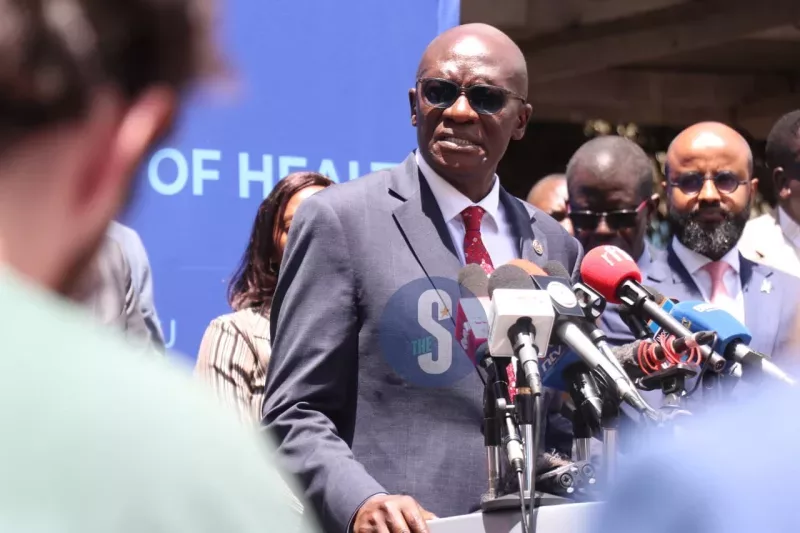
Health Director-General Patrick Amoth said the government formed a multi-agency team to locate people who could have been exposed to the virus, using phone information and intelligence to establish their whereabouts.
“The other challenge, of course, is how difficult it is to do contact tracing, especially in such an urban metropolis like Nairobi,” Amoth told a World Health Organisation Africa Region media briefing on Thursday.
“One of the things that we put in place was to establish a multi-agency team under the command of the Kenya Defence Forces, bringing together our telcos and intelligence services.”
Kenya has recorded nine Ebola cases, including the first patient who died. The eight surviving patients are receiving treatment at Kenyatta National Hospital and Nairobi Hospital and were reported to be stable and responding well.
All 135 contacts are now accounted for, with some being monitored outside the country after crossing into neighbouring states. Kenya said it had formally notified the relevant authorities in those countries.
The Ministry of Health reported no new cases in the 24 hours to Friday, while all 14 samples collected from people suspected of having the disease tested negative.
Amoth said tracing contacts in Nairobi was especially difficult because people could move quickly across the city and beyond.
The government also faced difficulties keeping people apart after placing them in quarantine. Amoth said some facilities were not designed to hold people who might have been exposed to Ebola, which requires strict separation to prevent possible infection.
“Ideally, you should have a quarantine in his or her individual space. A totally separate room with toilet facilities, bathroom facilities, and that person should not be able to get into contact with any other person,” he said.
“However, that was not happening at one of the institutions.”
Amoth said some people in quarantine continued to meet and eat together despite instructions to remain in their own rooms. The government responded by installing closed-circuit television cameras to monitor whether they were following the rules.
“Even when they are provided with their own rooms, it was very, very difficult to ensure that they obeyed those rules,” he said. “And therefore, we had to put CCTVs in these rooms to ensure that we monitor them 24-7.”
The government also held online meetings with families, doctors and community opinion leaders to explain why people had to remain separated. Amoth said cooperation improved after the discussions.
Two nurses are among four healthcare workers infected after attending to the first patient. The other two are a patient attendant and a biomedical technician. Four family members were also infected.
Amoth said the infections among healthcare workers pointed to possible weaknesses in infection prevention and control when the first patient was being treated.
“We think there are gaps in infection prevention control when they were managing the index case,” he said. “All of them have received monoclonal antibody and are currently on day two or day three of remdesivir, and they are all stable and responding very well to treatment.”
He said protective equipment previously available in health facilities had largely been intended for Covid-19 and was not suitable for Ebola. The government had since supplied Ebola-specific protective equipment to health workers in 12 counties considered to be at very high risk and 26 high-risk counties, while training continued.
Kenya has also requested 10,000 Ebola vaccine doses through the WHO, with health workers among those to be prioritised. However, vaccines developed for the Zaire strain of Ebola are not established as effective against the Bundibugyo strain responsible for the current outbreak.
WHO Africa Regional Director Mohamed Janabi said the outbreak required countries to work together because people and the virus could cross borders.
“Ebola does not wait. It follows movement, exploits gaps, and tests the strength of our health systems,” Janabi said. “Today, the test is no longer confined to one place. It is a regional concern that demands regional vigilance and collective resolve.”
WHO officials said all Kenya’s secondary cases were known contacts of the first patient. They were already in quarantine when their infections were identified, and there was no evidence at the time of sustained community transmission in Kenya.
The first patient had travelled from the Democratic Republic of Congo through Uganda before arriving in Nairobi. The outbreak has placed pressure on Kenya’s ability to detect infections early, protect health workers and prevent the virus from spreading through busy transport routes and border crossings.