Christine Adhiambo has lived in Mathare Number 10 slum for 28 years now.
"We suffered flooding in 2024 and many houses were swept away. We lost several people," she said.
“Another problem we face here is frequent fires. We never know how they start. You return from your hustle and find everything has been razed. You even have no idea where your children are.”
The iron-sheet houses are tiny and inconvenient especially for families.
“I have an adolescent son, who should be having his own room. But I live with him, his father and the other children," Adhiambo said.
She was among residents who turned up for a public sensitisation session on the government's Affordable Housing Programme last Thursday.
"I am very grateful to the President for starting the affordable housing project here. I am happy that officials have today informed us about the programme and how to apply and pay for a house.”
At the site of Mathare Boma Yangu Phase II, Eng Tom Ochanda and his 250-strong workforce are racing to complete the houses.
“This site has 4,800 units in 11 blocks that have a ground floor and 14 upper floors each,” Ochanda said.
In the coming months when the project is completed, slum residents like Adhiambo will enter an entirely new world of decent homes.
Kenya needs some 200,000 units annually to meet the housing deficit, according to the State Department for Housing and Urban Development.
More than 303,900 affordable housing units are completed or under construction nationwide. At least 45,000 units will be ready for occupation by the end of this year, Affordable Housing Board CEO Joe Mutugu told the Star.
A total of 13,012 units have been completed as of October 2026, and 7,050 are occupied, he said.
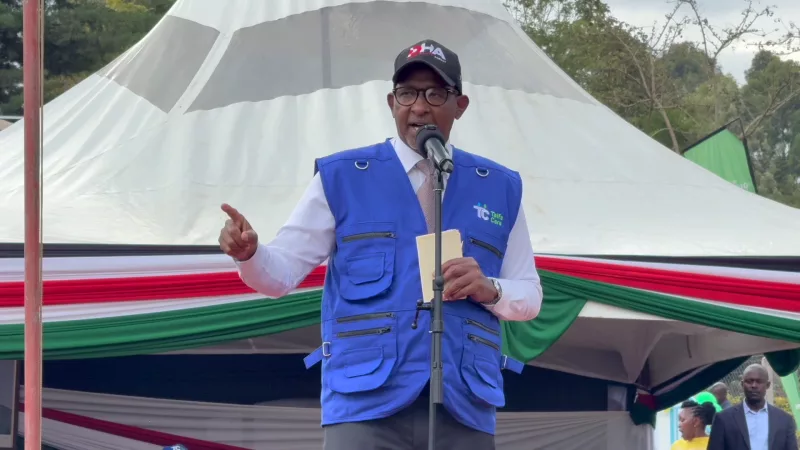
“When we began this programme, our aim was to provide homes that the majority of Kenyans can afford. If you look at the pricing, we have homes that are designed for Kenyans who earn less than Sh20,000 per month. This is what we call social housing. We have the affordable category for people who earn between Sh20,000 and Sh120,000. Then we have the market segment for the Kenyans who earn more than Sh150,000,” Mutugu said.
The programme got a major reprieve last month after the Court of Appeal upheld the constitutionality of the Affordable Housing Act, 2024, clearing the path for the government to continue collecting the 1.5 per cent levy from workers.
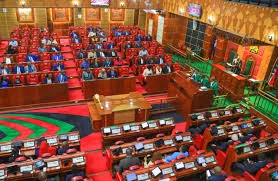
But the programme continues to face criticism, especially from the opposition.
The People’s Liberation Party leader Martha Karua said last Thursday that Kenyans were already stretching their pay cheques to meet daily needs, yet a portion of their hard-earned income was deducted for a housing levy without sufficient regard for their immediate priorities.
“This regime has failed to adequately explain how the funds are used, who benefits and whether the programme meets the needs of the people paying for it,” she said, vowing to scrap the levy if elected as the president next year.
Marsabit Senator Mohammed Chute has petitioned the Senate Housing Committee to establish whether the government is delivering value for money through the programme.
The senators want a project-by-project audit of expenditure, construction costs, the allocation of completed units and the programme’s management.
But the programme remains popular among prospective homeowners.
“For instance, in Mukuru, where we have around 13,000 units, we received more than 25,000 applications,” Mutugu said.
“We have updated our systems such that if someone does not get a home in the development which they expect to get a home in, they can easily transfer their application to a different development.”
The CEO said all housing projects around the country have received applications for units, dismissing critics who say Kenyans are not interested.
“For the first time in Kenya, someone who earns Sh20,000 can afford to buy a home. Not to rent, but to buy a decent home, which has piped gas, which is in a clean compound, which has adequate security, and which is serviceable. So, we do believe that His Excellency the President has fulfilled his promise.”
Mutugu said the allocation process is 100 per cent transparent and fair, strictly on a first-come, first-served basis, and on a one-ID, one-home basis.
“We can never have a situation where one person comes and buys, say, an entire block, or a situation where we have people jumping the queue. The allocation system is completely automated, and a big part of that allocation process is actually subcontracted to our TPS [tenant purchase scheme] providers. We have entered into agreements with commercial banks who help us to assess applications and to allocate the homes, and we've designed it such that there is no political interference.”
Once one submits an application and pays the requisite deposit of five per cent, they will be allocated a house when the project is completed.
Mutugu said up to 90 per cent of buyers already occupying their homes have no difficulty paying rent. Anyone facing such challenges can approach the board to find a solution.
The CEO said all the projects are on course, dismissing claims that some had slowed down or stalled altogether because of challenges facing contractors.
“Our intention is not just to build homes. It is also to build the capacity of our contractors. So, when we have such situations, we work together with these contractors and give them the support that they need to deliver,” Mutugu said.
The housing board is speeding up about 65 projects with 45,000 homes to be completed by the end of the year.
“Then, in the first half of next year, we intend to complete another 15,000 homes. So, in total, between now and June next year, we have prioritised projects with about 60,000 homes,” Mutugu said.
Home buyers sign a sale agreement with the Affordable Housing Board.
“This contract is enforceable by law. Once they sign this contract and complete payment, they are issued with a sectional title. Now, the question I will pose to Kenyans is, when the government changes, can anyone come and take your title deed?”
Since 2022, the AHP has created more than a million jobs, according to the Department of Housing.
For young engineer Mike Kariuki, working as clerk of works at the Sh1.8 billion Makuyu Affordable Housing project has provided more than a monthly salary, giving him financial stability, professional experience and confidence to pursue his ambition of becoming an independent contractor.
Kariuki, who joined the project when construction began in 2024, said the experience had strengthened his project management skills while enabling him to save, invest and register a company in preparation for future construction contracts.
“My life has changed significantly. I can’t even explain it. Being jobless gives you anxiety. You don’t know what will happen tomorrow. As of now, I can say I am comfortable,” he said, urging young people to take advantage of employment opportunities in their localities.
Located in Makuyu town, Maragua constituency, Murang’a county, the project comprises 764 residential units targeting households across different income groups.
Kariuki said managing a project of this scale has exposed him to responsibilities beyond those he previously handled, having worked on smaller jobs before.
His responsibilities also include overseeing corporate social responsibility initiatives associated with the project, including support for local institutions such as Makuyu Boys Secondary School.
Kariuki, who completed his education in 2020, described the job as an opportunity to improve his financial position while preparing for a future in business.
He has registered a company and obtained National Construction Authority registration. The project has created employment opportunities. Kariuki estimated that the workforce at the site ranged from about 100 to 250.