Mistrust among regional actors and parallel peace initiatives undermined the East African Community Regional Force in eastern DRC, a former Kenyan force commander has said.
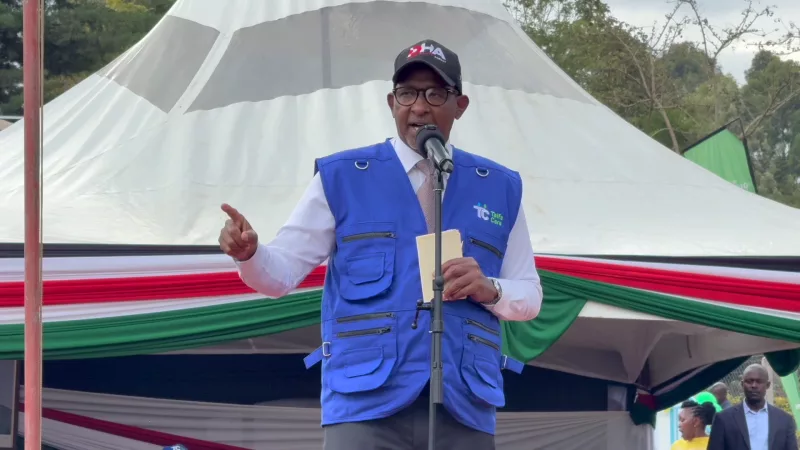
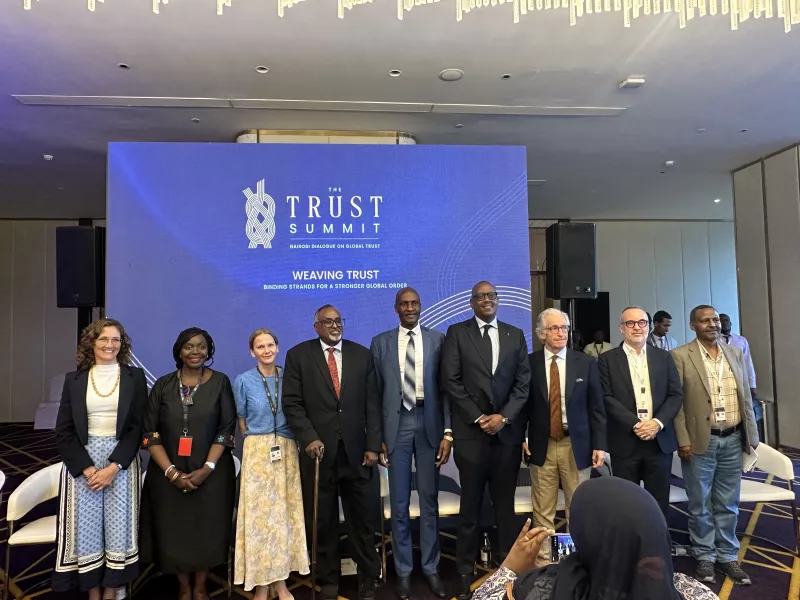
Speaking at the Global Trust Summit in Nairobi on Thursday, Maj Gen (Rtd) Aphaxard Kiugu said the trust deficit made joint military operations difficult and weakened efforts to restore stability in the war-torn region.
Kiugu said the absence of trust among the parties involved complicated intelligence-sharing, operational planning and coordination, exposing the limitations of a military intervention without sufficient political alignment.
Kiugu served as one of the commanders during Kenya’s deployment to the conflict-hit region, succeeding Maj Gen Jeff Nyagah as the commander of EACRF.
Speaking about his experience in the mission, Kiugu said joint operations with the Congolese armed forces became extremely difficult because military cooperation depended on the willingness of the parties to share sensitive information.
“The mandate involved conducting joint operations with the forces of the DRC. From the outset, this became extremely difficult because you cannot conduct joint operations without planning.”
He said successful operations required individual planning, followed by joint planning, intelligence-sharing and implementation.
But mistrust undermined that process.
“How do you share intelligence? You share intelligence with people with whom you have the highest level of trust. If that trust is absent, they will not share information with you, and you will not be able to share information with them,” Kiugu said on a panel discussion on peace and security.
His account is the first time the EACRF debacle is explained, an issue Rwanda President Paul Kagame is on record regretting was never discussed.
The EACRF deployment was a regional intervention that sought to help stabilise eastern DRC amid escalating insecurity and the activities of armed groups, particularly the M23 rebels.
The EACRF was established in 2022 under an EAC initiative intended to support peace efforts and facilitate the restoration of security in eastern DRC.
However, the force operated in a complicated political environment in which regional diplomacy, the Congolese government's expectations and the military realities on the ground did not always align.
Kiugu identified the coexistence of two regional diplomatic initiatives as another source of difficulty.
The Nairobi Process, facilitated by retired President Uhuru Kenyatta, sought to engage armed groups and bring together the Congolese government, civil society and other stakeholders in pursuit of a political settlement.
Alongside it was the Luanda Process, led by Angola President João Lourenço, which focused on diplomatic engagement and efforts to ease tensions involving the DRC and Rwanda.
Although the two initiatives pursued related objectives, Kiugu said their parallel operation contributed to an environment of mistrust.
“We therefore had two processes running in parallel, although both were intended to achieve the same objective,” he said.
“One was an East African Community process, while the other was the Luanda Process.”
He argued that the competing diplomatic tracks complicated the environment in which the regional force was expected to operate.
“Do you see how that created elements of mistrust in the room? The existence of these parallel processes was itself a recipe for mistrust,” he said.
While the Nairobi Process sought to engage armed groups and pursue a political settlement, the Luanda Process concentrated substantially on tensions between the DRC and Rwanda, whose relationship was central to the regional crisis.
The challenge for the EACRF, Kiugu said, was that its military mandate depended on political cooperation among actors whose interests and expectations were not always aligned.
Kiugu said the mission eventually reached a point where its continuation became untenable after the Congolese government declined to renew its mandate.
The EACRF's mandate expired in December 2023, and the force subsequently withdrew from eastern DRC.
He dsaid the relationship with DRC was so strained that the departure of Kenyan forces went without a formal transition to the incoming SADC regional force.
The Southern African Development Community Mission in the Democratic Republic of Congo or SAMIDRC succeeded EACRF.
“We reached a breaking point when the host nation refused to renew the mandate. The force subsequently exited the theatre without even conducting what is called relief operations — the formal handover to the incoming force.”
The retired military commander described the exit as a missed opportunity.
The withdrawal came amid growing disagreements between Kinshasa and the EACRF over the force's effectiveness and its role in confronting armed groups.
The Congolese government had expressed dissatisfaction with the mission, including concerns about its inability to halt the M23 advance. The EACRF's mandate was not renewed, and the Southern African Development Community subsequently deployed its own regional force.
Kiugu also raised questions about how regional organisations coordinate military and diplomatic initiatives when several countries are pursuing parallel approaches to the same conflict.
Kiugu said the result has been forum shopping, with different peace efforts in Qatar, Washington and Switzerland.