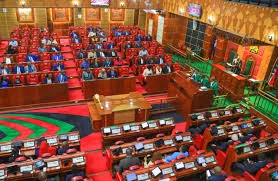

A fresh political row over the integrity of the voter register erupted in the National Assembly after Kirinyaga MP Njeri Maina claimed aliens could be registering to vote.
In the heated exchange between Maina and broad-based affiliated MPs, lawmakers demanded evidence that was happening and warned against undermining public confidence n the electoral process.
Maina, who has allied with DCP, argued that Kenyans deserved full disclosure on voter registration, claiming that reports of foreigners being issued national identity cards raised concerns about the possibility of non-citizens participating in elections.
“It is critical because we have heard conversations that aliens may have been registered to vote and are abusing the democratic rights of Kenyans,” she said.
“I think it is only fair that there is full disclosure so that Kenyans can know who is voting at a particular polling station.”
She added that television stations had reported cases of identification documents allegedly being issued to people who were not Kenyan citizens.
However, when pressed by stand in Speaker Farah Maalim to substantiate the serious allegations, Maina defended her choice of words, arguing that she had only suggested that such registration might be happening.
“I used the word ‘may’ and imputing that it can’t be done is wrong. It is in the public domain,” she said.
Her remarks drew objections from lawmakers who warned that allegations of electoral malpractice should not be made without supporting evidence.
Minority leader Junet Mohamed challenged Maina’s claims, arguing that they risked imputing improper motives to the Independent Electoral and Boundaries Commission.
“My colleague is imputing improper motive on the IEBC that aliens can be registered as voters. I don’t think, Chair, we should go in that direction,” he said.
Homa Bay Town MP Peter Kaluma said the allegations touched on national sovereignty and required substantiation under parliamentary Standing Orders.
Majority leader Kimani Ichung’wah also condemned the remarks, warning that careless political statements could contribute to electoral tensions.
“The allegations by Hon Njeri are very serious and dangerous as they cast aspersions on our electoral process,” he said.
Ichung’wah argued that politicians risked fuelling an election crisis when they made unsubstantiated claims in Parliament, at funerals or during political meetings.
He said Maina could not use the House to disparage the electoral commission and then defend the allegations by arguing that they were already in the public domain.
National Assembly Deputy Speaker Gladys Boss Shollei introduced another dimension to the dispute, questioning whether the debate risked confusing dual citizenship and legitimate diaspora participation with the alleged registration of foreign nationals.
Shollei noted that Kenya was expanding voter registration for citizens living abroad, including in countries such as Australia, Canada and the United States.
She questioned whether a Kenyan citizen holding two passports should be considered a foreigner simply because they also possessed another country’s nationality.
“Those are Kenyans, who also hold a dual passport. Is that person an alien?” she asked.
“Even when you go to Uganda, you will find someone who has two [IDs or passports] because they are a dual citizen, and our country allows it.”
An adamant Maina said she would substantiate her claims in the next sitting with a 500-page document.
The Constitution permits dual citizenship, meaning that acquiring another nationality does not, by itself, remove a Kenyan citizen’s eligibility to vote. However, foreign nationals do not qualify to vote in Kenyan elections.
The parliamentary exchange comes amid mounting political scrutiny of the voter registration exercise, with allegations of foreign nationals being enrolled emerging as one of the contentious issues ahead of the 2027 elections.
In September, the IEBC dismissed claims that it was illegally registering foreigner, particularly from Uganda, saying no individual or organisation had submitted credible evidence to support allegations of malpractice.
Chairperson Erastus Ethekon said the commission’s mandate was to register eligible Kenyan citizens as voters, while the issuance of national identity cards and passports fell under other government agencies.
The commission urged anyone with credible evidence of wrongdoing to submit it for investigation.